
How Are Blanking Lines Used in Metal Processing?
Blanking lines play a crucial role in metal processing by transforming large coils or sheets of metal into smaller, precise shapes or “blanks” that serve as raw materials for manufacturing various products. Here’s a breakdown of how blanking lines are used in metal processing:
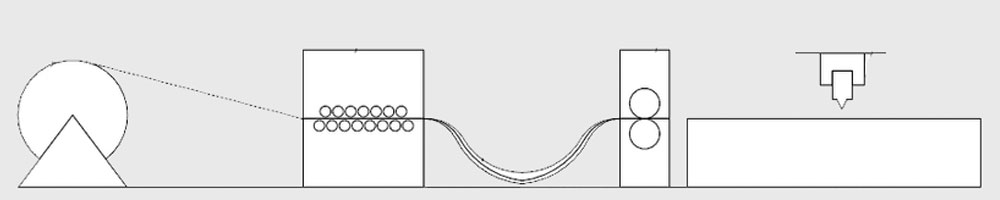
1. Material Loading
- Input Material: Metal coils or sheets (e.g., steel, aluminum, copper).
- The coil is mounted on a decoiler, which unrolls it to feed into the machine.
2. Straightening and Flattening
- The material passes through a leveler or straightener to remove any coil memory or curvature.
- This ensures flat and uniform material for accurate processing.
3. Feeding and Alignment
- A feeder system pushes the metal through the blanking press or cutting section.
- Precision alignment mechanisms ensure the material is correctly positioned for consistent cuts.
4. Cutting or Stamping
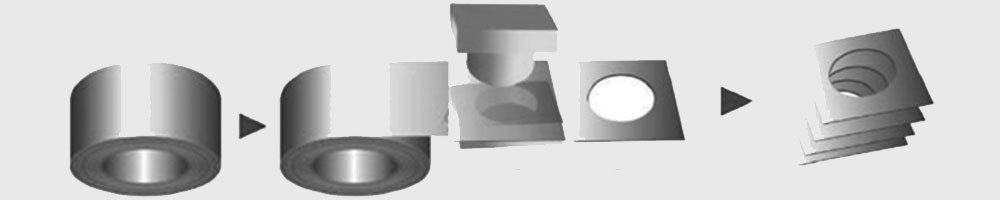
- The blanking press uses dies or cutting tools to cut the metal into specific shapes or sizes.
- Cut-to-length: Produces flat sheets of desired dimensions.
- Blanking dies: Stamp out predefined shapes, such as circles, rectangles, or custom designs.
- High speed operations allow for mass production.
5. Sorting and Stacking
- The blanks are automatically sorted and stacked for easy handling and transport.
- Scrap or leftover material (trim) is directed to a scrap handling system for recycling.
6. Automation and Quality Control
- Modern blanking lines incorporate automation and sensors to monitor dimensions, quality, and efficiency.
- Any defective blanks are identified and removed.
Applications of Blanking Lines
- Automotive Industry:Producing body panels, doors, and other stamped components.
- Appliances:Parts for refrigerators, ovens, and washing machines.
- Electrical Industry: transformer laminations, motor parts, and enclosures.
- Construction:Roofing sheets, beams, and structural components.
- Aerospace:Precision blanks for high-strength components.
Advantages of Using Blanking Lines
- High Precision: Ensures exact dimensions and consistent quality.
- Efficiency: High speed processing enables mass production.
- Versatility: Can handle various metals and thicknesses.
- Material Utilization: Minimizes waste by optimizing the layout of blanks on the sheet.
1. Fine Blanking Lines
Fine Blanking Line is a specialized blanking process designed for high precision and clean edged parts. This technique is widely used when parts require tight tolerances and smooth edges.
- Triple Action Press: Utilizes three forces (blanking force, counterforce, and clamping force) to achieve high precision and minimize distortion.
- Precise Die Clearance: The gap between the punch and die is extremely small, ensuring clean shearing without tearing.
- Smooth and Burr Free Edges: Eliminates secondary finishing processes.
- Materials: Often used with softer metals like aluminum or specific alloys for automotive or electronics industries.
Applications:
- Automotive components (gears, levers, brackets).
- Watch and precision instrument parts.
- Electrical connectors and switches.
Advantages:
- Superior surface quality and precision.
- Allows for high strength, thin materials to be processed efficiently.
- Ideal for high-volume, detailed part production.
2. Progressive Blanking Lines
Progressive blanking lines combine multiple operations in continuous processes, such as cutting, punching, bending, and sometimes forming.
- Multiple Dies in One Tool: The material moves through a series of stations, each performing a specific task.
- High Speed Processing: Ideal for mass production of complex parts.
- Continuous Material Feed: The strip material moves step by step, and blanks are separated at the end.
Applications:
- Automotive parts (suspension components, brackets).
- Appliance hardware (handles, hinges).
- Consumer goods (cutlery, fasteners).
Advantages:
- Minimizes handling and reduces processing time.
- Capable of creating intricate parts with several operations in a single pass.
- Cost effective for high volume runs.
Comparison Between Fine and Progressive Blanking
| Feature | Fine Blanking | Progressive Blanking |
|---|---|---|
| Precision | Very high | Moderate to high |
| Surface Finish | Clean, burr-free | May require secondary processing |
| Complexity of Parts | High, ideal for intricate designs | High, but with simpler shapes |
| Speed | Moderate | High |
| Applications | High-precision components | Complex parts with multiple operations |
While both blanking and CTL (Cut to Length) lines handle metal coils, blanking lines create shaped pieces, whereas CTL lines focus on cutting sheets to specified lengths.
