How to Choose a Reliable Partner for Precision Sheet Processing
Selecting a cut to length line manufacturer is one of the most consequential decisions a steel service center, fabricator, or OEM will make when investing in coil processing capacity. A cut to length line converts steel coil into flat, precisely dimensioned sheets, and the quality of the equipment determines flatness, length accuracy, surface integrity, and ultimately the yield of every downstream operation. This article outlines what a cut to length line is, the components that define its performance, and the criteria that should guide the selection of a qualified manufacturer.
What Is a Cut to Length Line?
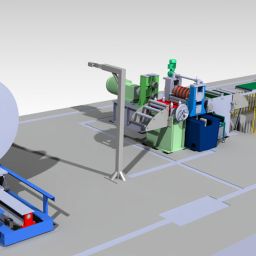
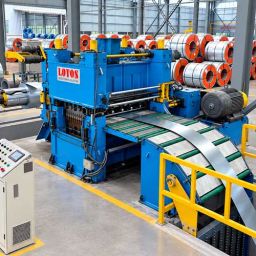
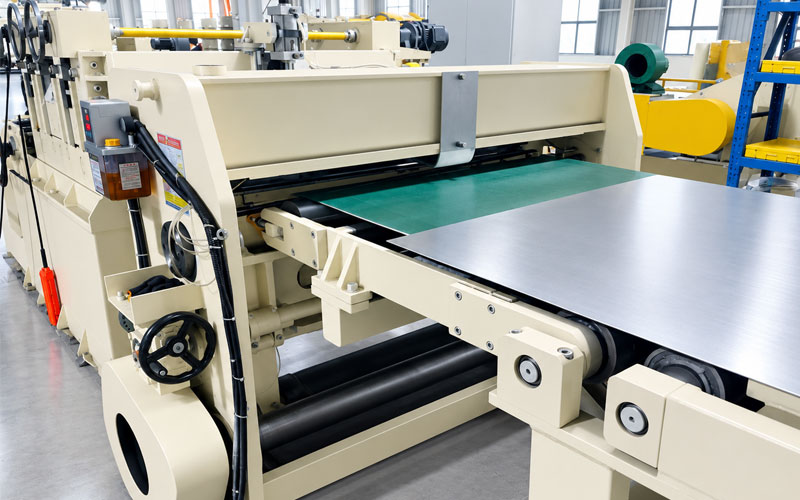
A cut to length line (CTL line) is an integrated processing system that uncoils, levels, measures, shears, and stacks metal sheet to specified lengths. It is widely used for carbon steel, stainless steel, galvanized steel, pre-painted steel, and aluminum.
Compared with purchasing pre-cut sheet, an in house CTL line offers several advantages:
- Material cost savings, as coil is typically priced lower than sheet.
- Flexibility, allowing sheet lengths to be changed according to order requirements.
- Reduced waste, since lengths can be matched to the customer’s drawings.
- Shorter lead times, as production is not dependent on external suppliers.
Core Components of a Cut to Length Line
The performance of the entire line depends on how well each section is engineered and integrated by the manufacturer.
1. Coil Car and Decoiler
The coil car loads the coil onto the decoiler mandrel. The decoiler, whether hydraulically or mechanically expanded, must hold the coil securely and release material smoothly. Appropriate capacity, expansion range, and braking control are essential to prevent coil telescoping and surface damage.
2. Straightener and Leveler
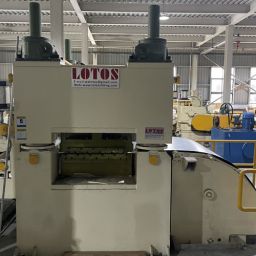
Flatness is the defining quality of cut sheet. A precision leveler removes coil set, crossbow, and edge wave through repeated reverse bending between work rolls. The number of rolls, roll diameter, and backup support structure should be matched to the thickness range and yield strength of the intended material.
3. Feeding and Measuring System
Length accuracy is governed by the feeding mechanism and the measuring device. Servo driven feeding combined with an encoder based measuring roll provides stable, repeatable results, and a loop control system ensures that the material feed remains continuous and tension-free.
4. Shearing Unit
The shear cuts the leveled strip to the programmed length. Depending on production requirements, manufacturers supply:
- Flying shears, for high speed continuous operation.
- Stop and go (hydraulic or mechanical) shears, for heavier gauges and moderate speeds.
Blade material, clearance adjustment, and cut quality directly affect burr height and edge condition.
5. Conveyor, Stacker, and Packaging
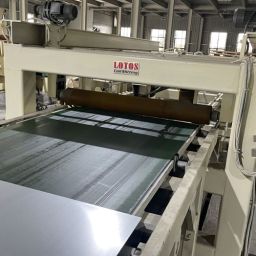
Cut sheets are conveyed to a stacker that aligns and piles them without scratching the surface. Options include belt conveyors, magnetic or vacuum stackers, and sheet lifting tables, which protect finished surfaces such as stainless steel and pre-painted coil.
6. Electrical and Control System
A modern PLC with a touchscreen interface allows operators to set length, quantity, and speed, store recipes, and monitor production data. Reliable control architecture reduces setup time and operator error.
Key Criteria for Evaluating a Cut to Length Line Manufacturer
Engineering Capability and Customization
A credible manufacturer does not offer a single fixed machine. It should assess the customer’s material type, thickness range, coil width, coil weight, output speed, and sheet tolerance, and then design a configuration appropriate to those parameters.
Precision and Quality Standards
Request documented performance data, including length tolerance, flatness tolerance, and diagonal accuracy. Established manufacturers verify these parameters during factory acceptance testing before shipment.
Component Quality and Build Standards
The line’s service life depends on the quality of its structural frame, rolls, bearings, hydraulics, drives, and electrical components. Leveler rolls should be manufactured from alloy steel with appropriate heat treatment and surface finishing. Recognized international brands for key electrical and hydraulic components improve reliability and simplify spare parts sourcing.
Integration with Slitting and Downstream Equipment
Many processors operate both slitting and cut to length lines. A manufacturer with experience in both can help ensure compatibility in coil handling, material flow, and automation, and can supply complementary equipment such as slitting lines, recoilers, and coil packaging systems.
Installation, Training, and After-Sales Support
Evaluate the supplier’s commissioning procedures, operator training, documentation, warranty terms, and availability of spare parts. Prompt technical support minimizes costly downtime.
Track Record and References
Ask for installation references, project case studies, and, where possible, the opportunity to observe a comparable line in operation.
Common Applications
Cut to length lines serve a broad range of industries, including:
- Steel service centers and distributors
- Roll forming and profiling operations
- HVAC and ductwork fabrication
- Appliance and electrical cabinet manufacturing
- Automotive and transportation components
- Construction, roofing, and cladding products
Why Partner with Lotos Slitting?
LotosSlitting designs and manufactures coil processing equipment, including cut to length lines, for customers who require dependable accuracy and long term operating stability. Each line is configured according to the customer’s material specification and production target, with attention to leveling performance, length precision, and surface protection. Our engineering team supports customers from initial specification through installation, commissioning, and operator training.
Conclusion
Choosing the right cut to length line manufacturer requires careful evaluation of engineering competence, equipment quality, precision standards, and after sales commitment. A well-specified line improves material utilization, product quality, and operational efficiency for many years. Manufacturers that combine sound design with responsive technical support provide the strongest foundation for a long-term investment.
To discuss your material specifications and production requirements, please contact the LotosSlitting team to receive a tailored cut to length line proposal.
FAQ:
A cut to length line uncoils steel coil, levels it, measures it, and shears it into flat sheets of a specified length. It is used by steel service centers, roll forming plants, HVAC fabricators, appliance manufacturers, and many other industries that require flat, dimensionally accurate sheet.
A properly configured line can process carbon steel, stainless steel, galvanized steel, pre painted steel, aluminum, and other flat-rolled metals. The thickness range, coil width, and surface requirements of the material determine the specification of the leveler, shear, and handling equipment.
Evaluate the manufacturer’s engineering capability, customization options, component quality, documented accuracy standards, installation experience, and after-sales support. Reviewing reference projects and requesting factory acceptance testing are also advisable.
The leveler removes coil set, crossbow, and edge wave, and therefore determines the flatness of the finished sheet. The number of rolls, roll diameter, and backup support must match the thickness and strength of the material being processed.
Many processors operate both types of equipment. A manufacturer with experience in both can ensure compatibility in coil handling, material flow, and automation, and can supply complementary systems such as recoilers and coil packaging equipment.