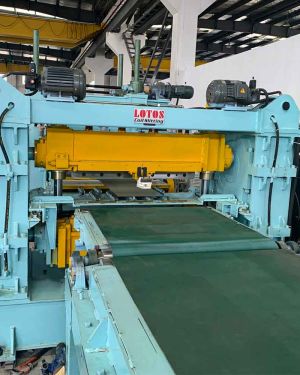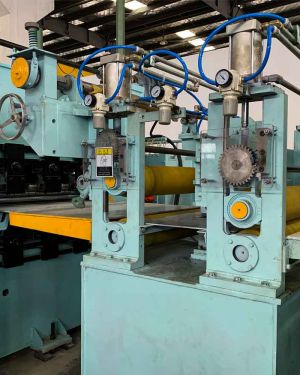
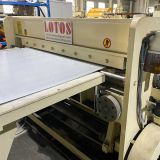
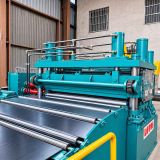
recoiler slitting line machine
In a coil processing operation, the quality of the finished coil depends on the final stage of the line as much as on the cutting itself. The recoiler, also called a rewinder, is the machine that winds slit strips back into tight, evenly layered coils. Without a properly engineered recoiler, even precisely slit strips can suffer from telescoping, edge damage, loose winding, or inconsistent coil shape.
What Is a Recoiler?
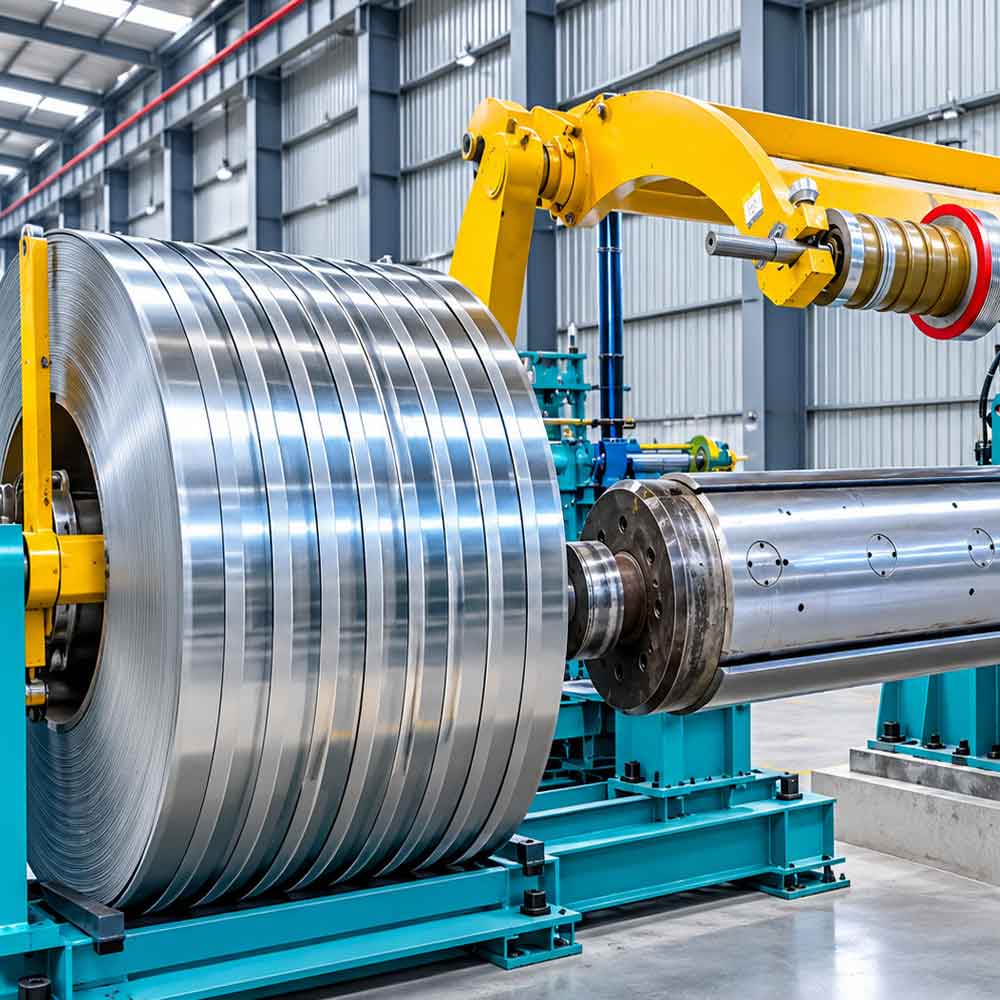
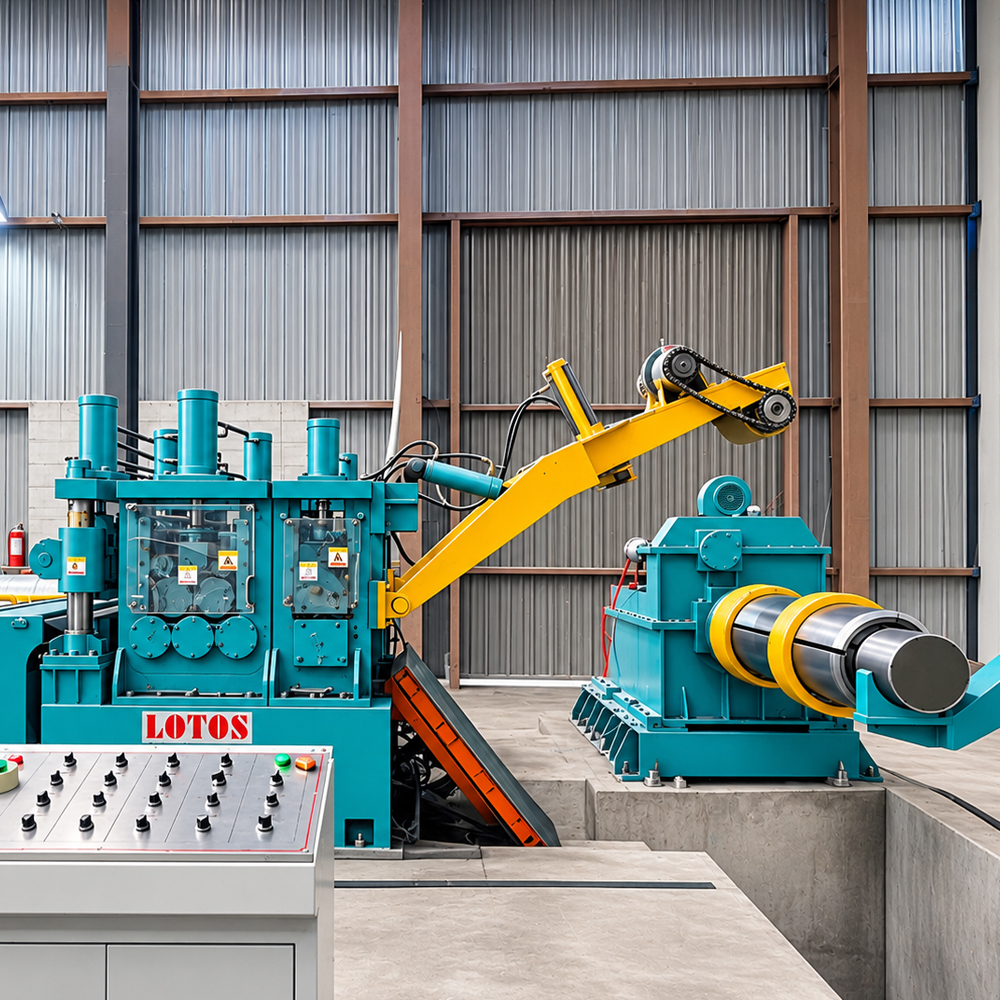
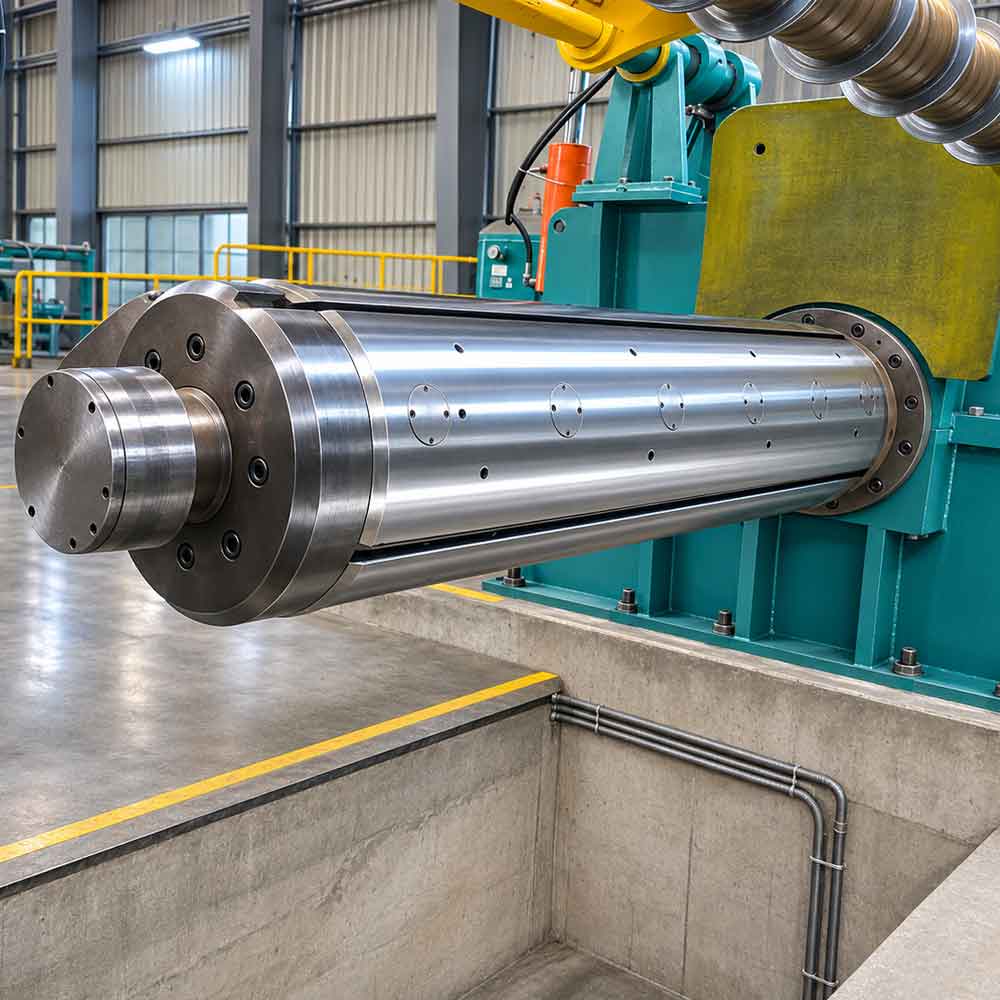
A recoiler is a mechanical unit installed at the exit end of a coil slitting line. It receives the individual strips produced by the slitter head and winds them onto a mandrel under controlled tension, producing finished coils ready for packaging, storage, or shipment.
Recoilers are used with a wide range of materials, including:
- Cold rolled and hot rolled steel
- Galvanized and pre-painted steel
- Stainless steel
- Aluminum and aluminum alloys
- Copper and brass
- Silicon steel
The Role of the Recoiler in a Slitting Line
A complete slitting line typically includes the following sequence:
- Decoiler (uncoiler), which feeds the master coil into the line
- Pinch roll and leveling unit, which prepares the strip
- Slitter head, which cuts the strip into the required widths
- Loop pit, which buffers the strip between slitting and winding
- Tension unit, which applies back tension to the slit strips
- Recoiler, which winds the slit strips into finished coils
The recoiler is the final process stage. Its performance directly determines the appearance, density, and handling characteristics of the product delivered to the customer.
Main Components of a Recoiler
1. Recoiler Mandrel
The mandrel is the rotating shaft on which the strip is wound. Most mandrels are expandable, allowing them to grip the coil’s inner diameter during winding and contract to release the finished coil. Mandrel design affects coil concentricity, load capacity, and ease of coil removal.
2. Drive System
An electric motor and gearbox drive the mandrel. Modern systems use AC or DC drives with closed-loop control to maintain consistent winding torque and speed as the coil diameter increases.
3. Separator (Separating Arm)
The separator, which usually consists of a shaft fitted with discs, keeps adjacent strips apart and guides them into the correct winding position. It prevents strips from crossing over one another and reduces the risk of edge damage.
4. Tension Unit
Positioned before the recoiler, the tension unit applies controlled resistance to the strips. Correct tension is essential for a tight, uniform wind, particularly when several strips of different widths are wound together.
5. Pressing Arm (Hold Down Arm)
The pressing arm, or snubber roll, presses lightly against the outer surface of the coil. It helps maintain winding tightness, restrains the strip tail, and improves coil shape at higher speeds.
6. Coil Car and Unloading Device
After winding, a hydraulic coil car removes the finished coils from the mandrel and transfers them for strapping or packaging. This reduces manual handling and improves workplace safety.
7. Outboard Support (Arbor Support)
For heavy coils or wide strips, an outboard bearing support steadies the free end of the mandrel, ensuring stability during winding and preventing deflection.
How a Recoiler Works
The recoiler operates in a clearly defined cycle:
- Threading: The leading edges of the slit strips are guided through the separator and attached to the mandrel.
- Mandrel expansion: The mandrel expands to secure the strip heads.
- Winding: The drive rotates the mandrel while the tension unit maintains consistent strip tension.
- Tension compensation: As the coil diameter grows, the control system adjusts the mandrel speed and torque so that line speed and tension remain stable.
- Completion: Once the coil reaches the target diameter or weight, the line decelerates and stops.
- Strapping and unloading: The coils are secured, the mandrel contracts, and the coil car removes the finished coils.
Types of Recoilers
Single Mandrel Recoiler
A single mandrel design is straightforward and economical. It suits lines with moderate production volumes where brief stoppages for coil removal are acceptable.
Double Mandrel (Dual Arm) Recoiler
A double mandrel recoiler uses two mandrels mounted on a rotating arm or a movable carriage. While one coil is being wound, the other is being unloaded and prepared, which reduces downtime and increases throughput.
Cantilever Recoiler
In a cantilever configuration, the mandrel is supported at one end only, allowing easy coil removal. This type is common in thin gauge strip applications.
Recoiler with Outboard Support
For heavy gauge or wide coil applications, outboard support increases mandrel rigidity and load bearing capacity.
Belt Wrapper Recoiler
A belt wrapper uses a belt wrapping mechanism to guide and secure the strip head onto the mandrel. This is particularly useful when handling thin or delicate materials.
Maintenance Recommendations
Regular maintenance prolongs recoiler service life and preserves coil quality:
- Inspect mandrel segments and expansion mechanisms for wear.
- Check hydraulic and pneumatic systems for leaks and pressure stability.
- Lubricate bearings, gearboxes, and guide components according to the manufacturer’s schedule.
- Calibrate tension sensors and drive controllers periodically.
- Examine separator discs for wear and replace them when necessary.
- Verify alignment between the recoiler, tension unit, and slitter head.
Advantages of a High Quality Recoiler
- Consistent coil shape and tight, even winding
- Reduced material waste and fewer customer rejections
- Higher line speeds with stable tension control
- Improved operator safety through automated coil handling
- Reduced downtime, particularly with double-mandrel configurations
- Better surface protection for sensitive materials
Conclusion
The recoiler is a decisive component of any slitting line. By winding slit strips under controlled tension into uniform, stable coils, it protects the quality achieved during cutting and prepares the product for downstream handling and delivery. Selecting a recoiler with the correct mandrel design, drive capacity, and tension control for the intended material and production volume is essential to achieving reliable, efficient, and high quality coil processing.
For tailored recoiler solutions matched to your material specifications and production requirements, please contact the LotosSlitting team for technical consultation.
FAQ:
Yes, the terms are used interchangeably in the coil processing industry.
The separator keeps adjacent strips apart and guides them into the correct winding position to prevent crossover and edge damage.
Telescoping is typically caused by uneven strip tension or poor strip alignment during winding.
The pressing arm applies light pressure to the coil surface to maintain winding tightness and improve coil shape at higher speeds.
A double-mandrel recoiler allows one coil to be unloaded while the next is being wound, which reduces downtime and increases productivity.