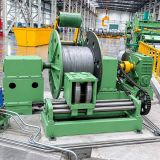
Coil Leveling Machine for Slitting Lines
In modern metal processing, the quality of slit strips depends heavily on the condition of the incoming coil. Steel, stainless steel, aluminum, and coated materials carry residual stresses from rolling, coiling, and storage. If these stresses are not corrected before slitting, they produce edge wave, center buckle, camber, and coil set, all of which reduce the precision of the finished product.
A coil leveling machine is a precision flattening unit integrated into a slitting line to correct these defects. Positioned ahead of the slitter head, it relieves internal stress and delivers a flat, stable strip to the slitting section.
What Is a Coil Leveling Machine?
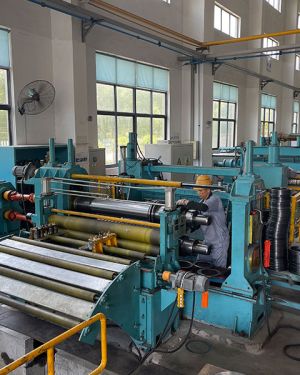
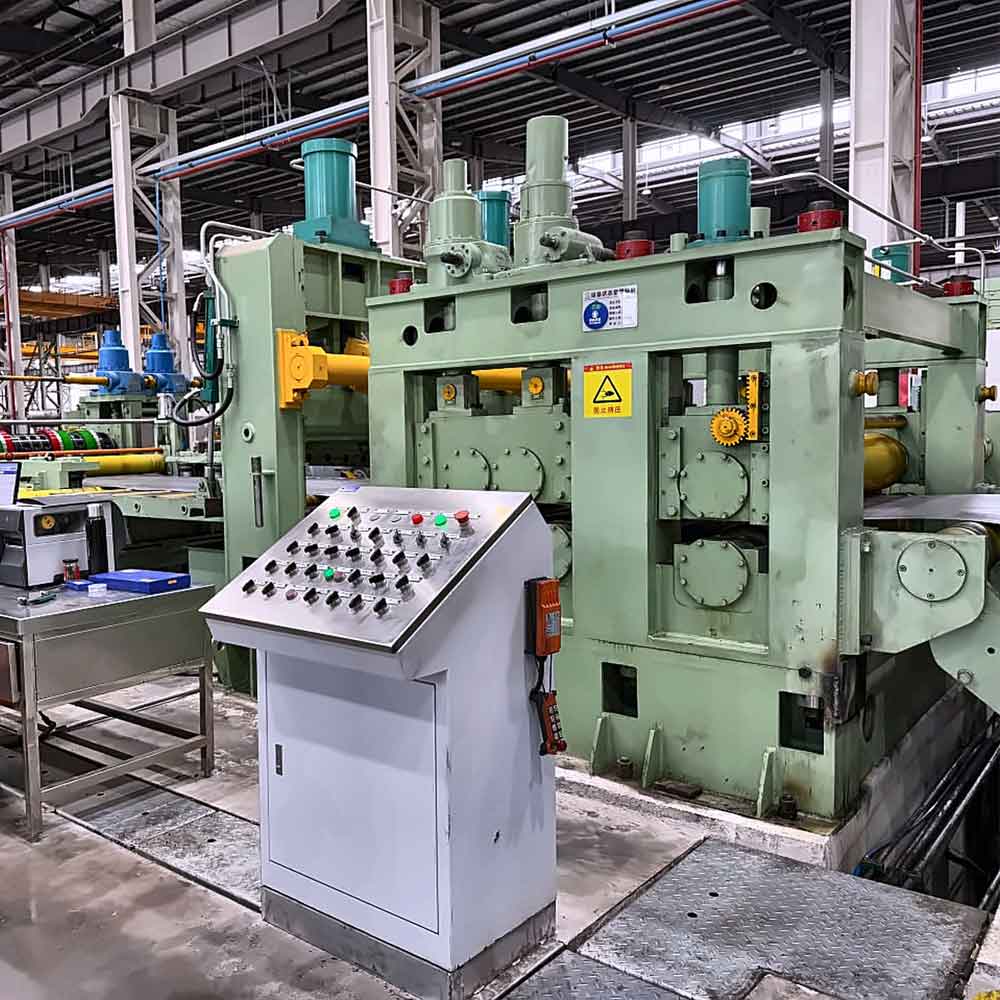
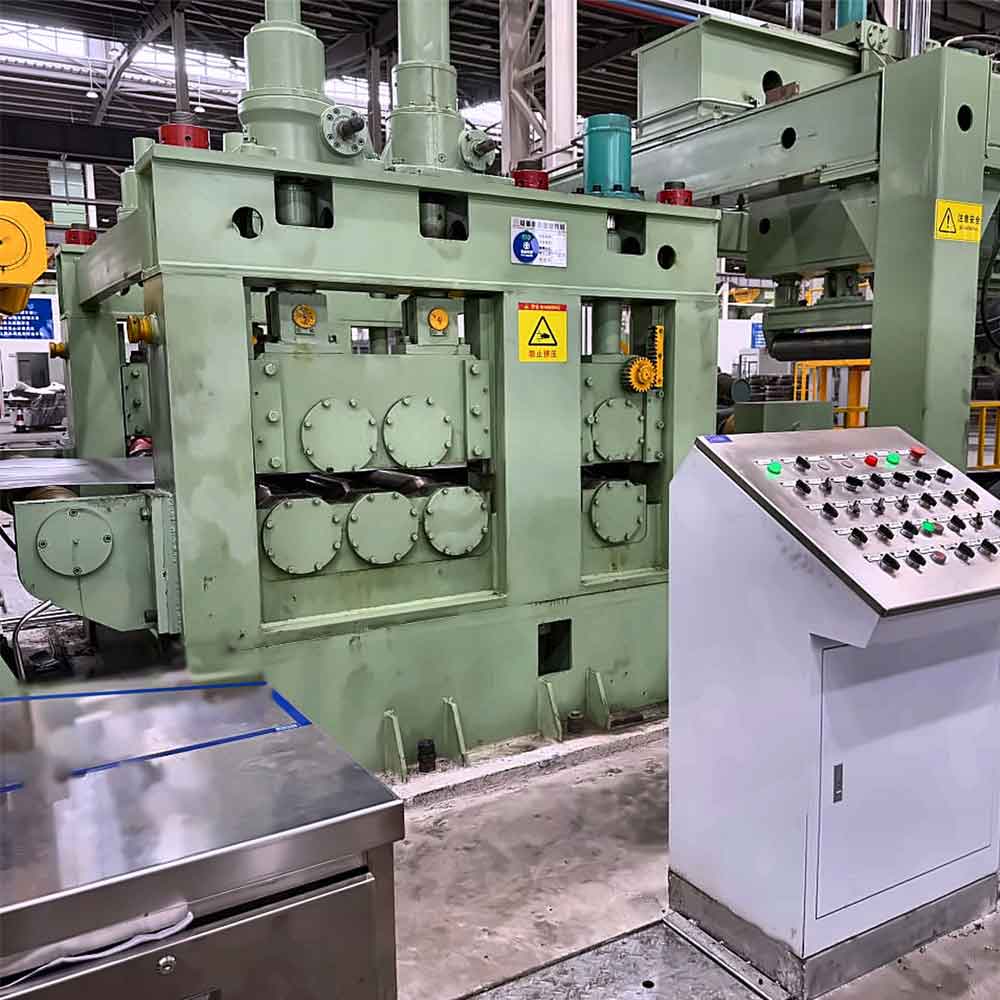
A coil leveling machine, also called a leveler or strip straightener, is a mechanical device that passes metal strip through a series of staggered work rolls. The rolls impose alternating bending cycles on the material, which plastically deforms the strip in a controlled manner and removes residual stress. The result is a strip free from coil set, crossbow, and shape irregularities.
In a slitting line, the leveler is normally installed between the decoiler (uncoiler) and the slitter head, often after the pinch roll and entry guiding system.
Benefits for Slitting Operations
- Improved slit width accuracy through stable strip geometry.
- Cleaner edges with reduced burr and edge cracking.
- Better recoiling quality, with straight and uniform coil edges.
- Extended knife life, since uniform strip contact reduces uneven tool wear.
- Higher line speed due to stable feeding and tracking.
- Consistent material properties for downstream stamping, roll forming, and welding.
Working Principle
The leveling process is based on the elastic plastic deformation of the strip. As the material passes through the upper and lower work rolls, it is bent alternately up and down. The bending intensity is highest at the entry rolls and decreases progressively toward the exit rolls.
- Entry rolls apply the greatest penetration, producing plastic deformation across the full thickness of the strip.
- Intermediate rolls reduce the penetration gradually, equalizing fiber elongation across the width.
- Exit rolls apply minimal penetration, leaving the strip flat with controlled residual stress.
Because the longer fibers are stretched more than the shorter fibers during repeated bending, the differences in strip length across the width are equalized, and flatness is restored.
Main Structure and Components
Work Rolls
Work rolls are forged from high grade alloy steel, such as GCr15 or 42CrMo, then heat treated, ground, and hard chrome plated. They are manufactured in small diameters to achieve effective bending at low penetration depths.
Backup Rolls
Backup rolls support the work rolls and prevent deflection under load. Multiple rows of backup rolls are installed across the machine width, allowing uniform pressure distribution and precise flatness control.
Frame Structure
A rigid welded steel frame, stress-relieved and machined, ensures stable alignment under high leveling forces. Frame rigidity is a decisive factor in leveling accuracy and long-term machine reliability.
Roll Adjustment System
- Entry and exit gap adjustment, performed manually, by motor, or hydraulically.
- Tilt adjustment to correct edge wave and center buckle independently.
- Crown or bending adjustment for width-direction compensation.
Drive System
A gear reducer and universal joint shaft assembly, driven by an AC servo or variable frequency motor, transmits torque to the work rolls. Synchronized drive ensures consistent roll speed and material feed.
Quick Change Roll Cassette
On advanced models, the roll assembly is housed in a removable cassette that can be exchanged rapidly, reducing downtime during maintenance or when changing between material thicknesses.
Control System
A PLC with touchscreen interface stores leveling parameters for different material grades, thicknesses, and widths, providing repeatable setups and reducing operator dependency.
Types of Leveling Machines for Slitting Lines
Precision Roller Leveler (Multi Roll Leveler)
This is the standard configuration for slitting lines. It typically contains 7 to 19 work rolls and is suitable for light to medium gauge material. A higher roll count provides superior flatness and stress relief.
Four High Leveler
The four-high design adds a second row of backup rolls, offering greater rigidity for thick, high-strength steel and wide-width material.
Cassette Type Leveler
The cassette design permits rapid roll set replacement, making it well suited to lines that handle a wide range of materials and thicknesses.
Combined Leveler-Feeder
This integrated unit combines leveling and feeding functions and is more common in cut to length and blanking applications, but it is also used in compact slitting systems.
Factors Affecting Leveling Quality
- Material thickness and yield strength. Higher strength material requires greater leveling force and a larger roll diameter.
- Work roll diameter and pitch. Smaller rolls improve leveling of thin material, while larger rolls are needed for heavy gauge strip.
- Number of rolls. More rolls provide a more gradual stress reduction and better flatness.
- Roll penetration setting. Incorrect penetration leaves residual curvature or introduces new defects.
- Strip tension and line speed. Excessive speed or tension variation can compromise flatness.
- Roll surface condition. Worn, scratched, or contaminated rolls transfer marks to the strip surface.
Selection Criteria
When selecting a coil leveling machine for a slitting line, the following points should be assessed:
- Material range: Define minimum and maximum thickness, width, and yield strength.
- Material type: Carbon steel, stainless steel, aluminum, galvanized, pre-painted, and other coated materials have different surface sensitivity requirements.
- Required flatness tolerance: Determine the downstream product requirements.
- Line speed: The leveler must support the full production speed of the line.
- Roll configuration: Select roll count and diameter according to material thickness.
- Surface protection: For aluminum and coated strip, consider backup roll design, roll material, and surface finish to prevent marking.
- Automation level: Evaluate PLC recipe storage, motorized adjustment, and quick-change capability.
- Supplier support: Confirm engineering capability, installation, commissioning, and after-sales service.
Installation Position in the Slitting Line
A typical slitting line layout is arranged as follows:
- Coil car
- Decoiler (uncoiler) with hold-down arm
- Pinch roll and shear (head and tail cutting)
- Coil leveling machine
- Loop pit or looping bridge
- Slitter head with circular knives
- Scrap winder
- Tension stand
- Recoiler
Placing the leveler before the slitter head allows the strip to enter the slitting section flat and stress-balanced, which is essential for narrow-width slitting and thin material.
Maintenance and Operation Recommendations
- Inspect work rolls and backup rolls regularly for wear, pitting, and surface damage.
- Maintain lubrication of bearings, gearboxes, and universal joints according to the schedule.
- Check roll alignment and parallelism periodically, especially after roll replacement.
- Keep strip surfaces clean to prevent debris from damaging roll surfaces.
- Record leveling parameters for each material grade to ensure repeatable setups.
- Replace worn components promptly to avoid deterioration in flatness quality.
- Train operators on proper penetration adjustment and defect identification.
Applications
Coil leveling machines for slitting lines are widely used in processing:
- Hot rolled and cold rolled steel coil
- Stainless steel coil
- Galvanized and galvalume coil
- Pre-painted (PPGI/PPGL) coil
- Aluminum and aluminum alloy coil
- Copper and brass strip
- High-strength steel (HSLA, AHSS)
These materials serve the automotive, construction, appliance, electrical, packaging, and transformer lamination industries.
Conclusion
A coil leveling machine is a critical component of a high performance slitting line. By correcting coil set, edge wave, center buckle, and residual stress before slitting, it improves slit strip accuracy, edge quality, recoiling consistency, and overall line productivity. Selecting the correct roll configuration, rigidity, and control system for the intended material range ensures long-term, reliable operation.
LotosSlitting supplies precision coil leveling machines engineered for integration with complete slitting line solutions. For specifications, configuration advice, or a customized quotation, please contact our engineering team.
FAQ :
It is normally positioned between the decoiler (with pinch roll and shear) and the slitter head, ahead of the loop pit.
The strip passes through staggered upper and lower work rolls that bend it alternately, with penetration decreasing from entry to exit to equalize fiber length.
Most precision levelers use 7 to 19 work rolls, with a higher roll count giving better flatness for thinner or more demanding material.
Inspect rolls regularly, keep bearings and universal joints lubricated, check roll alignment, and keep the strip surface clean.
A coil leveling machine is a roller-based unit installed before the slitter head that flattens the strip and removes coil set, edge wave, and residual stress.