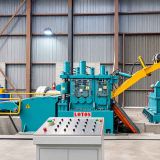
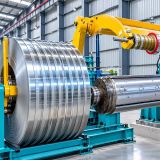
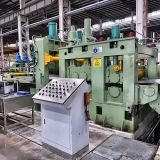
Tension Stand for Slitting Lines
In coil slitting operations, the quality of the finished coil depends heavily on how consistently the strip is tensioned before winding. The tension stand is the machine that applies controlled back tension to the slit strips as they travel toward the recoiler. Without proper tension control, strips may wind loosely, shift sideways, or suffer surface damage, resulting in telescoped coils and rejected product.
What Is a Tension Stand?
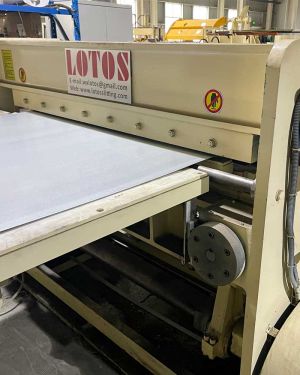
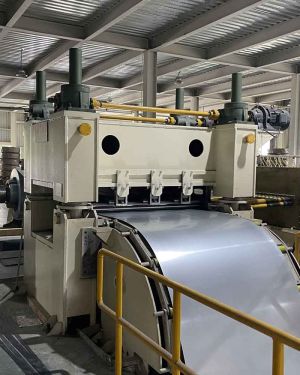
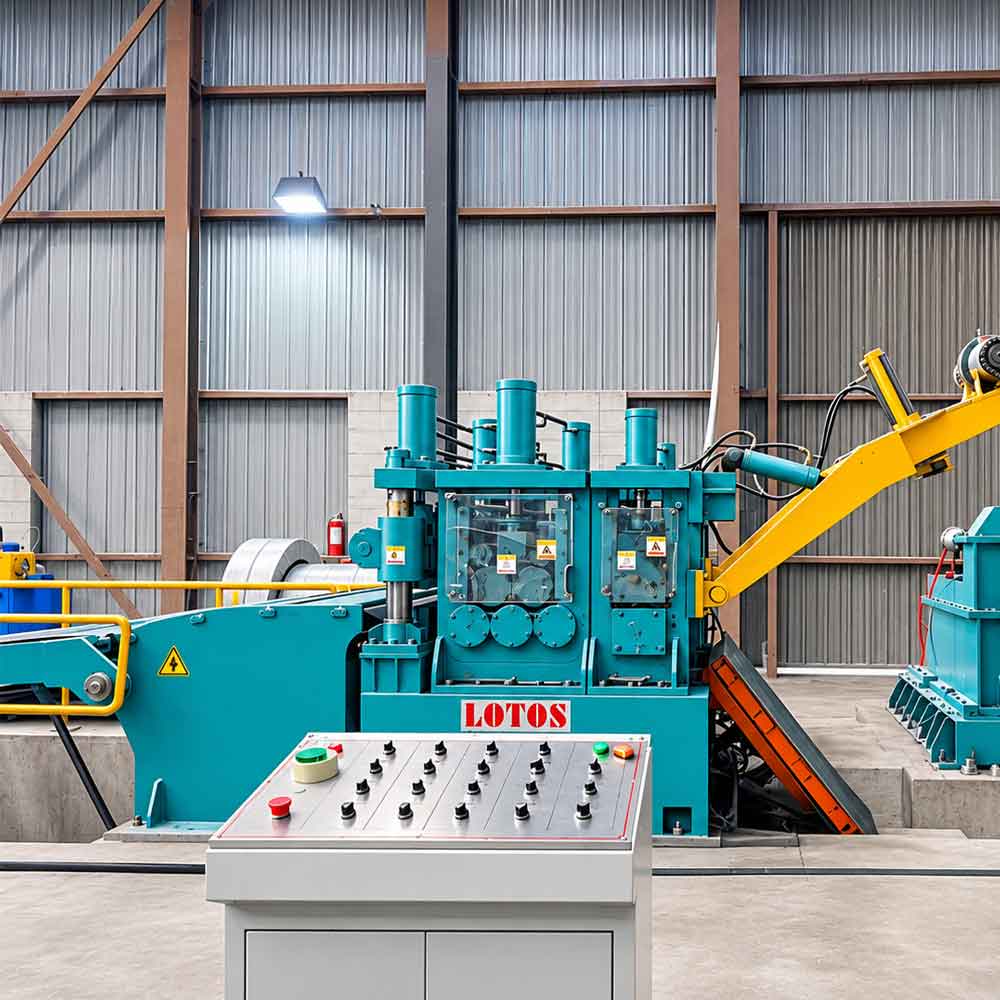
A tension stand, also known as a tension unit or strip tensioner, is a mechanical assembly installed between the slitter head (or loop pit) and the recoiler. Its purpose is to apply uniform resistance to each slit strip so that the recoiler can wind the strips tightly and evenly.
Tension stands are suitable for a wide range of materials, including:
- Cold rolled and hot rolled steel
- Galvanized and pre-painted steel
- Stainless steel
- Aluminum and aluminum alloys
- Copper and brass
- Silicon steel
The Role of the Tension Stand in a Slitting Line
A typical slitting line operates in the following sequence:
- Decoiler, which feeds the master coil into the line
- Pinch roll and leveler, which prepare the strip
- Slitter head, which cuts the strip to the required widths
- Loop pit, which buffers the strip between slitting and winding
- Tension stand, which applies back tension to the slit strips
- Recoiler, which winds the strips into finished coils
The tension stand ensures that the strips arrive at the recoiler under stable and controlled tension, which is a prerequisite for high quality coil formation.
Why Strip Tension Matters
Correct tension delivers several measurable benefits:
- Tight, uniform coil winding with consistent density
- Straight strip travel, which reduces edge misalignment
- Prevention of telescoping, loose layers, and coil collapse
- Reduced surface scratches caused by strip-to-strip friction
- Stable line speed, even at high production rates
Main Components of a Tension Stand
1. Tension Rolls (Pressure Rolls)
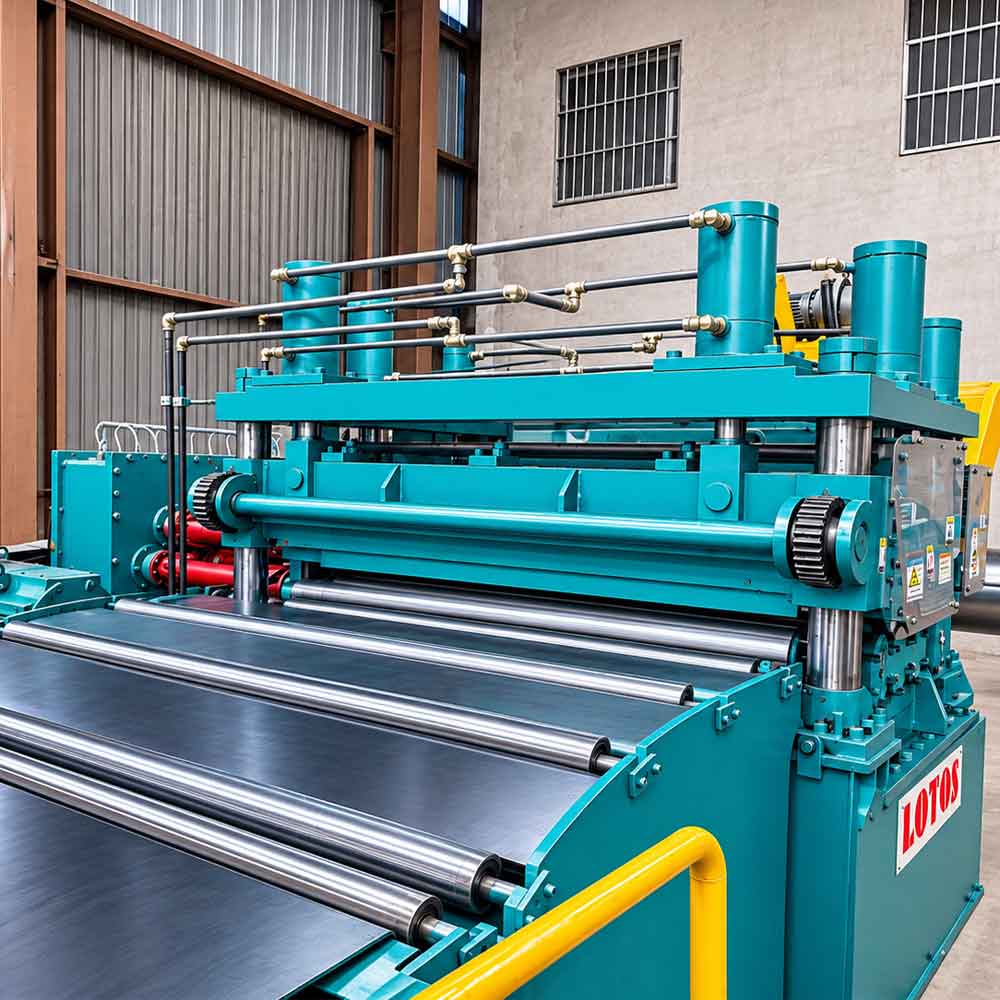
The strips pass between upper and lower rolls that grip the material and generate the required drag. Roll surfaces are usually polished or coated to protect sensitive finishes.
2. Braking System
Tension is generated by an electric, hydraulic, or pneumatic brake connected to the lower roll shaft. The brake converts mechanical energy into controlled resistance, allowing precise adjustment of tension force.
3. Pressing (Clamping) Mechanism
A hydraulic or pneumatic cylinder presses the upper roll against the strip. Adjustable pressure ensures reliable grip across varying strip thicknesses.
4. Separator Plates or Discs
Separators keep neighboring strips apart as they pass through the unit, preventing crossover and edge damage.
5. Strip Guide Rollers and Entry Table
These components direct the strips accurately into the tension unit and maintain correct alignment with the slitter head and recoiler.
6. Drive and Control System
Modern tension stands use closed-loop control to monitor tension and adjust braking torque automatically. This supports stable performance during acceleration, deceleration, and changes in coil diameter.
7. Frame and Base Structure
A rigid welded steel frame provides the stability required to withstand vibration and the high forces generated at the tension rolls.
How a Tension Stand Works
The operating cycle follows a clear sequence:
- Threading: The slit strips are guided through the separator and between the tension rolls.
- Clamping: The pressing mechanism closes the upper roll onto the strips with the selected pressure.
- Tension generation: The brake applies resistance to the lower roll, creating back tension in the strips.
- Continuous regulation: The control system maintains the set tension as line speed and coil diameter change.
- Release: At the end of the run, the pressing mechanism opens, allowing the strip tails to clear the unit.
Types of Tension Stands
Roll Type Tension Stand
The most common design, in which strips pass between a pair of rolls driven against a brake. It suits a broad range of strip thicknesses and widths.
Bridle Type Tension Stand
Bridle units use multiple rolls and wrap angles to generate higher tension with lower pressure, which is advantageous for thin or delicate materials.
Pad Type (Friction Pad) Tension Unit
Strips pass between pressure pads, typically lined with felt or other soft material, to generate drag. This design is used for lightweight strips and surface-sensitive materials.
Hydraulic Tension Stand
Hydraulic systems offer smooth, adjustable control and are well suited to heavy gauge applications that demand high tension forces.
Electric (Motor-Driven) Tension Stand
Motor driven units provide precise, programmable tension control and integrate easily with automated slitting lines.
Maintenance Recommendations
Regular maintenance preserves tension accuracy and extends service life:
- Inspect tension rolls for wear, scoring, and contamination.
- Check the brake system for consistent torque output.
- Examine hydraulic and pneumatic circuits for leaks and pressure stability.
- Lubricate bearings and moving components according to the manufacturer’s schedule.
- Calibrate tension sensors and controllers periodically.
- Verify alignment between the slitter head, tension stand, and recoiler.
Advantages of a High-Quality Tension Stand
- Consistent and adjustable strip tension
- Improved coil shape and winding density
- Reduced scrap and fewer customer complaints
- Protection of surface-sensitive materials
- Stable operation at high line speeds
- Reliable integration with modern automated slitting lines
Conclusion
The tension stand is a critical component of any slitting line, ensuring that slit strips reach the recoiler under uniform and controlled tension. By selecting a tension stand with the appropriate roll design, braking system, and control capability for the intended material and production volume, manufacturers can achieve tight, stable coils and dependable line performance.
For tailored tension stand solutions matched to your material specifications and production requirements, please contact the LotosSlitting team for technical consultation.
FAQ:
Insufficient or uneven tension can cause telescoping, loose coils, strip crossover, edge damage, and surface scratches.
Separator plates keep adjacent strips apart to prevent crossover and edge damage.
Maintenance should follow the manufacturer’s schedule, including regular inspection of rolls, brakes, hydraulic systems, and tension sensors.
It is installed between the slitter head (or loop pit) and the recoiler.
It maintains uniform strip tension, which prevents telescoping, loose coils, and strip misalignment during winding.