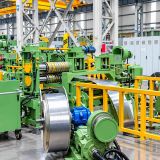
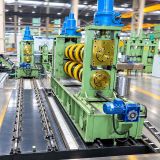
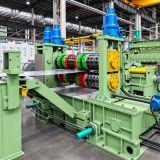
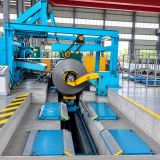
Single Slitter Head and Double Slitter Head Explained
The slitter is the central machine unit in any coil slitting line. It converts a wide master coil into several narrower strips by shearing the material between pairs of rotating circular knives. The accuracy of the slitter determines strip width, edge quality, burr height, and the overall consistency of the finished coils.
Two main configurations are used in industry: the single slitter head and the double slitter head. Each offers distinct advantages in productivity, flexibility, and investment cost.
What Is a Slitter?
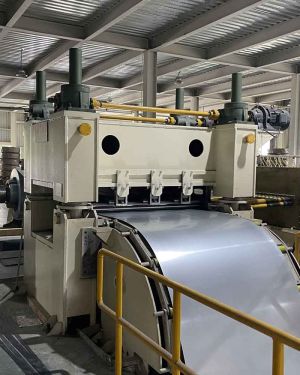
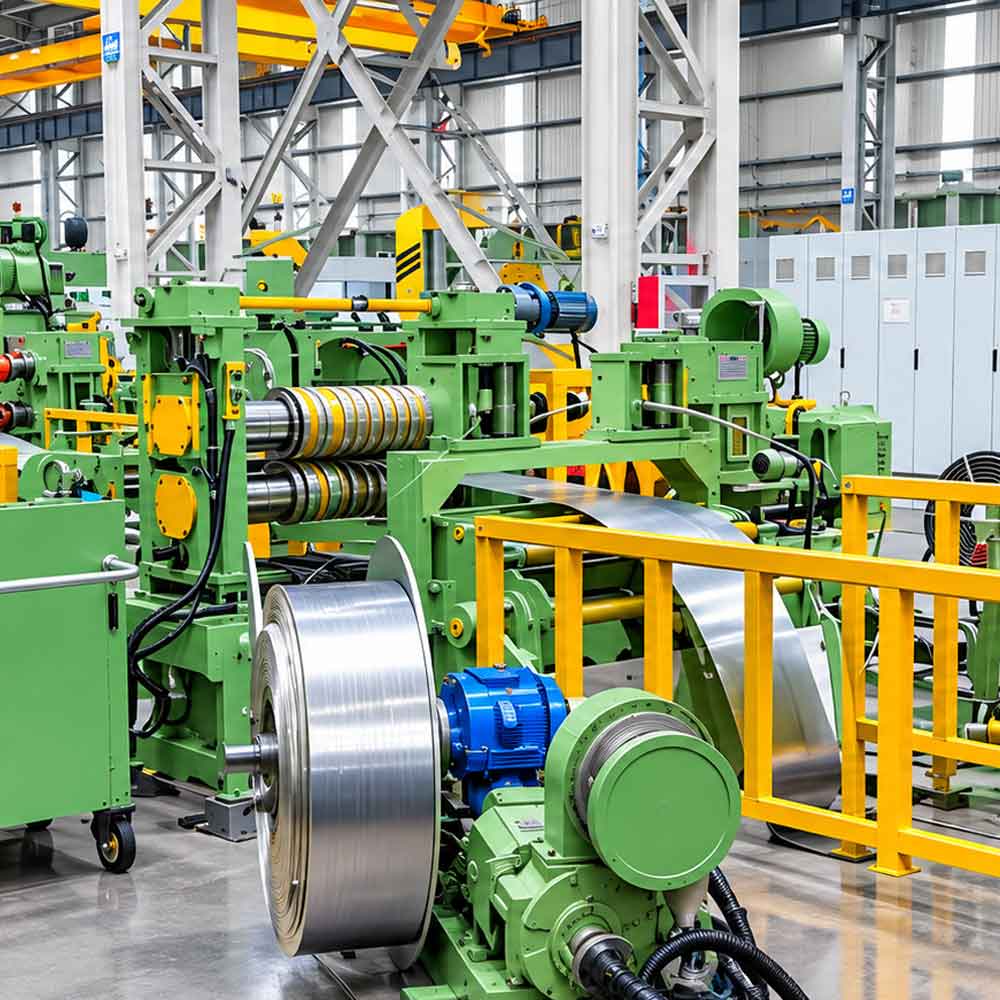
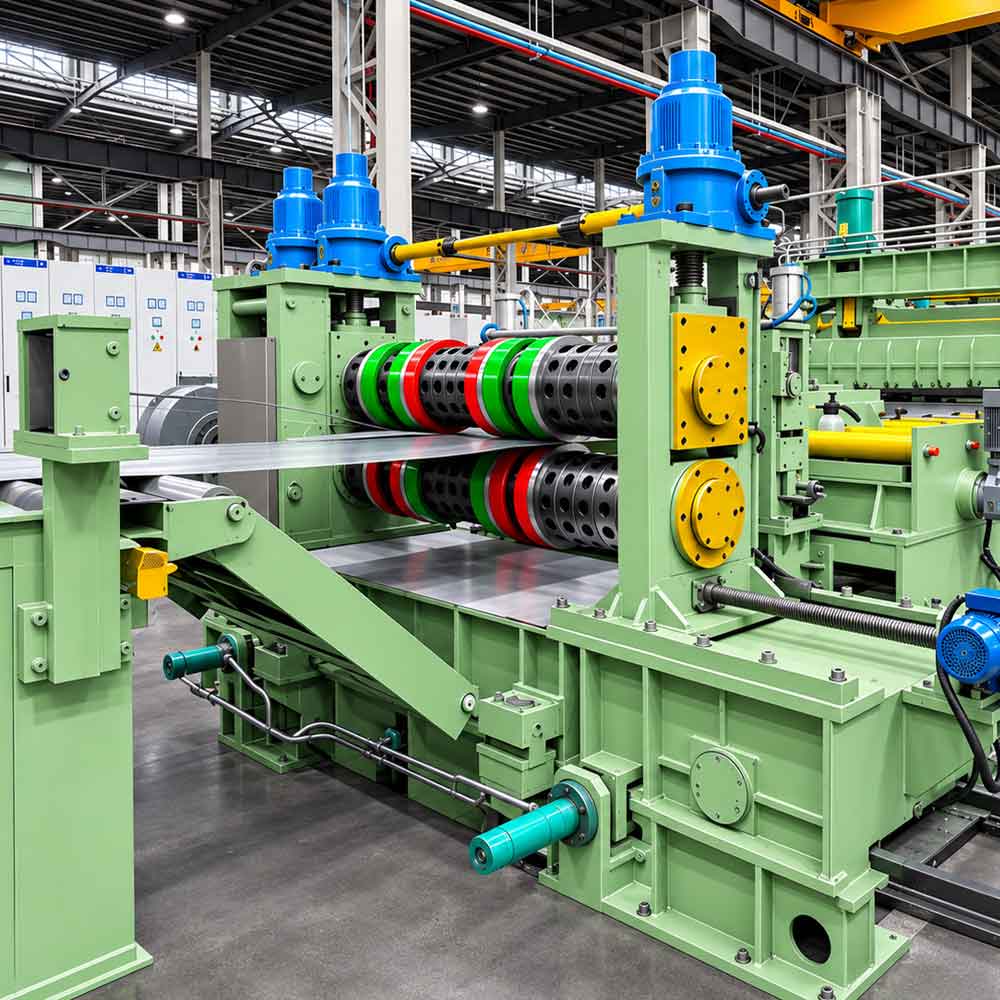
A slitter is a machine unit consisting of a rigid housing, a pair of parallel arbors (upper and lower), circular knives, and spacers that set the strip width. As the strip passes between the knives, the material is sheared along defined lines, producing multiple strips simultaneously.
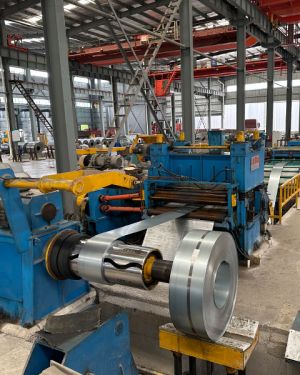
The slitter typically works as part of a complete slitting line comprising a coil car, decoiler, entry guide, slitter, loop pit, separator, tension unit, and recoiler. Its performance is influenced by the quality of the preceding and following units, particularly strip guiding and tension control.
How a Slitter Works
The slitting process follows these principles:
- The strip is fed into the slitter under controlled tension.
- The upper and lower arbors rotate in opposite directions, driving the knives at a speed synchronized with the strip.
- Each upper knife overlaps its lower counterpart by a defined amount, called overlap, with a small gap between them, called clearance.
- The material is sheared as it passes between the knife edges, forming strips of the width determined by the knife and spacer arrangement.
- Edge trim, if produced, is directed to a scrap winder or chopper.
Correct clearance and overlap are essential for clean cutting. Excessive clearance results in high burrs and rough edges, while insufficient clearance increases cutting force and accelerates knife wear.
Main Components of a Slitter
Arbors
Arbors are hardened and precision-ground shafts that carry the knives and spacers. Minimal run-out and high rigidity are essential for accurate strip width.
Circular Knives
Knives are made from tool steel or carbide and ground to tight tolerances. Material hardness and coating are selected according to the material being processed.
Spacers
Spacers, including rubber or polyurethane rings, define strip width and help control the strip during cutting. Their thickness tolerance directly influences width accuracy.
Slitter Housing and Frame
A rigid frame resists deflection under cutting force and maintains consistent knife alignment.
Drive System
An electric motor with a gearbox drives the arbors at a speed synchronized with the line. Stable, smooth drive characteristics prevent cutting irregularities.
Knife Positioning System
Positioning may be manual, motorized, or fully automatic. Automatic systems reduce setup time and improve repeatability.
Side Guides and Strip Guiding
Side guides center the strip as it enters the knives, reducing camber and width variation.
Single Slitter Head
A single slitter head is equipped with one set of arbors, knives, and spacers.
Characteristics
- One arbor assembly is mounted permanently in the slitter housing.
- Knife and spacer changes are performed directly on the machine.
- The structure is simple, compact, and economical.
Advantages
- Lower investment cost compared with double head designs
- Simpler structure and easier maintenance
- Straightforward operation and shorter operator training
- Well suited to repetitive production with infrequent width changes
Limitations
- Longer changeover time, since the line must stop while knives and spacers are rearranged
- Lower productivity in applications with frequent width changes
Typical Applications
- Service centers with stable, repetitive slitting orders
- Dedicated production of a limited range of strip widths
- Operations with lower daily output or limited budget
Double Slitter Head
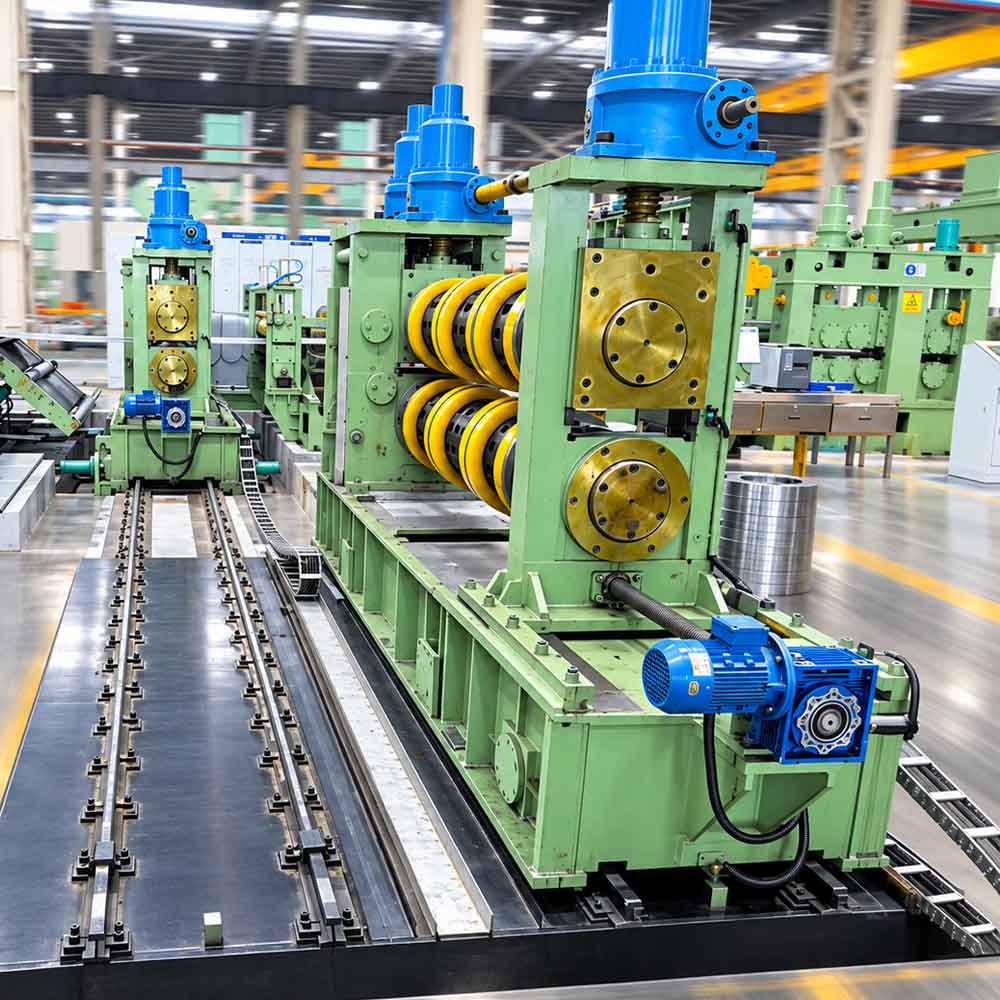
A double slitter head is equipped with two complete arbor assemblies, mounted on a common base, usually on a rotating or sliding platform.
Characteristics
- While one arbor set is in production, the second set is prepared offline with the knives and spacers for the next job.
- When the current job is complete, the platform is rotated or shifted, and the prepared head is brought into position.
- The next production run can begin almost immediately.
Advantages
- Significantly shorter changeover time, often reduced from tens of minutes to a few minutes
- Higher productivity, particularly in high-mix production
- Improved setup accuracy, since knives and spacers are prepared in a controlled environment without time pressure
- Reduced operator exposure to hazards during knife handling
- Better knife management with dedicated setups for recurring jobs
Limitations
- Higher initial investment than a single head
- Larger footprint and more complex structure
- Additional arbor and knife sets are required
Typical Applications
- Service centers with frequent changes in strip width and material
- High volume operations where uptime is critical
- Production of customized orders and small batches
- Plants processing a wide range of materials and thicknesses
Factors That Influence Slitter Performance
Rigidity and Accuracy of the Arbors
Arbor deflection and run out reduce width accuracy and edge quality. High quality bearings and precisely ground shafts are essential.
Knife Quality and Maintenance
Sharp, properly ground knives with accurate thickness provide clean cuts and stable strip width. Regular inspection and regrinding preserve cutting geometry.
Clearance and Overlap Settings
These settings should be adjusted according to material thickness, tensile strength, and hardness.
Tension Control
Stable tension before and after the slitter protects strip quality and prevents telescoping during recoiling.
Strip Guiding
Accurate centering and guiding reduce camber and width deviation.
Material Condition
Variations in coil thickness, flatness, and edge condition affect slitting results. Incoming coil inspection supports consistent output.
Materials and Applications
Slitters process a wide variety of coil materials, including:
- Hot rolled and cold rolled steel
- Galvanized and pre-painted steel
- Stainless steel
- Aluminum and non-ferrous strip
- Electrical steel (silicon steel)
Typical applications include:
- Steel service centers
- Roll forming and tube manufacturing feedstock
- Automotive and appliance components
- Electrical transformer and motor laminations
- Building materials and roofing
- Packaging and general fabrication
How to Choose Between a Single and a Double Slitter Head
Consider the following questions:
- How often will strip widths change? Frequent changes favor a double head.
- What is the expected production volume? Higher output justifies the investment in reduced downtime.
- What is the available budget? A single head offers a lower entry cost.
- How much floor space is available? Double heads require more space.
- What are the required tolerances? Offline preparation in double heads can improve repeatability.
- How many operators are available? Double heads reduce workload during changeovers.
As a general guideline, producers with stable orders and limited budgets may prefer a single head, while service centers serving diverse customers typically benefit from a double head.
Maintenance Recommendations
- Inspect knives regularly for wear, chipping, and edge condition.
- Regrind or replace knives before cutting quality deteriorates.
- Measure knife and spacer thickness to maintain stack tolerance.
- Check arbor run-out and bearing condition on a scheduled basis.
- Lubricate drives and bearings according to the manufacturer’s instructions.
- Keep the slitter and surrounding area clean to avoid surface damage to the strip.
- Document successful setups for each material and thickness.
Why Choose LotosSlitting Slitters
- Robust design: Rigid frames and precision ground arbors support stable, accurate cutting.
- Flexible configurations: Single and double slitter head options match your production needs.
- Optional automation: Motorized and automatic knife positioning reduce setup time.
- Reliable components: Quality bearings, drives, and controls ensure long service life.
- Complete line integration: Slitters are designed to operate with LotosSlitting decoilers, loop pits, separators, tension units, and recoilers.
- Technical support: Our engineers assist with selection, installation, training, and service.
Conclusion
The slitter is the heart of every slitting line, and the choice between a single and a double slitter head has a direct impact on productivity, flexibility, and cost. A single slitter head provides a simple and economical solution for stable production, while a double slitter head offers faster changeovers and higher output for demanding, high-mix operations. By considering production volume, changeover frequency, budget, and quality requirements, producers can select the configuration that delivers the best return on investment.
For specifications, technical consultation, or a customized quotation, please contact the LotosSlitting team with your material, thickness, width range, and production requirements.
FAQ: