How Does a Slitting Line Work?
Steel processing industries require high precision and efficiency when converting wide steel coils into narrower strips for downstream manufacturing. A slitting line is one of the most important pieces of equipment used in steel service centers, tube mills, roll forming factories, automotive production, and appliance manufacturing. Understanding how a slitting line works can help manufacturers optimize production quality, reduce material waste, and improve operational efficiency.
What Is a Slitting Line?
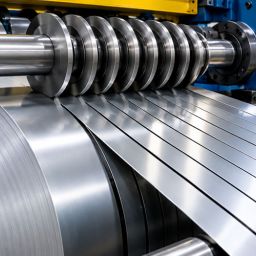
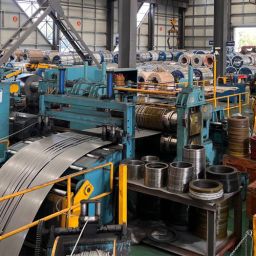
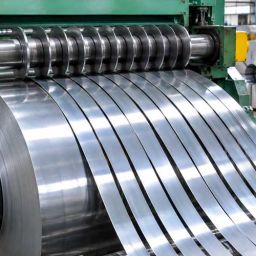
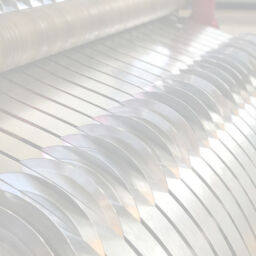
A slitting line is an automated production system designed to cut a master steel coil into multiple narrower coils of specified widths. The process is performed by a set of precision circular knives mounted on slitting shafts. After slitting, the narrow strips are rewound into individual coils for further processing.
Modern slitting lines can process various materials, including:
- Carbon Steel
- Stainless Steel
- Galvanized Steel
- Aluminum
- Silicon Steel
- Pre-painted Steel (PPGI)
Depending on material thickness, slitting lines are generally classified as light gauge, medium gauge, and heavy gauge slitting lines.
Main Components of a Slitting Line
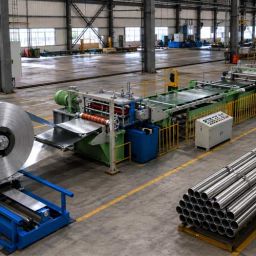
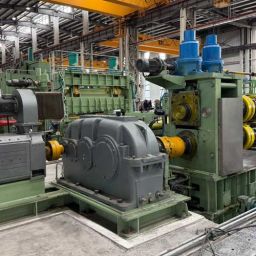
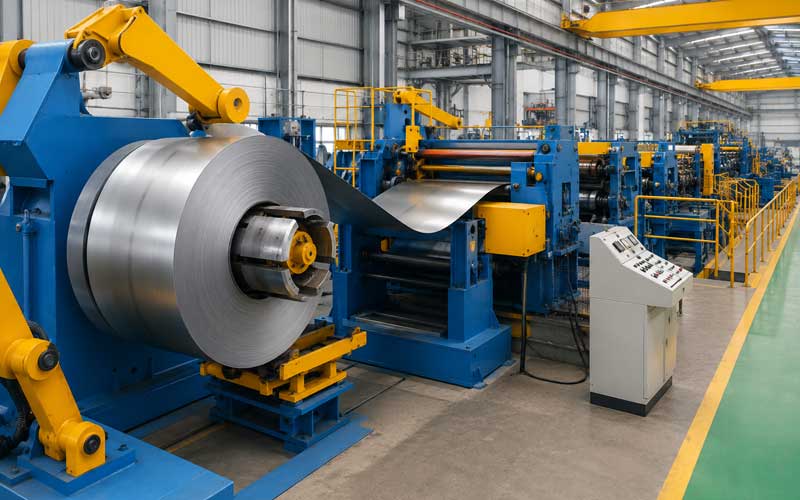
A complete slitting production line consists of several integrated sections working together to ensure smooth and accurate processing.
1. Coil Loading Car
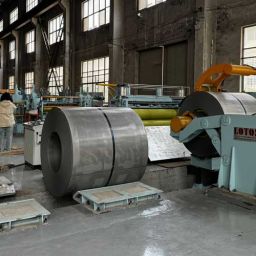
The loading car transports the master coil to the decoiler station. Hydraulic lifting mechanisms position the coil accurately before processing begins.
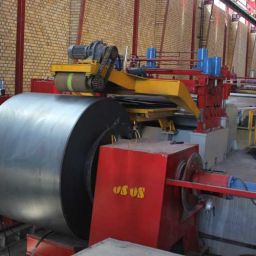
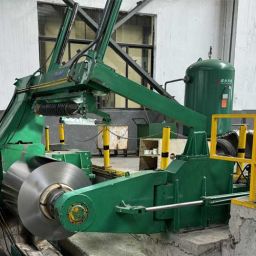
2. Hydraulic Decoiler
The decoiler supports and unwinds the steel coil. Hydraulic expansion of the mandrel securely holds the coil while allowing smooth rotation during feeding.
3. Coil Head Opener and Pinch Roll
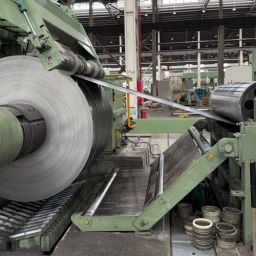
The leading edge of the coil is guided into the production line. Pinch rolls grip the material and feed it forward into the leveling section.
4. Leveling Machine
The leveler removes coil set, crossbow, and surface irregularities. This ensures the material enters the slitting machine in a flat and stable condition.
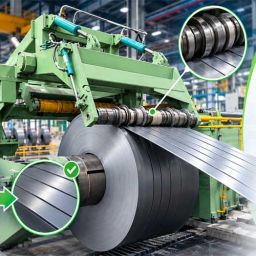
5. Slitting Machine
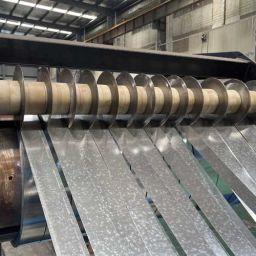
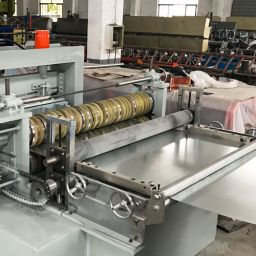
The slitter is the core component of the entire line. It contains upper and lower arbors equipped with circular knives and spacers.
As the steel strip passes through the rotating knives, it is divided into multiple narrower strips according to the required widths. Proper knife setup and clearance are essential for achieving clean edges and minimizing burr formation.
6. Scrap Winding System
During slitting, edge trim material is generated. The scrap winding system continuously collects these edge strips, maintaining a clean production environment and preventing line interruptions.
7. Tension Station
The tension station applies controlled tension to the slit strips. Maintaining uniform tension is critical for preventing strip wandering, telescoping, and coil deformation during recoiling.
8. Separator and Recoiler
After passing through the tension section, the slit strips enter the recoiler. Separator discs guide each strip into its proper position while the recoiler rewinds the strips into finished coils.
9. Coil Unloading Car
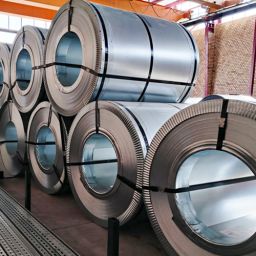
The finished slit coils are removed from the recoiler and transferred for packaging, storage, or further manufacturing processes.
Step by Step Slitting Process
Step 1: Coil Loading
The master coil is placed onto the decoiler using the loading car or overhead crane.
Step 2: Coil Feeding
The strip is fed through the pinch rolls and leveling section.
Step 3: Slitting Operation
The material enters the slitter where multiple rotary knives cut the coil into narrower strips.
Step 4: Scrap Collection
Edge trim is automatically collected by the scrap winding system.
Step 5: Tension Control
The slit strips pass through the tension station to maintain stability and proper strip alignment.
Step 6: Recoiling
The separated strips are rewound into finished coils with controlled tension.
Step 7: Coil Discharge
Finished coils are unloaded and prepared for transportation or secondary processing.
Advantages of Modern Slitting Lines
High Production Efficiency
Modern slitting lines can operate at speeds exceeding 120 m/min, significantly increasing productivity.
Excellent Slitting Accuracy
Advanced knife positioning systems provide precise strip widths and consistent edge quality.
Reduced Downtime
Double Slitter Block technology allows operators to prepare a second tooling setup offline, dramatically reducing changeover time.
Wide Material Compatibility
A properly designed slitting line can process stainless steel, carbon steel, galvanized steel, aluminum, and other metal coils.
Improved Coil Quality
Advanced tension control and recoiling systems ensure tightly wound coils with excellent appearance and dimensional accuracy.
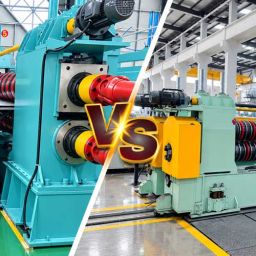
Heavy Gauge Slitting Lines for Stainless Steel
Heavy gauge slitting lines are specially engineered to process thick materials ranging from 4 mm to 12 mm or more. These lines feature:
- Reinforced machine structures
- High-torque drive systems
- Larger slitting arbors
- Heavy-duty recoilers
- Advanced hydraulic systems
For stainless steel processing, heavy gauge slitting lines provide the strength and precision necessary to achieve clean cuts while maintaining long tooling life.
How to Choose the Right Slitting Line
When selecting a slitting production line, manufacturers should consider:
- Material type
- Coil thickness range
- Coil width
- Required slitting speed
- Number of strips
- Annual production capacity
- Automation level
- Future expansion requirements
A properly matched slitting line improves productivity, reduces maintenance costs, and ensures long-term operational reliability.
Conclusion
A slitting line is a critical steel processing system that transforms wide master coils into accurately sized narrow strips. Through coordinated operation of the decoiler, leveler, slitter, tension station, and recoiler, manufacturers can achieve high-quality slit coils with excellent dimensional accuracy and productivity. Whether processing stainless steel, galvanized steel, or carbon steel, modern slitting lines play a vital role in supplying material for tube mills, roll forming lines, automotive components, and numerous industrial applications.