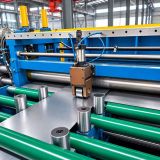
Guillotine Shearing Machine for Cut to Length Lines
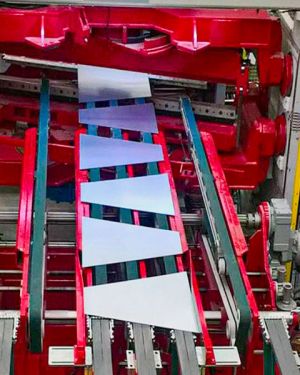
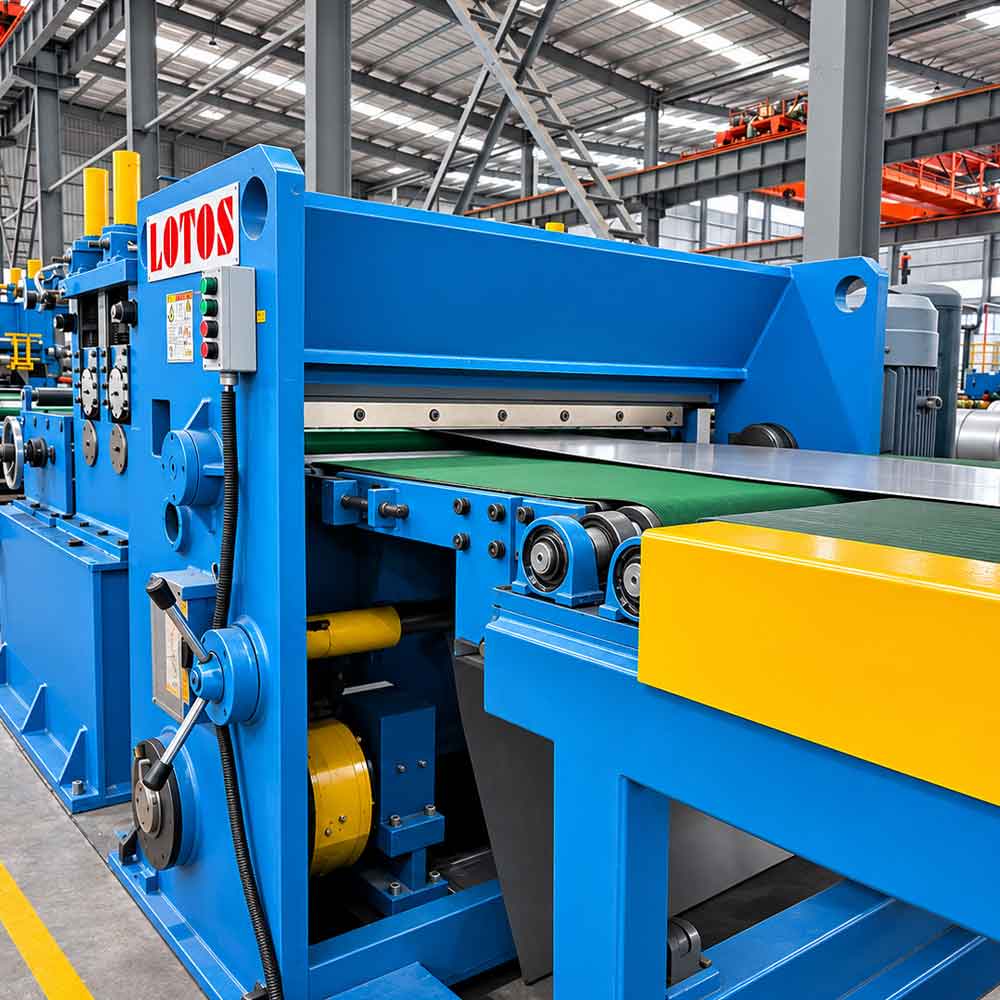
A guillotine shearing machine is the cutting unit of a cut to length line. It converts leveled steel strip into flat sheets of accurate, repeatable length. Because cut quality and length accuracy directly determine the value of the finished sheet, the shear is one of the most important machines in the line.
What Is a Guillotine Shearing Machine?
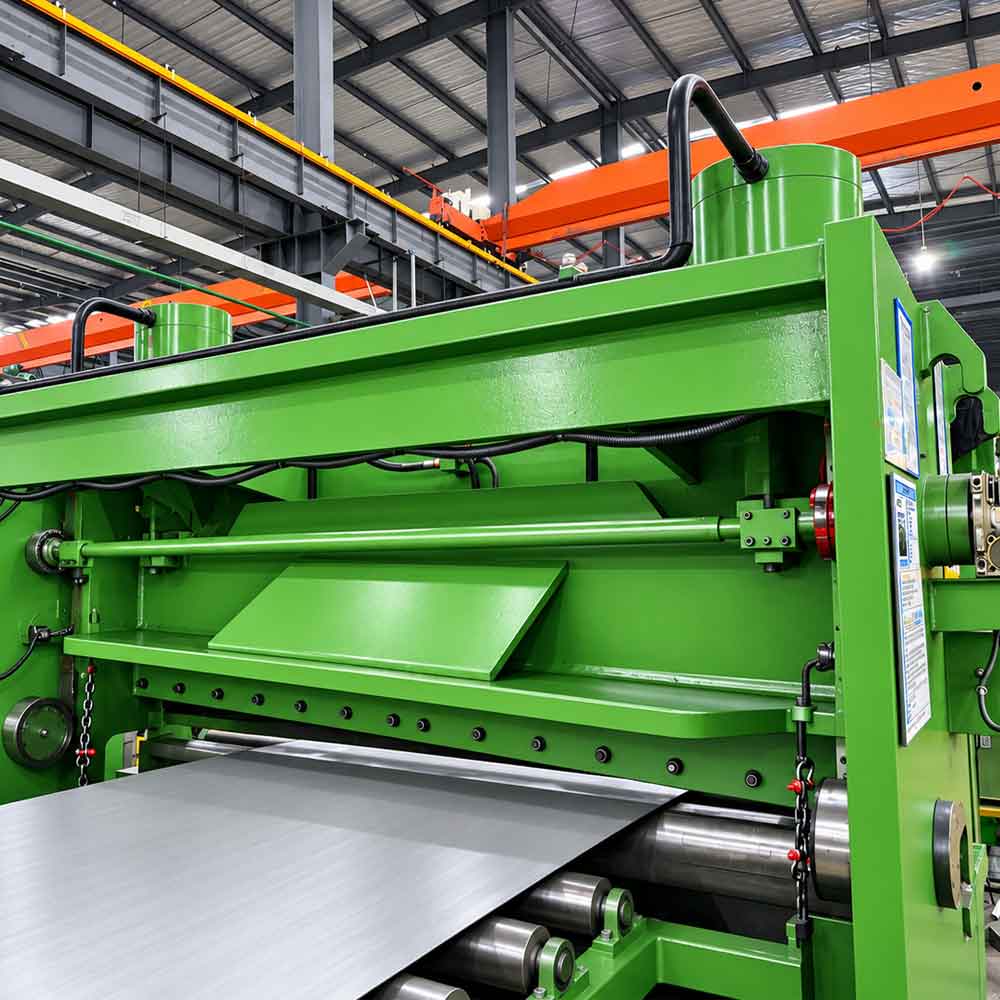
A guillotine shearing machine is a metal cutting machine that uses a moving upper blade and a fixed lower blade to cut sheet or strip along a straight line. The upper blade descends against the material, applying shear force until the material separates.
Shearing is a cold cutting process. It generates no heat affected zone, so the material retains its original mechanical properties and surface condition up to the cut edge. This makes the guillotine shear well suited to galvanized, pre-painted, stainless and carbon steel sheet, where edge quality and surface integrity are important.
Role of the Shear in a Cut to Length Line
A cut to length line normally includes the following sequence of equipment:
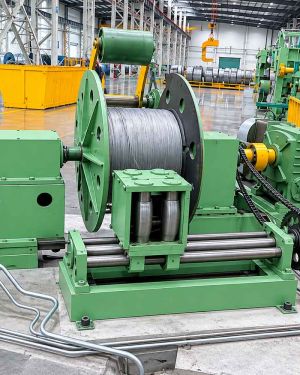
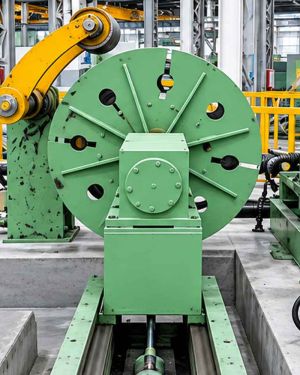
- Decoiler: Holds the coil and uncoils the strip
- Leveling machine: Removes coil set, wave and camber
- Feeder and length measuring system: Advances the strip and measures its length
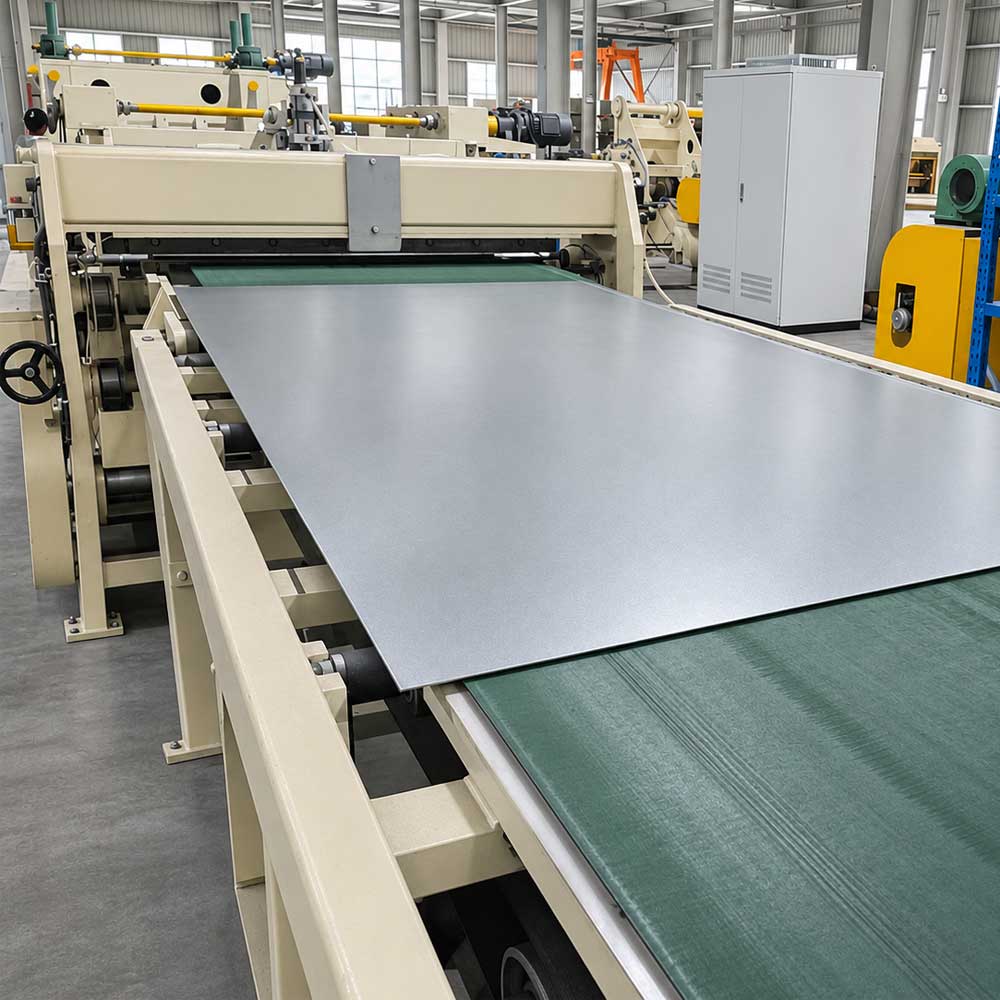
- Guillotine shearing machine: Cuts the strip to the programmed length
- Stacker: Collects and arranges the finished sheets
The shear receives a signal from the length measuring system and cuts the strip when the target length is reached. Its accuracy and speed therefore influence both product quality and line productivity.
How a Guillotine Shearing Machine Works
The cutting cycle in a cut to length line follows these steps:
- Strip positioning: The feeder advances the strip through the shear to the programmed length.
- Clamping: Hold down devices press the strip against the table, preventing movement during the cut.
- Cutting: The upper blade moves down at a set rake angle and shears the strip against the lower blade.
- Blade return: The blade returns to its starting position.
- Sheet discharge: The cut sheet moves forward to the stacker, and the next cycle begins.
The rake angle, which is the angle between the upper and lower blades, reduces the cutting force required and helps limit distortion of the sheet. The blade gap, which is the clearance between the blades, determines the quality of the cut edge.
Types of Guillotine Shears Used in Cut to Length Lines
Hydraulic Guillotine Shear
Hydraulic shears use hydraulic cylinders to move the upper blade. They provide smooth, controllable cutting force, adjustable stroke and stable performance across a wide range of thicknesses. They are widely used in cut to length lines that process medium and heavy gauge material.
Mechanical Guillotine Shear
Mechanical shears use a flywheel and crank mechanism. They offer fast, fixed cycle operation and are used in applications requiring high cutting frequency on lighter gauge strip.
Stop Cut and Flying Shear Configurations
Cut to length lines may use a stop and cut arrangement, in which the strip stops momentarily while the shear operates, or a flying shear arrangement, in which the shear travels with the strip so that cutting occurs without stopping the line. The choice depends on the required line speed, sheet length and output volume.
Factors That Influence Cut Quality
Several variables determine whether the shear produces a clean, accurate and square cut:
- Blade gap: Incorrect clearance produces burrs, rollover or a ragged edge. The correct gap depends on material type and thickness.
- Blade sharpness and condition: Worn or chipped blades reduce cut quality and increase cutting force.
- Rake angle: An unsuitable angle may cause sheet bow, twist or edge distortion.
- Strip flatness: A leveling machine upstream improves flatness and supports a more consistent cut.
- Clamping force: Insufficient clamping allows the strip to shift during cutting.
- Length measurement accuracy: The shear can only cut as accurately as the length signal it receives.
- Machine rigidity: A rigid frame maintains blade alignment and cut squareness under load.
Advantages of a Guillotine Shearing Machine
- Clean, burr-free cut edges without heat distortion
- Accurate and repeatable sheet lengths
- Suitable for a wide range of steel and non-ferrous materials
- Efficient cutting cycle supporting continuous production
- Low scrap generation
- Straightforward integration with other cut to length line equipment
- Reliable operation with routine maintenance
Applications
Guillotine shearing machines in cut to length lines supply sheets to many industries, including:
- Steel service centers and sheet distribution
- Electrical enclosures and panel manufacturing
- HVAC and ducting
- Automotive components
- Construction and building materials
- Household appliances
- Metal furniture and storage systems
How to Select a Suitable Guillotine Shearing Machine
When specifying a shear for a cut to length line, the following criteria should be considered:
- Material type and grade, including tensile strength
- Thickness range, with the maximum and minimum thickness clearly defined
- Strip width, which determines the cutting length of the blades
- Sheet length range and tolerance
- Required line speed and output volume
- Cutting method, whether stop-cut or flying shear
- Surface requirements, particularly for coated or pre-painted material
- Integration needs with the leveler, feeder and stacker
- Service and spare parts support from the manufacturer
Selecting a machine with a suitable capacity margin allows for future changes in material and production requirements.
Maintenance Recommendations
Regular maintenance maintains cut quality and extends service life:
- Inspect blades regularly and regrind or replace them when wear appears
- Check and adjust the blade gap when changing material or thickness
- Monitor hydraulic oil level, temperature and cleanliness
- Inspect hold down clamps for wear and correct pressure
- Lubricate moving parts according to the maintenance schedule
- Verify safety devices at regular intervals
- Keep records of blade changes and adjustments
Conclusion
The guillotine shearing machine is a decisive element in a cut to length line. Correct selection, accurate blade setting, stable strip conditions and routine maintenance together ensure clean cuts, consistent sheet lengths and efficient production.
Lotosslitting supplies cut to length lines with guillotine shearing machines configured to your material, thickness range and output requirements. For technical consultation or a tailored quotation, please contact our team.
FAQ:
A guillotine shearing machine cuts steel strip or sheet along a straight line using a moving upper blade and a fixed lower blade. In a cut to length line, it cuts the leveled strip into sheets of a programmed length.
A hydraulic shear uses cylinders to move the blade and offers smooth, controllable force and adjustable stroke, making it suitable for medium and heavy gauge material. A mechanical shear uses a flywheel and crank mechanism and provides fast, fixed-cycle operation for lighter gauge material.
Blade gap is the clearance between the upper and lower blades. A correct gap produces a clean, burr-free edge, while an incorrect gap may cause burrs, rollover or a ragged cut and shorten blade life.
Cut length accuracy depends on the length measuring system, feeder performance, strip tension and slippage, shear response time and overall machine rigidity.
Yes. With correct blade condition, appropriate clamping pressure and suitable table surfaces, a guillotine shear can cut coated and pre-painted material without damaging the surface.