A Complete Guide to Steel Coil Slitting
Steel coil slitting is a precision metal processing operation used to divide wide steel coils into narrower strips with controlled widths and high dimensional accuracy. The process is essential for manufacturers that require steel strips in specific widths for downstream operations such as roll forming, tube and pipe production, stamping, fabrication, and automotive component manufacturing.
A steel coil slitting line is designed to continuously process master coils into multiple narrower coils while maintaining consistent strip width, edge quality, tension, and coil shape. For manufacturers seeking efficient and reliable coil processing, selecting the appropriate slitting equipment is an important consideration.
What Is Steel Coil Slitting?
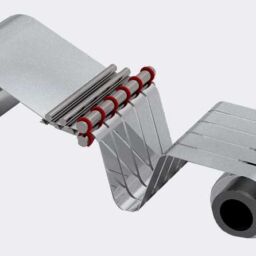
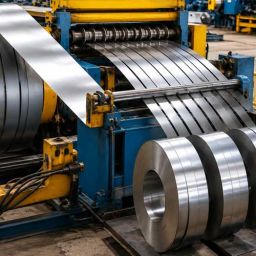
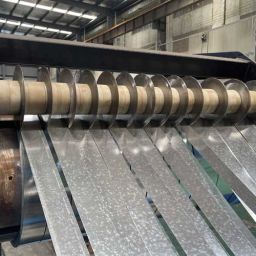
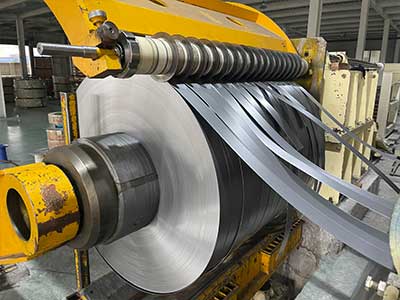
Steel coil slitting is the process of cutting a wide steel coil longitudinally into several narrower strips. Instead of cutting the material into individual sheets, a slitting machine uses circular rotary knives to make continuous cuts along the length of the coil.
For example, a 1,500 mm-wide master coil can be processed into several narrower strips according to the customer’s production requirements.
The basic process includes:
- Coil loading
- Uncoiling
- Strip leveling or entry guiding
- Rotary slitting
- Strip separation
- Tension control
- Recoiling
- Finished coil handling
This continuous process allows manufacturers to produce multiple steel strips from a single master coil with high production efficiency.
How Does a Steel Coil Slitting Line Work?
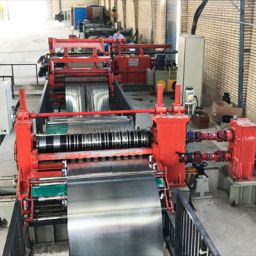
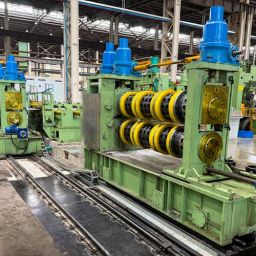
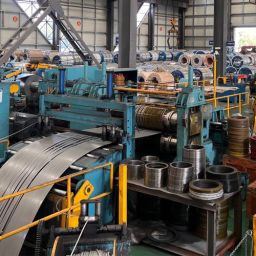
A modern steel coil slitting line consists of several integrated machines that work together to provide stable and accurate coil processing.
1. Coil Loading
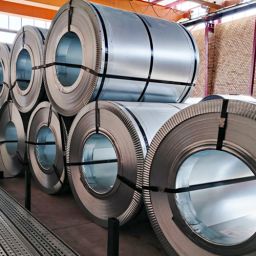
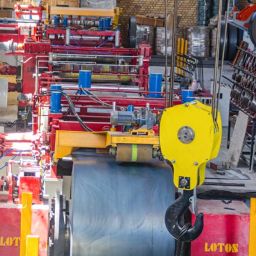
The master steel coil is transported to the entry section and loaded onto the uncoiler. Depending on the line configuration and coil weight, coil loading may be performed using a coil car or other handling equipment.
2. Uncoiling
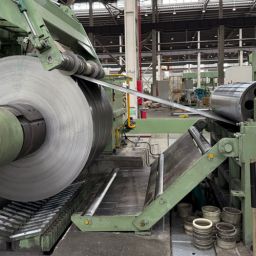
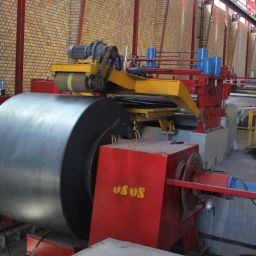
The uncoiler supports the master coil and feeds the steel strip continuously into the processing line. Hydraulic or mechanical expansion systems can be used to secure the coil on the mandrel.
3. Strip Guiding
Before entering the slitting section, the steel strip is accurately guided to maintain its position along the processing centerline. Proper alignment is important for achieving consistent slit widths.
4. Steel Coil Slitting
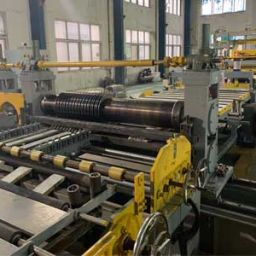
The material passes through the slitter head, where circular knives make continuous longitudinal cuts.
Knife positioning is adjusted according to the required strip widths. Depending on the material and application, different knife arrangements and tooling configurations may be selected.
5. Strip Separation
After slitting, the individual strips must be separated and properly guided. Separators help prevent the strips from overlapping or contacting each other during processing.
6. Tension Control
Controlled strip tension is important for maintaining stable coil winding. Proper tension helps produce compact and uniform finished coils and reduces problems such as telescoping or loose winding.
7. Recoiling
The narrow strips are collected onto the recoiler. The recoiling system winds the slit strips into finished coils that can subsequently be transported or used in downstream production.
What Materials Can Be Slit?
Steel coil slitting equipment can be configured for different metal materials and thickness ranges. Common materials include:
- Carbon steel
- Stainless steel
- Galvanized steel
- Galvannealed steel
- Pre-painted or color-coated steel
- Cold rolled steel
- Hot rolled steel
- Electrical steel
- Aluminum and other non-ferrous metals
The appropriate slitting knives, tension system, drive configuration, and line design depend on the material’s thickness, strength, width, surface characteristics, and required slit quality.
Key Components of a Steel Coil Slitting Line
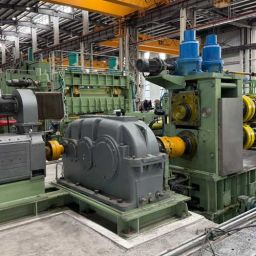
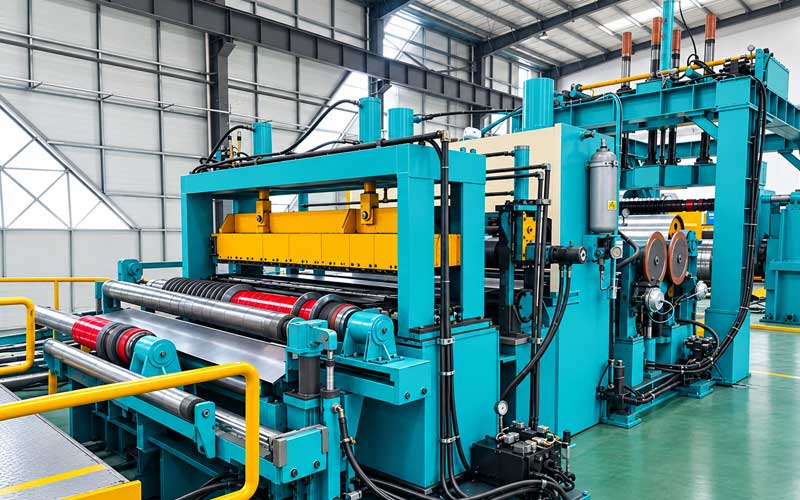
A complete steel coil slitting machine may include the following major components:
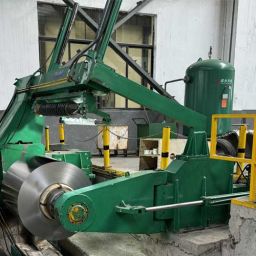
Uncoiler
The uncoiler holds and feeds the master coil into the processing line. Its capacity must be matched to the maximum coil weight, outer diameter, inner diameter, and material specifications.
Slitter Head
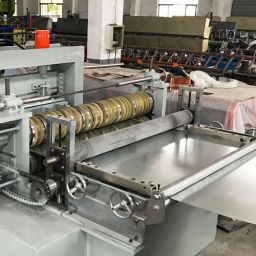
The slitter head is the primary cutting unit. It contains rotary knives arranged according to the required strip widths.
Separator
The separator section keeps slit strips properly positioned and helps control strip movement before recoiling.
Tension Unit
A tension system maintains controlled strip tension throughout the line. Stable tension is particularly important when processing thin or high-strength materials.
Recoiler
The recoiler collects the finished slit strips and forms them into compact coils.
Hydraulic System
Hydraulic systems may be used for coil loading, mandrel expansion, knife positioning, coil handling, and other mechanical operations.
Electrical and Control System
PLC and HMI control systems coordinate line speed, tension, acceleration, braking, slitting operation, and other production parameters.
Why Is Slitting Quality Important?
The quality of a slit steel strip directly affects downstream manufacturing processes. Poor slitting can result in:
- Uneven strip widths
- Excessive burrs
- Edge deformation
- Coil telescoping
- Loose winding
- Surface damage
- Inconsistent strip tension
High-quality slitting requires accurate knife setup, stable material feeding, precise tension control, and appropriate tooling.
Factors to Consider When Choosing a Steel Coil Slitting Machine
Before purchasing a steel coil slitting line, manufacturers should evaluate several technical parameters.
Material Thickness
The line must be designed for the minimum and maximum material thickness required by the application.
Maximum Coil Width
The maximum master coil width determines the required processing width of the slitting line.
Maximum Coil Weight
The uncoiler and recoiler must be capable of safely handling the maximum coil weight.
Slitting Width
The required minimum slit width and number of strips influence the slitter head configuration and knife arrangement.
Production Speed
Line speed should be selected according to the material, thickness, slit width, coil dimensions, and required production capacity.
Edge Quality
Applications with strict downstream requirements may require particularly precise knife setup and tension control to achieve clean slit edges and controlled burr formation.
Automation Level
Modern lines can incorporate automated knife positioning, automatic tension control, PLC control, coil handling, and other automation features to reduce setup time and operator workload.
Steel Coil Slitting Applications
Slit steel coils are widely used across different industries. Typical applications include:
- Tube and pipe manufacturing
- Roll forming
- Automotive components
- Construction products
- HVAC components
- Electrical equipment
- Steel fabrication
- Stamping and pressing
- Metal furniture
- Solar mounting structures
- Industrial machinery
For example, narrow steel strips produced by a slitting line can be directly supplied to a tube mill or roll forming machine, where they are further processed into finished profiles.
Steel Slitting vs Sheet Cutting
Steel slitting and sheet cutting are different coil-processing methods.
Coil slitting divides a wide coil into narrower continuous strips, while cut to length (CTL) processing cuts the material into individual sheets of predetermined lengths.
A manufacturer may therefore choose:
- Slitting line → for narrow continuous steel strips
- Cut-to-length line → for individual metal sheets
- Slitting + recoiling → for finished narrow coils
- Slitting + additional processing → for specialized downstream applications
The appropriate process depends on the final product requirements.
Advantages of Steel Coil Slitting
A properly designed steel coil slitting line provides several production advantages:
- High processing efficiency
- Accurate strip widths
- Continuous operation
- Reduced material handling
- Consistent coil quality
- Flexible strip-width combinations
- Suitable for different steel grades
- Integration with downstream production lines
- Reduced processing time
For high volume metal processing, continuous slitting can significantly improve production efficiency compared with individual cutting operations.
How to Improve Steel Coil Slitting Performance
Manufacturers can improve slitting performance by controlling several critical factors:
Optimize Knife Setup
Correct knife clearance, overlap, positioning, and tooling condition are essential for achieving consistent cutting quality.
Maintain Proper Tension
Stable tension helps prevent loose winding, telescoping, and strip instability.
Use Appropriate Tooling
Slitting knives should be selected according to material grade, hardness, thickness, and production requirements.
Maintain Accurate Alignment
Correct alignment between the uncoiler, slitter, separator, and recoiler helps maintain consistent strip quality.
Perform Regular Maintenance
Regular inspection of knives, bearings, hydraulic components, electrical systems, and tension mechanisms helps reduce unexpected downtime.
Conclusion
Slitting coil steel is an essential process for converting wide master coils into narrower steel strips for downstream manufacturing. A well-designed steel coil slitting line combines precision rotary cutting, accurate strip guiding, controlled tension, and reliable recoiling to produce consistent finished coils.
For manufacturers processing carbon steel, stainless steel, galvanized steel, color coated steel, or other metal materials, the right slitting line should be selected according to coil dimensions, material thickness, strip widths, production speed, coil weight, and required edge quality.
LOTOSSLITTING provides steel coil slitting solutions designed for different material specifications and production requirements, including customized slitting lines for industrial metal processing applications.
FAQ :
A typical steel coil slitting line includes coil loading, decoiling, leveling, slitting, scrap edge trimming, tension control, recoiling, and coil unloading. The steel strip passes continuously through the line while rotary knives cut it into the required widths.
Slitting knives are selected according to the material, thickness, hardness, and required slit quality. Knife material, diameter, clearance, and sharpening condition all affect cutting performance and edge quality.
Edge trimming removes unwanted material from the edges of the steel strip before or during slitting. The trimmed edge scrap is collected separately, helping produce clean and accurately sized slit strips.
A high speed steel coil slitting line is designed to process metal coils at higher production speeds while maintaining accurate slitting, stable strip tension, and reliable recoiling. It is suitable for high-volume coil processing applications.