A Complete Guide for Metal Fabrication Professionals
In the metal processing industry, precision and efficiency are the foundation of every successful fabrication project. Among the many techniques used to prepare raw metal coils for downstream manufacturing, coil slitting stands out as one of the most essential processes. Whether you are sourcing steel, aluminum, or specialty alloys, understanding how coil slitting works can help you make informed decisions about your material supply chain.
At LotosSlitting, we specialize in transforming wide master coils into precisely sized strips that meet exact industry specifications. This article explores the coil slitting process in detail, covering its stages, equipment, benefits, and applications across various industries.
What Is Coil Slitting?
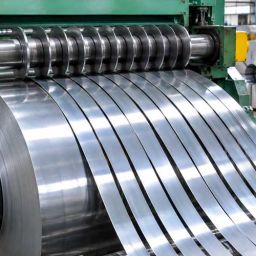
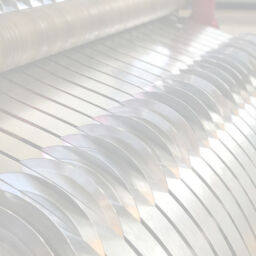
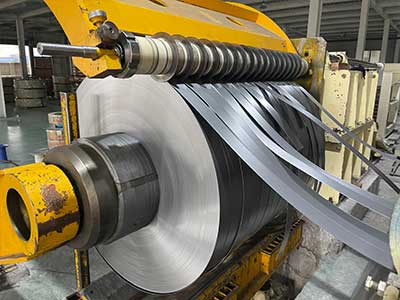
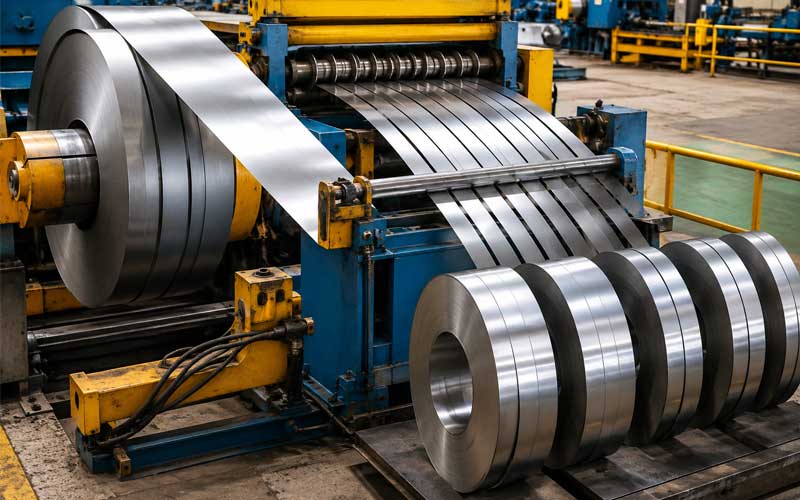
Coil slitting is a metal cutting process in which a wide coil of sheet metal is cut lengthwise into narrower strips of a specified width. These narrower strips, often referred to as “slit coils” or “mults,” are then re-coiled for use in secondary manufacturing operations such as stamping, roll forming, and tube production.
Unlike shearing, which cuts metal into individual sheets, slitting produces continuous strips that remain in coil form. This distinction makes slitting particularly valuable for high-volume manufacturing environments where consistent strip width and coil integrity are critical.
Why Coil Slitting Matters
Manufacturers rarely require metal in the exact width it is originally produced or shipped. A single master coil may need to be divided into several strips of varying widths depending on the end application. Coil slitting allows fabricators to:
- Achieve precise, repeatable strip widths
- Reduce material waste compared to alternative cutting methods
- Improve downstream processing efficiency
- Meet tight tolerances required for automotive, construction, and appliance manufacturing
Optimize raw material costs by ordering wide coils and slitting to custom specifications
1. Coil Uncoiling
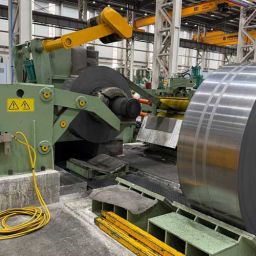
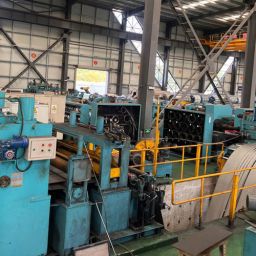
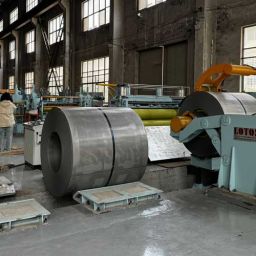
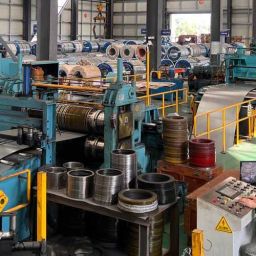
The process begins with an uncoiler, which holds the master coil and feeds the metal into the slitting line at a controlled speed and tension. Maintaining consistent tension at this stage is critical, as any variation can lead to uneven slitting results later in the process.
2. Straightening and Feeding
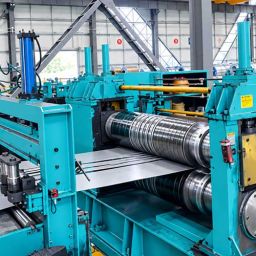
Before the metal reaches the slitting knives, it typically passes through a straightener or leveler. This step removes coil set, camber, and other deformations that could compromise cutting accuracy. A feeding system then guides the flattened metal into the slitting head at a steady rate.
3. Slitting
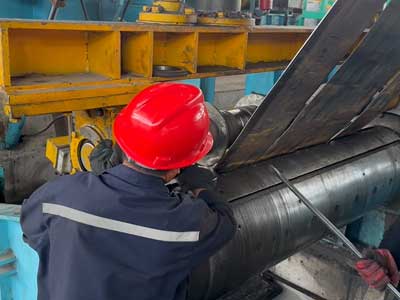
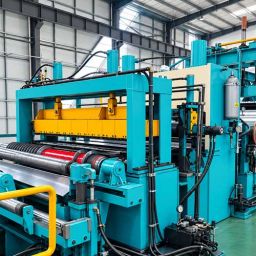
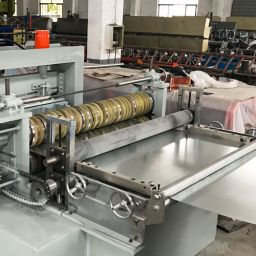
At the heart of the operation is the slitting head, which houses a series of circular rotary knives arranged in pairs. As the metal passes between the upper and lower knives, it is sheared lengthwise into multiple narrower strips. Key variables at this stage include:
- Knife clearance – the horizontal gap between the upper and lower blades
- Knife overlap – the vertical engagement between blades
- Blade sharpness and material – affecting cut quality and burr formation
- Line speed – balanced against material thickness and hardness
Precise calibration of these variables ensures clean edges, minimal burrs, and dimensional accuracy across every strip.
4. Separation and Tensioning
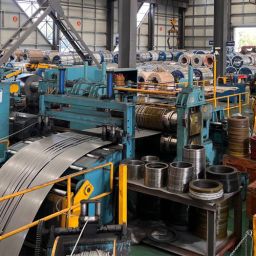
Once slit, the individual strips must be separated to prevent scratching or tangling. Separator discs or spacers guide each strip along its own path. Tensioning devices maintain uniform pull across all strips, which is essential for producing tightly and evenly wound recoiled strips.
5. Recoiling
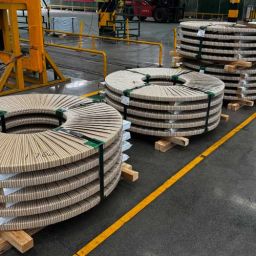
The final stage involves rewinding each slit strip onto individual mandrels, forming separate coils. Depending on customer requirements, these coils may be wound as single-wrap or multi-wrap coils, with or without interleaving paper to protect the metal surface from scratching during storage and transport.
6. Quality Inspection
Before packaging, slit coils undergo rigorous quality checks, including:
- Width tolerance verification
- Edge condition and burr height inspection
- Camber and coil set measurement
- Surface finish evaluation
Any deviation from specification is flagged and corrected before the material is approved for shipment.
7. Packaging and Shipment
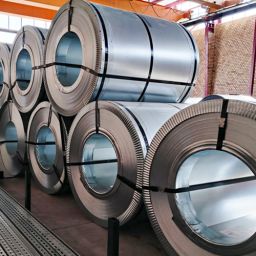
Finished coils are wrapped, labeled, and secured for transport. Proper packaging protects the material from moisture, corrosion, and physical damage during handling and delivery.
Types of Coil Slitting Techniques
Rotary Shear Slitting
The most common method, rotary shear slitting uses matched circular blades to shear the metal similarly to how scissors cut paper. This technique is suitable for a wide range of material thicknesses and produces clean, consistent edges.
Razor Slitting
Used primarily for thinner gauge materials, razor slitting employs a single blade pressed against a rubber or urethane backing roll. This method is common in industries requiring lighter gauge strip material.
Crush Slitting
In crush slitting, the material is compressed between blades rather than sheared cleanly. While faster and more economical, this method is typically reserved for less critical applications due to increased burr formation.
Applications of Slit Coils
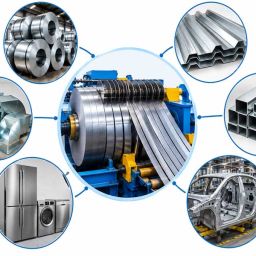
Slit coil strips serve as raw material inputs across numerous industries, including:
- Automotive manufacturing – stamped components, brackets, and structural parts
- Construction – roofing, siding, and structural framing materials
- Appliance manufacturing – housings, panels, and internal components
- HVAC – ductwork and ventilation systems
- Electrical and electronics – enclosures, connectors, and conductive strips
Key Factors That Affect Slitting Quality
Achieving consistently high quality slit coils depends on several interrelated factors:
- Material properties – thickness, hardness, and alloy composition influence knife selection and line speed
- Blade condition – dull or improperly spaced knives lead to burrs, camber, and edge defects
- Machine calibration – precise clearance and overlap settings are essential for clean cuts
- Tension control – uneven tension causes telescoping or loose winds in the finished coil
- Operator expertise – skilled technicians can identify and correct issues before they affect large production runs
.
Choosing the Right Coil Slitting Partner
Selecting a reliable slitting service provider is critical to maintaining quality and efficiency in your supply chain. When evaluating a potential partner, consider the following:
- Equipment capability – Can the provider handle your required material thickness, width, and alloy type?
- Tolerance capabilities – Does the provider consistently meet tight dimensional tolerances?
- Quality control processes – Are inspection protocols documented and rigorously followed?
- Turnaround time – Can the provider meet your production schedule requirements?
- Industry experience – Does the provider have a proven track record serving your specific industry?
At LotosSlitting, our team combines advanced slitting technology with decades of industry experience to deliver precisely slit coils that meet the exacting standards of automotive, construction, appliance, and industrial manufacturing clients.
Conclusion
Coil slitting is a foundational process in modern metal fabrication, enabling manufacturers to transform wide master coils into precisely dimensioned strips ready for downstream production. From uncoiling and straightening to slitting, recoiling, and quality inspection, each stage of the process demands careful control to ensure dimensional accuracy, clean edges, and consistent material performance.
By partnering with an experienced slitting provider like LotosSlitting, manufacturers can reduce material waste, improve production efficiency, and ensure that every coil meets the precise specifications their applications demand..
FAQ:
Tolerances vary by material thickness and equipment capability, but modern slitting lines can typically hold width tolerances within a few thousandths of an inch, depending on the specification required.
Slitting cuts metal lengthwise into continuous strips that remain in coil form, while shearing cuts metal crosswise into individual flat sheets or blanks.
Key factors include the provider’s equipment capabilities, achievable tolerances, quality control processes, turnaround time, and experience serving your specific industry or application.
Yes. By ordering wide master coils and slitting them to custom widths, manufacturers can often reduce scrap, optimize yield, and lower per-unit material costs compared to purchasing pre-cut narrow strips.
Burrs are commonly caused by dull or improperly spaced knives, incorrect blade clearance, excessive line speed, or unsuitable knife selection for the material being processed.