Sheet Metal Slitting Machine
Sheet metal slitting is one of the most important preparatory processes in metal manufacturing. Wide master coils produced by rolling mills must be converted into narrower strips before they can be stamped, roll formed, welded, or laminated into finished products. The efficiency and precision of this conversion directly influence material yield, downstream productivity, and final product quality.
As customer specifications tighten and material grades become more demanding, conventional slitting practices are often insufficient. High performance sheet metal slitting refers to an integrated approach that combines precision tooling, rigid and well controlled machinery, optimised process parameters, and disciplined quality management. Its objective is to deliver strips with consistent width, clean edges, minimal burr, and excellent flatness, at the highest sustainable line speed and with minimal scrap.
This article examines the fundamentals of the slitting process, the elements that define high performance, and the practical measures manufacturers can adopt to improve their operations.
Understanding the Sheet Metal Slitting Process
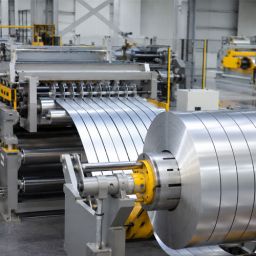
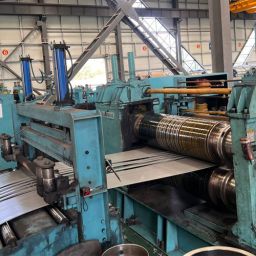
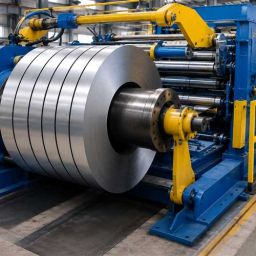
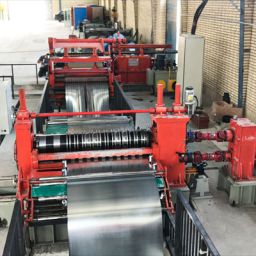
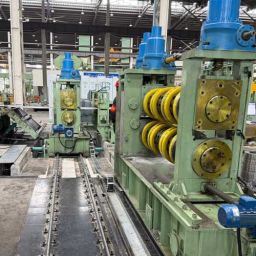
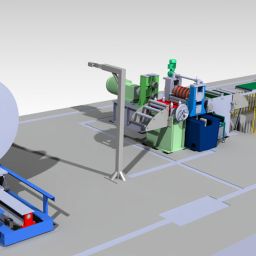
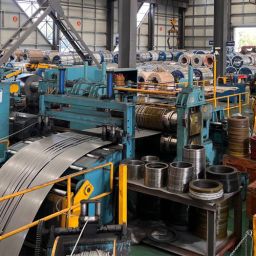
A slitting line typically consists of the following principal sections:
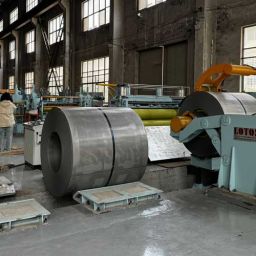
- Uncoiler (decoiler): Holds and unwinds the master coil.
- Entry equipment: Includes the pinch roll, leveller, and threading table, which prepare and guide the strip.
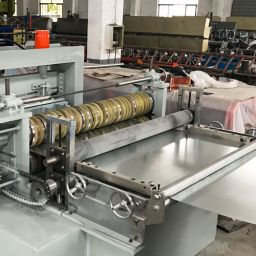
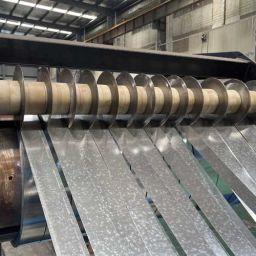
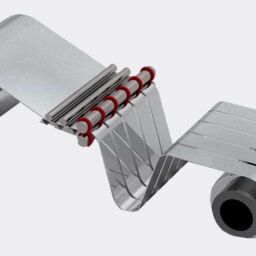
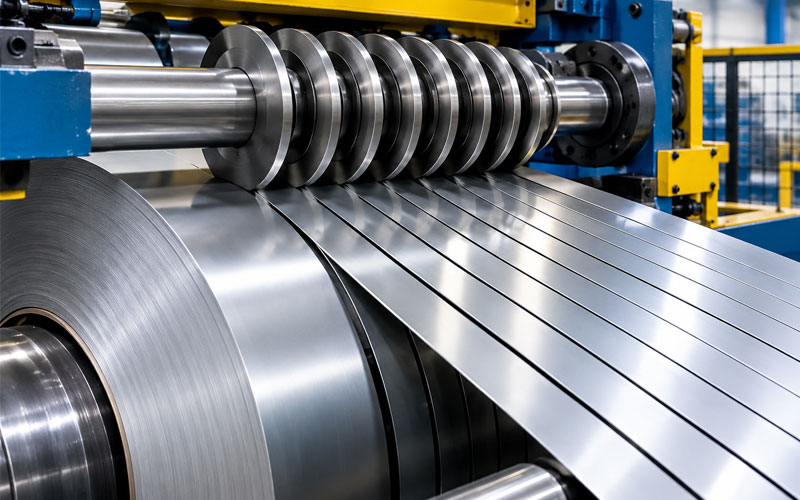
- Slitter head: Contains the upper and lower arbors fitted with circular knives and spacers, where the actual shearing takes place.
- Scrap handling system: Removes edge trim, either by winding it or chopping it.
- Tension and looping section: Isolates the slitter head from the recoiler and controls strip tension.
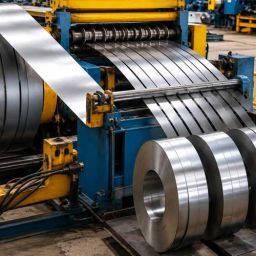
- Recoiler: Winds the slit strips into finished coils, supported by a separator and tension system.
Each section contributes to the final result. A weakness in any one of them, such as poor tension control or an out of tolerance arbor, will limit the performance of the whole line.
What Defines High Performance Slitting?
High performance is not measured by speed alone. It is best understood as the simultaneous achievement of several objectives:
- Dimensional accuracy: Strip width held within tight tolerances, often within ±0.05 mm or better for precision applications
- Edge quality: Low burr height, minimal rollover, and no edge cracking or microfractures
- Strip flatness and shape: Freedom from camber, edge wave, and coil set
- Surface integrity: No scratches, marks, or coating damage on sensitive surfaces
- High material yield: Minimal edge trim and scrap
- Productivity: High uptime, rapid changeovers, and stable line speeds
- Repeatability: Consistent output from coil to coil and shift to shift
Critical Elements of a High Performance Slitting Line
1. Precision Tooling
The knives, spacers, and rubber stripper rings form the working heart of the line. Their quality determines the achievable edge condition and tool life.
- Knife material selection: Tool steels, powder metallurgy steels, and tungsten carbide should be chosen according to the material being processed.
- Tight tolerances: Knife thickness, parallelism, and flatness should typically be held within a few microns, and spacers should be ground to equivalent precision.
- Appropriate coatings: Surface treatments can reduce friction and adhesion, particularly on stainless steel, aluminium, and coated products.
- Correct rubber hardness: Stripper rings must be matched to the material thickness and surface sensitivity to hold the strip without marking it.
2. Rigid, Accurate Machinery
Even the best knives cannot compensate for a flexible or worn machine. Key requirements include:
- Arbors with minimal runout and deflection
- Precision bearings and housings
- Accurate, repeatable knife positioning
- A rigid machine frame that resists vibration under load
Vibration and arbor deflection lead to uneven clearance, premature knife wear, and inconsistent edge quality.
3. Effective Tension Control
Proper strip tension is essential for maintaining flatness and preventing telescoping or loose winding. High performance lines use:
- Precisely controlled looping pits or loop control systems
- Tension stands or bridle rolls to isolate the slitter from the recoiler
- Adjustable, programmable recoiler tension to suit strip thickness and width
- Separator discs with correct spacing to guide strips cleanly onto the recoil mandrel
4. Automation and Process Control
Modern slitting lines incorporate automation to improve repeatability and reduce human error:
- Automatic knife positioning to minimise changeover time and improve setup accuracy
- Programmable recipes storing parameters for each material and job
- Closed-loop tension control for consistent winding quality
- Laser or optical width measurement for in-line verification
- Surface inspection systems to detect defects early
- Data logging and traceability to support quality documentation
Challenges in Slitting Advanced Materials
High Strength and Advanced High-Strength Steels
These materials place greater loads on knives and machinery. They require tougher knife grades, higher machine rigidity, and carefully tuned clearance to avoid chipping and edge cracking. Edge cracking is particularly important where downstream forming operations, such as flanging and stretching, are demanding.
Stainless Steel
Stainless steel work hardens quickly and tends to gall, so knife sharpness, coatings, and lubrication are all important. Surface sensitive grades also require careful strip handling and protective interleaving.
Aluminium and Non-Ferrous Metals
Soft metals may produce fine particles and adhere to knife surfaces. Regular cleaning, correct clearance, and suitable lubrication help to maintain surface quality and prevent scratching.
Coated and Pre Painted Steel
Galvanised, galvalume, and pre-painted coils require gentle handling and suitable knife geometry to avoid damaging the coating. Edge quality also influences corrosion resistance at the cut edge.
Thin Gauge and Foil
Very thin materials call for extremely precise knife setup, highly accurate tension control, and often carbide tooling to maintain a burr free edge over long production runs.
Strategies for Improving Slitting Performance
Reduce Setup and Changeover Time
Changeover time is a major source of lost production. Manufacturers can reduce it through:
- Pre-assembled and pre-measured knife sets prepared offline
- Standardised knife and spacer arrangements
- Automatic or semi automatic knife positioning
- Clear, documented setup procedures
Implement Preventive Maintenance
A structured maintenance schedule helps to avoid unplanned stoppages. It should cover arbor runout checks, bearing condition, drive systems, tension equipment, and lubrication systems.
Manage Knife Life Systematically
Recording knife usage, regrind cycles, and wear patterns allows operators to predict replacement intervals and to remove knives before quality deteriorates. Linking knife performance to coil type also reveals which grades and treatments are most cost-effective.
Train Operators
Skilled operators identify problems earlier and set up lines more accurately. Training should cover setup principles, quality assessment, and safe handling procedures.
Monitor Quality Continuously
Regular measurement of burr height, width, camber, and surface condition provides early warning of drift. Modern inspection tools enable objective, repeatable evaluation rather than reliance on visual judgement alone.
Maximise Material Yield
Careful cutting pattern planning minimises edge trim and remnant coils. Efficient scheduling of coil widths and orders also reduces waste and inventory.
Safety and Sustainability Considerations
High performance operations also prioritise safety and environmental responsibility:
- Guarding and interlocks protect personnel from moving equipment and sharp edges.
- Safe handling procedures for knives, coils, and scrap are essential.
- Efficient material use reduces waste and the associated environmental footprint.
- Energy-efficient drives and well-maintained equipment lower power consumption.
- Scrap recycling ensures that trimmed material is returned to the metals cycle.
Industries That Rely on High Performance Slitting
- Automotive: Structural components, body panels, and precision stampings
- Construction: Roofing, cladding, framing, and structural sections
- Appliances: Cabinets, panels, and internal components
- Electrical and energy: Transformer cores, motor laminations, and battery components
- Tube and pipe production: Strip feedstock for welded tubing
- Packaging: Tinplate and aluminium for cans and containers
- General manufacturing and service centres: Custom-width supply for diverse customers
Selecting a Partner for Slitting Tooling and Solutions
Achieving high performance depends on collaboration between the processor and its suppliers. When choosing a partner for slitting tools or equipment, manufacturers should assess:
- Technical expertise in slitting applications and material behaviour
- Manufacturing precision and consistent quality control
- Material and heat treatment capability for various knife grades
- Customisation options for specific machines and products
- Responsive support, including guidance on setup and troubleshooting
- Reliable delivery and availability of regrinding services
Conclusion
High performance sheet metal slitting is the product of many well-managed details rather than any single improvement. Precision knives, rigid machinery, correct clearance and overlap, effective tension control, sound maintenance, and trained personnel all contribute to a process that delivers superior strip quality at competitive cost.
Manufacturers that treat slitting as a controlled, data-driven process, and that work with knowledgeable tooling partners, are best placed to meet increasingly demanding customer requirements while improving yield, uptime, and profitability.
FAQ:
Burr height is reduced primarily by maintaining sharp knives, setting the correct clearance and overlap for the material, ensuring rigid machine setup, and using appropriate knife materials or coatings. Regular inspection helps to detect deterioration before it affects quality.
There is no universal answer. Tool steels such as D2 suit general applications, powder metallurgy steels perform well in demanding or high-volume work, and tungsten carbide is preferred for thin, abrasive materials such as silicon steel and foils. The choice should reflect the material, thickness, volume, and machine rigidity.
The interval depends on the material, line speed, and required edge quality. The most reliable approach is to track burr height and edge condition, and to regrind before quality limits are exceeded.
High performance slitting is the practice of producing strips with exceptional edge quality, dimensional accuracy, and flatness, while maintaining high productivity and material yield. It depends on the combined effect of precision tooling, robust machinery, correct parameters, and effective quality control.