Precision Slitting
Precision slitting stainless steel is a critical coil-processing operation used to convert wide stainless steel coils into narrower strips with accurate widths, clean edges, and consistent dimensional quality. The process is widely used in industries where tight tolerances, excellent surface quality, and reliable strip performance are required.
For manufacturers and steel service centers, selecting the right stainless steel precision slitting line is essential for maintaining productivity while minimizing burrs, edge deformation, material waste, and dimensional variation.
What Is Precision Slitting Stainless Steel?
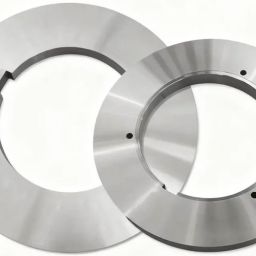
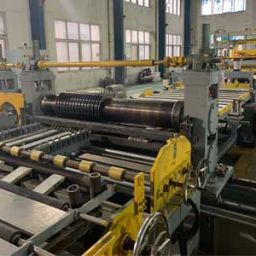
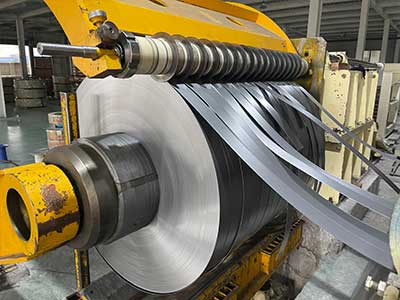
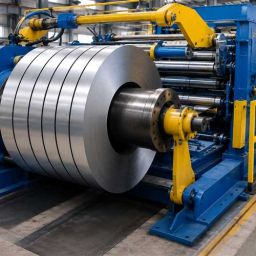
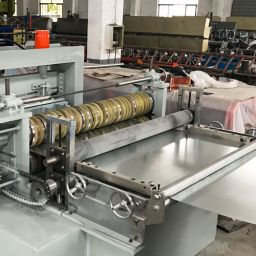
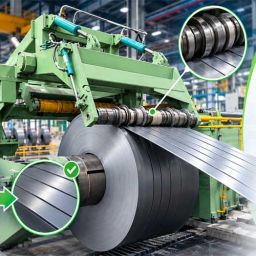
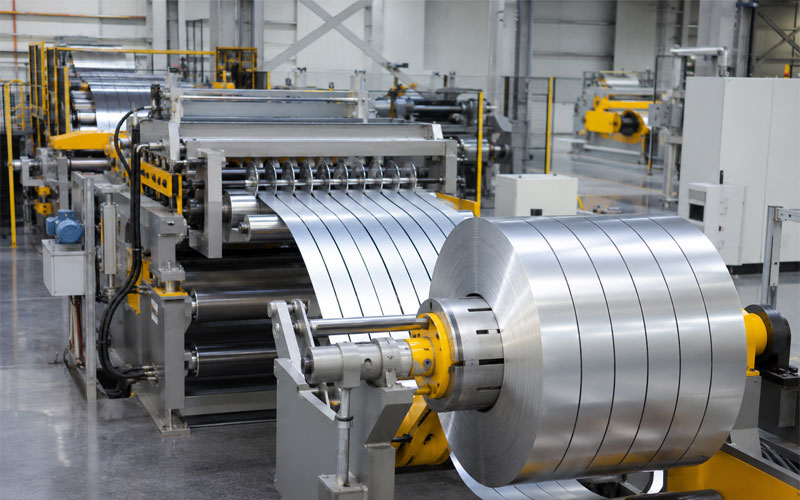
Precision slitting stainless steel is the process of continuously cutting a wide stainless steel coil into multiple narrower strips using circular slitting knives.
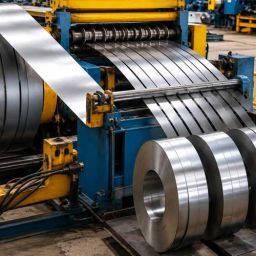
During the process, the stainless steel strip passes through a set of accurately positioned rotary knives. The knives make continuous longitudinal cuts along the coil, producing several narrow coils known as slit coils or mults.
The primary objectives of precision stainless steel slitting include:
- Accurate strip width
- Consistent edge quality
- Low burr formation
- Stable coil winding
- Minimum material loss
- High production efficiency
- Consistent strip tension
Unlike basic coil cutting operations, precision slitting requires careful control of tooling, knife clearance, strip tension, alignment, and recoiling.
Why Is Precision Slitting Important for Stainless Steel?
Stainless steel has different mechanical and surface characteristics compared with many carbon steels. Depending on the grade, it can have high strength, work-hardening characteristics, and strict surface-finish requirements.
Improper slitting conditions can result in excessive burrs, edge deformation, knife marks, camber, strip wandering, or poor coil winding.
A precision stainless steel slitting line therefore needs to maintain accurate control throughout the entire processing cycle.
How Does a Stainless Steel Precision Slitting Line Work?
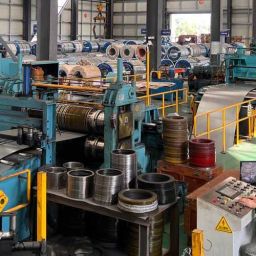
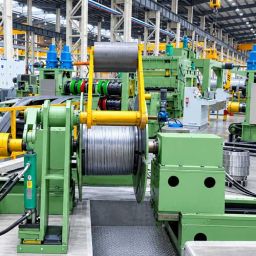
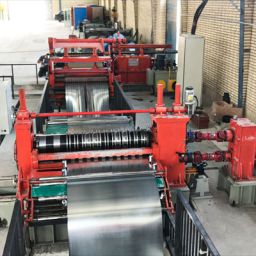
A typical precision slitting line follows a continuous processing sequence:
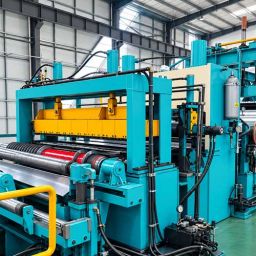
Coil Loading → Uncoiling → Leveling → Slitting → Tension Control → Recoiling → Coil Unloading
1. Coil Loading
The master stainless steel coil is positioned on a coil loading car and transferred to the uncoiler. Proper coil centering is important for maintaining stable strip tracking throughout the line.
2. Uncoiling
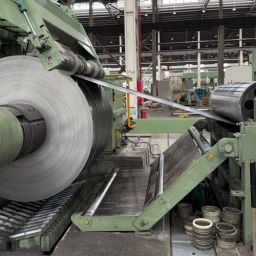
The uncoiler supports and rotates the master coil while feeding the stainless steel strip into the processing section.
Hydraulic or mechanical expansion systems can be used to secure the coil on the mandrel.
3. Strip Leveling and Entry Alignment
Depending on the line configuration and material requirements, a leveler or straightening section may be installed before the slitter.
Entry guides and alignment systems help maintain stable strip positioning before it reaches the slitting knives.
4. Precision Slitting
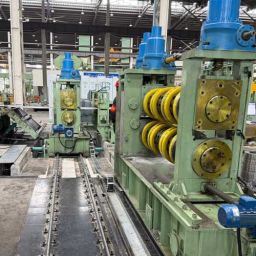
The stainless steel strip enters the slitting head, where circular knives divide the wide coil into predetermined widths.
Knife positioning must be highly accurate because even small deviations can affect the final strip width and edge quality.
5. Tension Control
After slitting, individual strips must be maintained under controlled tension. Proper tension helps prevent loose winding, telescoping, edge damage, and uneven coil formation.
6. Recoiling
The slit strips are collected onto the recoiler. A properly designed recoiling system produces compact and stable coils suitable for transportation and subsequent manufacturing processes.
7. Coil Unloading
After reaching the required coil diameter or weight, the finished slit coils are removed from the recoiler using a coil unloading system or coil handling equipment.
Key Factors in Precision Stainless Steel Slitting
Achieving high quality slit stainless steel requires more than simply selecting a high-speed machine. Several technical parameters must be carefully controlled.
Knife Clearance
Knife clearance is one of the most important factors affecting edge quality. The correct clearance depends on the stainless steel grade, thickness, tensile strength, and other material characteristics.
Incorrect clearance can lead to:
- Excessive burrs
- Edge tearing
- Material deformation
- Premature knife wear
- Poor strip separation
Knife Overlap
The overlap between the upper and lower knives influences the cutting action. Incorrect overlap may result in unstable cutting, edge deformation, or excessive tool wear.
Knife Quality
Slitting knives should have suitable hardness, dimensional accuracy, and wear resistance. High-quality tooling helps maintain consistent slit quality during extended production runs.
Strip Tension
Stable strip tension is essential for producing tightly wound slit coils. Insufficient tension can cause loose coils, while excessive tension can deform the strip or affect coil geometry.
Line Alignment
The uncoiler, slitter, tension section, and recoiler must remain properly aligned. Misalignment can cause strip wandering, uneven edges, and telescoping during recoiling.
What Stainless Steel Grades Can Be Precision Slit?
The appropriate slitting configuration depends on the stainless steel grade and material properties. Common stainless steel families processed by slitting lines include:
- 304 stainless steel
- 316 stainless steel
- 430 stainless steel
- 201 stainless steel
- Other austenitic, ferritic, and specialty stainless steel grades
Material thickness and width also have a significant influence on machine configuration, knife selection, and production speed.
Benefits of a Precision Stainless Steel Slitting Line
A properly configured precision slitting line provides several important advantages.
High Width Accuracy
Accurate knife positioning allows manufacturers to produce narrow strips according to specified dimensions.
Excellent Edge Quality
Correct tooling and cutting parameters help reduce burrs and edge deformation.
Reduced Material Waste
Optimized knife arrangements can improve material utilization and reduce scrap generated during coil processing.
High Productivity
Continuous coil slitting enables large master coils to be converted into multiple narrow coils with fewer interruptions.
Improved Coil Quality
Accurate tension control and recoiling technology produce stable slit coils that are easier to transport, store, and use in downstream production.
Flexible Production
A precision slitting line can be configured for different slit widths and strip quantities, allowing service centers to meet diverse customer requirements.
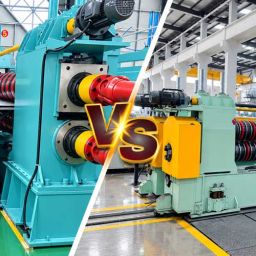
Precision Slitting vs. Standard Slitting
The fundamental principle is similar, but precision slitting places greater emphasis on dimensional accuracy, edge quality, repeatability, and process control.
For applications requiring narrow tolerances and high quality stainless steel strips, precision slitting equipment should be selected based on the actual material and production requirements rather than only the maximum line speed.
Common Problems in Stainless Steel Slitting
Several problems can occur when the slitting process is not correctly configured.
Excessive Burrs
Excessive burr formation may be caused by incorrect knife clearance, worn knives, improper overlap, or unsuitable tooling.
Telescoping Coils
Telescoping occurs when the slit strips shift sideways during recoiling. It can result from improper tension, poor alignment, or unstable strip tracking.
Edge Wave
Edge wave can be associated with incoming coil shape, residual stresses, or inappropriate tension and leveling conditions.
Camber
Camber occurs when the strip does not maintain a straight longitudinal path. Uneven knife conditions, material stress, or alignment problems may contribute to this issue.
Surface Damage
Stainless steel often requires careful surface protection. Improper handling, contaminated tooling, or excessive contact pressure can cause scratches or other surface defects.
How to Improve Stainless Steel Slitting Accuracy
Manufacturers can improve precision by establishing a controlled slitting process based on the characteristics of the material.
Key practices include:
- Select knives appropriate for stainless steel processing.
- Set knife clearance according to material thickness and grade.
- Maintain accurate knife overlap.
- Keep the slitting head properly aligned.
- Control strip tension throughout the line.
- Inspect knives regularly for wear or damage.
- Maintain clean tooling and machine surfaces.
- Use accurate width measurement and positioning systems.
- Optimize the recoiling parameters for each strip configuration.
- Perform regular maintenance on hydraulic, electrical, and mechanical components.
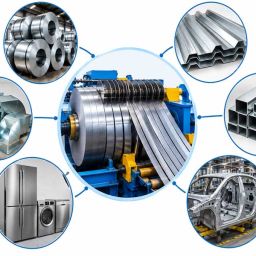
Applications of Precision Slit Stainless Steel
Precision slit stainless steel strips are used in numerous industrial applications, including:
- Automotive components
- Stainless steel tubes and pipes
- Electrical and electronic components
- Appliance manufacturing
- Metal stamping
- Construction products
- Kitchen equipment
- Medical equipment
- Precision fabrication
- General metal processing
The required slit width, thickness, edge condition, coil weight, and surface quality vary according to the final application.
How to Choose a Precision Stainless Steel Slitting Line
When selecting a stainless steel precision slitting line, buyers should evaluate the complete production requirement rather than focusing on a single specification.
Important parameters include:
Material Specifications
Determine the stainless steel grade, thickness range, yield strength, tensile strength, and surface requirements.
Coil Dimensions
The maximum and minimum master coil width, inner diameter, outer diameter, and coil weight should match the machine design.
Finished Strip Requirements
Define the required strip widths, number of slits, width tolerance, edge quality, and finished coil dimensions.
Production Speed
The required speed should be evaluated together with material thickness, strip width, slitting pattern, and required edge quality.
Automation
Modern lines can incorporate PLC control, automatic knife positioning, automatic tension control, coil handling systems, and other automation technologies to improve production consistency.
Conclusion
Precision slitting stainless steel requires accurate mechanical design, high quality slitting tooling, stable strip tension, precise alignment, and appropriate process parameters. A well designed stainless steel precision slitting line can transform wide master coils into narrow strips with consistent widths, clean edges, and reliable coil geometry.
For stainless steel processors and steel service centers, investing in the appropriate precision slitting machine can improve production efficiency, reduce material waste, and provide consistent slit-coil quality for demanding downstream applications.
FAQ:
Precision slitting lines can process various stainless steel grades, including 304, 316, 430, and 201, depending on the machine configuration, material thickness, and mechanical properties.
Tension control keeps the slit strips stable during processing and recoiling. Proper tension helps prevent loose coils, telescoping, strip wandering, and uneven winding.
The main advantages include high width accuracy, clean slit edges, reduced burrs, efficient material utilization, stable finished coils, high productivity, and flexible strip-width production.
Precision slitting places greater emphasis on tight dimensional tolerances, edge quality, repeatability, strip tension, and finished coil quality, making it suitable for demanding stainless steel applications.