Circular Slitter Blades
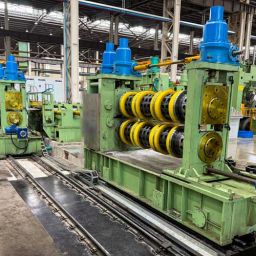
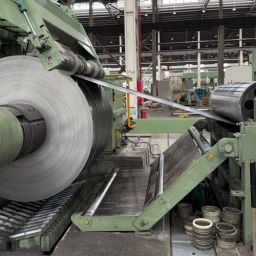
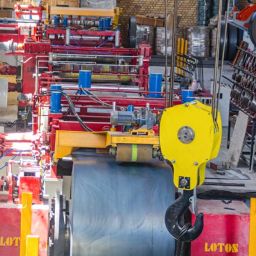
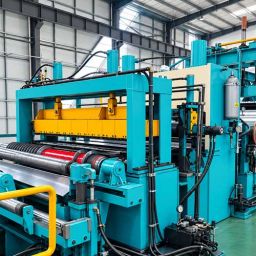
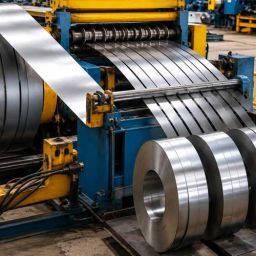
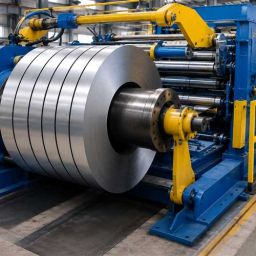
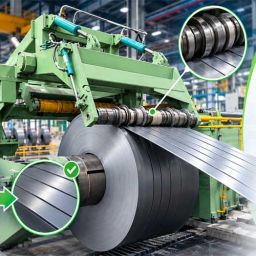
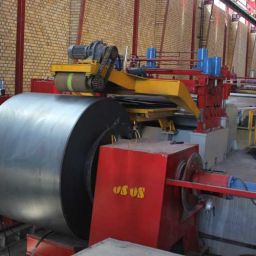
In modern metal processing, the slitting line is a foundational operation. It converts wide master coils into narrower strips that feed downstream industries such as automotive manufacturing, construction, appliance production, electrical laminations, and tube and pipe fabrication. At the heart of every slitting line lies a deceptively simple component: the slitter blade.
The quality of a slit strip, including edge finish, dimensional accuracy, burr height, and flatness, depends heavily on the condition and suitability of the slitter blades. This article explains what slitter blades are, the principal types and materials available, the factors that govern selection, and the maintenance practices that extend service life.
What Is a Slitter Blade?
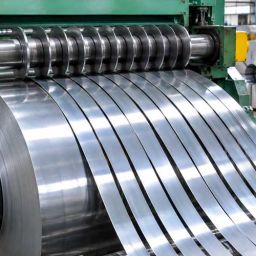
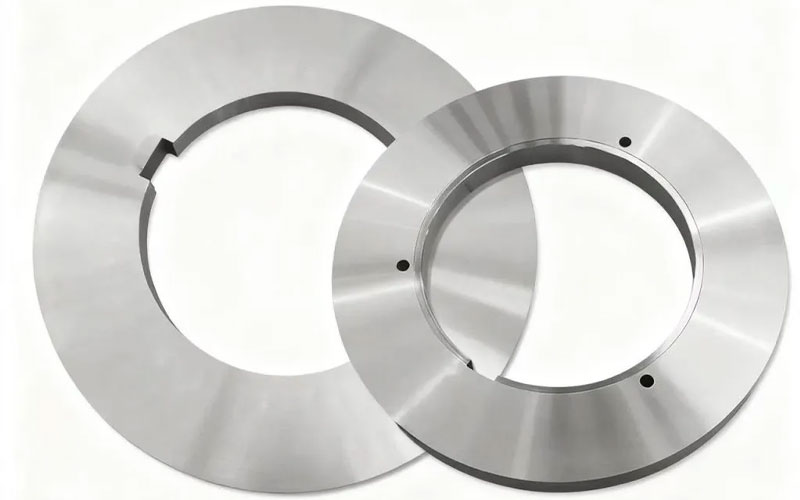
A slitter blade, also referred to as a slitting knife or circular slitting cutter, is a precision-ground circular tool mounted on the arbors of a slitting machine. Blades are installed in pairs, with an upper knife and a lower knife, arranged so that their edges overlap slightly. As the coil passes between them, the material is sheared along a continuous line, producing strips of the required width.
Unlike a simple cutting tool, a slitter blade must satisfy several demanding requirements at once:
- High hardness to resist wear and retain a sharp cutting edge
- Sufficient toughness to withstand shock loads and prevent chipping
- Tight dimensional tolerances in thickness, parallelism, and diameter
- Excellent surface finish to ensure consistent shearing and minimal material adhesion
How a Slitter Blade Works
Slitting is a shearing process rather than a cutting process in the conventional sense. When the strip enters the gap between the upper and lower knives, the following stages occur:
- Penetration: The blade edges press into the material, causing plastic deformation.
- Fracture: As the blade penetrates further, cracks initiate from both the upper and lower edges.
- Separation: The cracks propagate toward each other and join, separating the strip.
The proportion of the material thickness that is cleanly sheared, compared with the portion that fractures, determines the quality of the cut edge. This proportion is governed largely by the blade clearance and blade overlap, which are discussed later in this article.
Main Types of Slitter Blades
Circular Slitting Knives
Circular slitting knives are the most widely used type. They are mounted on arbors with spacers and rubber or polyurethane stripper rings between them, and they are employed in both light gauge and heavy gauge slitting lines.
Spacers and Rubber Stripper Rings
Although not cutting tools themselves, spacers and stripper rings work together with the knives. Spacers determine strip width, while stripper rings hold the strip and prevent it from wrapping around the knife. Their precision has a direct influence on cut quality.
Shear Blades and Straight Knives
Straight shear blades are used in cut to length lines and guillotine shears, and are sometimes used for trimming and end cropping. They are distinct from circular slitters but are often supplied by the same manufacturers and share many of the same material considerations.
Scrap Chopper Blades
Edge trim produced during slitting is often cut into short pieces by a scrap chopper. The blades used in this equipment are subjected to heavy impact and require particularly tough materials.
Common Materials for Slitter Blades
Selecting the correct material is one of the most consequential decisions in blade specification. The main options are outlined below.
Powder Metallurgy (PM) Steels
Powder metallurgy steels feature a fine and uniform carbide distribution. This produces a combination of high wear resistance and toughness that conventionally produced tool steels cannot easily match. They are well suited to high-volume production and difficult materials such as high-strength steel.
Tungsten Carbide
Tungsten carbide blades offer exceptional wear resistance and can last many times longer than tool steel blades in suitable applications. They are commonly used for slitting silicon steel (electrical steel), stainless steel, copper foil, aluminium foil, and other thin, abrasive materials. However, carbide is more brittle and requires highly rigid machine setups to avoid chipping.
Surface Coatings and Treatments
Surface treatments can further extend blade life. Commonly applied options include:
- Titanium nitride (TiN) and titanium carbonitride (TiCN) coatings for increased surface hardness
- Chromium plating to reduce friction and material adhesion
- Nitriding to harden the blade surface while maintaining a tough core
- Cryogenic treatment to improve dimensional stability and wear resistance
Key Factors in Slitter Blade Selection
No single blade is optimal for every application. The following factors should be evaluated together.
Material Type and Thickness
Harder, thicker, or more abrasive materials demand tougher and more wear-resistant blades. Thin foils and silicon steel usually call for carbide or PM steel, while thicker carbon steel strip is typically processed with D2 or S7 grades.
Blade Clearance
Clearance is the lateral gap between the upper and lower knives. It is commonly expressed as a percentage of material thickness, and typical values range from approximately 5% to 15% depending on the material. Insufficient clearance increases blade wear and can cause secondary shearing, whereas excessive clearance produces large burrs and rollover.
Blade Overlap
Overlap is the depth by which the upper knife extends below the top surface of the lower knife. It is usually adjusted based on material thickness and mechanical properties. Correct overlap ensures clean fracture without excessive rubbing or strip distortion.
Blade Dimensions
Outside diameter, inside diameter, and thickness must match the arbor and machine specifications. Blade thickness in particular influences rigidity and affects the minimum strip width that can be produced.
Production Volume and Line Speed
High volume operations benefit from premium materials that reduce the frequency of blade changes. In low volume or varied product environments, cost effective tool steels may deliver a better return on investment.
Maintenance and Best Practices
Proper maintenance can extend blade service life significantly and reduce total cost of operation.
Regular Inspection
Blades should be inspected at scheduled intervals for chips, cracks, edge wear, and surface damage. Any blade showing microcracks or edge damage should be withdrawn from service.
Regrinding
Slitter blades can be reground several times before reaching their minimum usable thickness. Regrinding should be performed on precision grinding equipment with adequate coolant to avoid thermal damage. Consistent thickness and parallelism after regrinding are essential.
Correct Storage and Handling
- Store blades in protective packaging to prevent edge damage.
- Apply a light coating of rust-preventive oil.
- Handle blades with appropriate protective equipment, since edges remain extremely sharp.
- Avoid stacking blades in a way that allows contact between cutting edges.
Accurate Machine Setup
Arbor runout, spacer accuracy, and arbor parallelism have a direct effect on blade performance. Even a premium blade will perform poorly when installed on a misaligned or worn arbor assembly.
Lubrication and Cleanliness
Suitable lubrication reduces friction, heat, and galling. Metal fines and debris should be removed regularly, as they can damage both the blades and the strip surface.
Applications of Slitter Blades
Slitter blades serve a wide range of industries, including:
- Steel service centres processing hot rolled, cold rolled, and coated coils
- Automotive manufacturing, where strict edge quality is required for stamped components
- Electrical steel production, for transformer and motor laminations
- Tube and pipe mills, where slit strip serves as feedstock for welded tubes
- Non-ferrous processing, including aluminium, copper, and brass
- Battery manufacturing, where thin foils demand exceptionally precise, burr-free edges
Choosing a Reliable Slitter Blade Supplier
Blade quality varies significantly between manufacturers. When evaluating suppliers, buyers should consider:
- Material certification and traceability of steel or carbide grades
- Heat treatment control, since consistent hardness is critical
- Grinding precision, including tolerances for thickness, parallelism, and flatness
- Customisation capability to match specific machine and material requirements
- Technical support for setup guidance and troubleshooting
- Regrinding services and consistent lead times
Conclusion
The slitter blade is a small component with a decisive influence on strip quality, productivity, and operating cost. By understanding the available blade types and materials, matching them to the application, setting clearance and overlap correctly, and maintaining the blades systematically, manufacturers can achieve cleaner edges, longer tool life, and lower cost per tonne of processed material.
Investing in high quality blades from a knowledgeable supplier, combined with disciplined setup and maintenance, remains one of the most effective ways to improve the performance of any slitting line.
FAQ:
The interval depends on the material, line speed, and required edge quality. The most reliable approach is to track burr height and edge condition, and to regrind before quality limits are exceeded.
There is no universal answer. Tool steels such as D2 suit general applications, powder metallurgy steels perform well in demanding or high-volume work, and tungsten carbide is preferred for thin, abrasive materials such as silicon steel and foils. The choice should reflect the material, thickness, volume, and machine rigidity.
The interval depends on the material, line speed, and required edge quality. The most reliable approach is to track burr height and edge condition, and to regrind before quality limits are exceeded.
High performance slitting is the practice of producing strips with exceptional edge quality, dimensional accuracy, and flatness, while maintaining high productivity and material yield. It depends on the combined effect of precision tooling, robust machinery, correct parameters, and effective quality control.