Steel Slitting Solutions
Metal slitting equipment is a fundamental part of modern metal processing. Steel, stainless steel, aluminum, copper, and other coil materials are rarely produced by the mill in the exact widths that downstream manufacturers require. Slitting bridges this gap by cutting wide master coils into multiple narrower strips with precise dimensional tolerances, ready for roll forming, tube making, stamping, electrical lamination, and many other applications.
This article provides a structured overview of metal slitting equipment: how it works, the principal machine types and components, the materials it processes, the key factors in choosing a system, and the maintenance practices that protect long-term productivity.
What Is Metal Slitting?
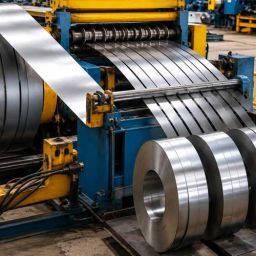
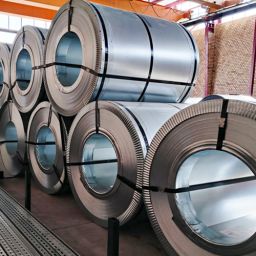
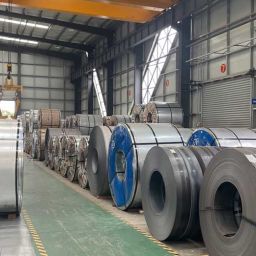
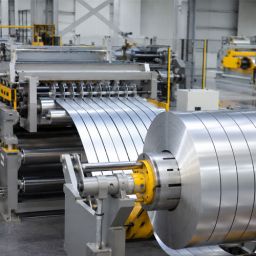
Slitting is a continuous, shear based cutting process in which a wide coil is uncoiled, passed through a set of rotary circular knives, and cut lengthwise into narrower strips. These strips are then recoiled into finished coils, commonly referred to as “mults” or slit coils.
Unlike a cut to length process, which produces flat sheets or blanks, slitting produces continuous strips in coil form. This makes it the preferred preparatory step for manufacturers that consume material in strip form.
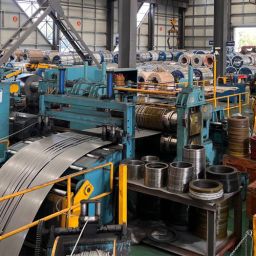
How a Metal Slitting Line Works
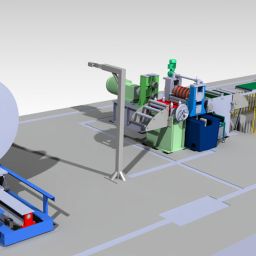
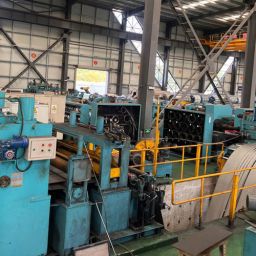
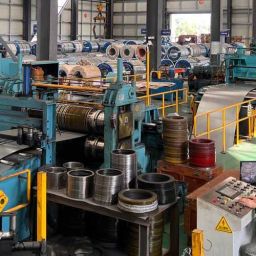
A typical slitting line performs a sequence of coordinated operations:
- Coil loading and uncoiling. The master coil is placed on a coil car, loaded onto the decoiler (uncoiler), and expanded to grip its inner diameter.
- Threading and leveling. The strip head end is fed through a pinch roll and, where required, a leveler or straightener to reduce coil set and crossbow.
- Slitting. The strip passes between upper and lower arbors fitted with circular knives and spacers, which shear the material into the required widths.
- Scrap handling. Edge trim is removed by a scrap chopper or scrap winder to maintain a clean process flow.
- Tension control and separation. The slit strips pass through a looping pit and tension unit to ensure consistent tension before recoiling.
- Recoiling. The strips are wound onto the recoiler (rewinder), with separator discs or a separator plate preventing strips from interfering with each other.
- Coil unloading and packaging. Finished coils are removed by a coil car, then strapped, labeled, and packaged.
Main Components of Metal Slitting Equipment
Decoiler (Uncoiler)
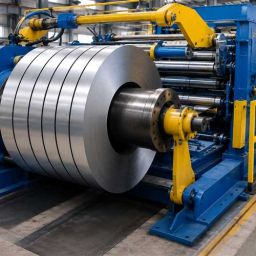
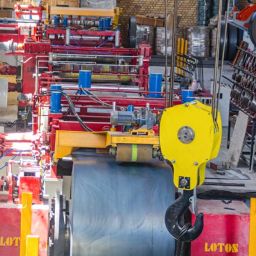
The decoiler supports and rotates the master coil during processing. Its capacity, mandrel expansion range, and braking system determine the coil weight and inside diameter the line can accommodate. Hydraulic expansion and integrated hold-down arms are common features that improve safety and stability.
Pinch Roll and Leveler
These units guide the strip into the line and reduce shape defects. Leveling is particularly important for higher-strength grades and for applications where flatness affects downstream forming or welding.
Slitter Head
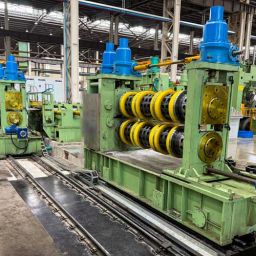
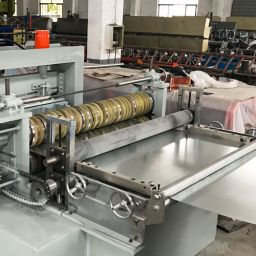
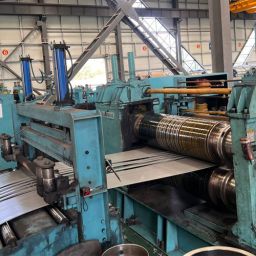
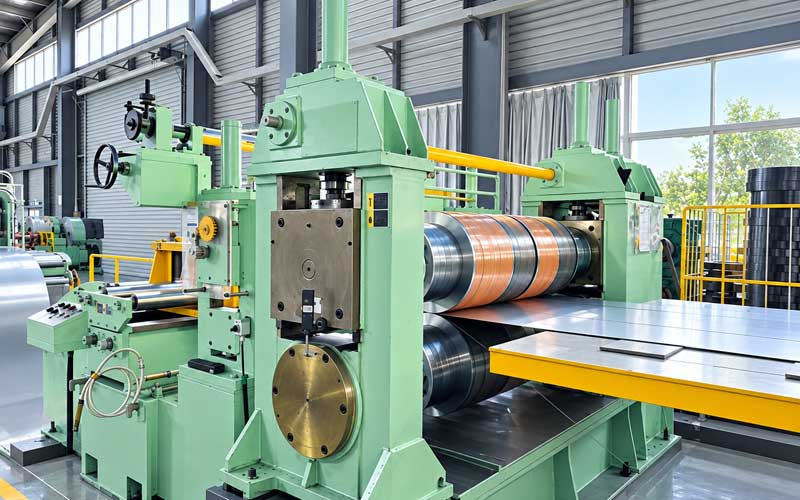
The slitter head is the core of the line. It consists of two arbors carrying matched sets of circular knives and spacers. The machine’s rigidity, arbor accuracy, and knife-gap adjustment directly influence cut quality, burr height, and edge condition. Modern slitter heads often feature motorized positioning and quick-change cassettes to reduce setup time.
Scrap Chopper or Scrap Winder
Edge trim generated during slitting must be managed continuously. A scrap chopper cuts the trim into short pieces for disposal, while a scrap winder coils it for later removal.
Looping Pit and Tension Station
The looping pit absorbs speed differences between the slitter and the recoiler, while the tension station applies controlled back tension. Together, they prevent strip wandering, telescoping, and loose winding.
Recoiler (Rewinder)
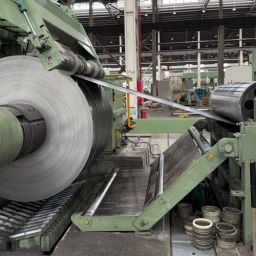
The recoiler winds the slit strips into finished coils. An overarm separator or separator plate keeps individual strips aligned, and a coil car or unloading device handles the finished product safely.
Control and Automation System
Contemporary slitting lines are governed by PLC-based controls with a human-machine interface. Automation can include knife positioning, line speed synchronization, tension regulation, and production data recording, all of which contribute to repeatability and reduced operator dependency.
Types of Metal Slitting Equipment
Standard Coil Slitting Lines
Designed for general-purpose processing of carbon steel, galvanized steel, and pre-painted coil, these lines are suitable for a broad range of thicknesses and are widely used by steel service centers and manufacturers.
Heavy Gauge Slitting Lines
Built with reinforced structures and higher-capacity drives, heavy gauge lines process thick, high-tensile strip in demanding applications such as structural components, automotive chassis parts, and heavy equipment.
Light and Thin Gauge Slitting Lines
These lines are optimized for thin materials such as aluminum foil, stainless strip, and precision electrical steel. They emphasize tension control, surface protection, and fine tolerances.
Precision Slitting Lines
Precision lines are engineered to deliver tight width tolerances, low burr, and minimal camber. They are commonly used for silicon steel, battery materials, and other high-value strip.
Loop Type and Non Loop Slitting Lines
Loop-type lines use a looping pit to buffer between the slitter and recoiler, allowing higher speeds and better tension consistency. Non-loop lines are more compact and economical, and they are typically chosen for lighter-duty or lower-volume operations.
Slitting and Cut-to-Length Combination Lines
Some facilities require both strip and sheet output. Combination lines provide the flexibility to switch between slitting and cut-to-length functions, reducing floor space and capital investment.
Materials Processed by Slitting Equipment
Metal slitting equipment is used across a wide range of coil materials, including:
- Hot rolled and cold rolled steel
- Galvanized and galvalume steel
- Pre painted and coated steel
- Stainless steel
- Aluminum and aluminum alloys
- Copper and brass
- Silicon (electrical) steel
- High strength low-alloy (HSLA) and advanced high-strength steels
Each material has distinct requirements regarding knife selection, clearance settings, surface protection, and tension control.
Key Industries and Applications
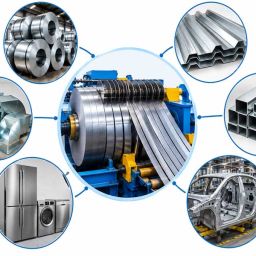
Slitting equipment supports numerous sectors, among them:
- Steel service centers, which supply custom-width strip to a wide customer base
- Tube and pipe manufacturing, where accurately slit strip is the raw material for welded tubes
- Roll forming, including purlins, studs, tracks, and roofing profiles
- Automotive manufacturing, for structural, chassis, and trim components
- Electrical equipment, including transformer and motor laminations
- Appliance and HVAC production
- Construction and infrastructure
Key Factors When Selecting Metal Slitting Equipment
Choosing a slitting line is a significant capital decision. The following criteria should be evaluated carefully.
Material Type and Specifications
Define the range of materials, thicknesses, widths, and yield strengths the line must process. These parameters determine the required motor power, structural rigidity, and knife design.
Coil Weight and Dimensions
Consider the maximum coil weight, outside diameter, and inside diameter. The decoiler and recoiler must be specified accordingly.
Production Capacity and Line Speed
Estimate annual throughput and required line speed. A line sized well for current demand but capable of accommodating growth will offer better long-term value.
Slitting Accuracy and Quality Requirements
Specify tolerances for width, burr, camber, and edge quality. Precision-sensitive applications require higher-grade slitter heads, tighter control systems, and more advanced tension management.
Automation and Changeover Efficiency
Features such as automatic knife positioning, quick-change tooling, and recipe-based settings reduce downtime between jobs and are particularly valuable in high-mix operations.
Safety and Compliance
Verify that the equipment incorporates appropriate guarding, emergency stops, interlocks, and conforms to applicable safety standards in the intended market.
Supplier Capability and After Sales Support
Evaluate the manufacturer’s engineering experience, installation and commissioning services, operator training, spare parts availability, and technical support. A reliable supplier partnership is as important as the machine itself.
Slitting Knives and Tooling
Tooling has a decisive effect on slit quality. Circular slitting knives are usually made from tool steels, high-speed steels, or carbide, depending on the material and volume. Important considerations include:
- Knife material and hardness, matched to the strip material and thickness
- Knife clearance and overlap, set according to material thickness and type
- Spacer and rubber stripper accuracy, which affect strip guidance and edge condition
- Regrinding schedules, which sustain cut quality and extend knife service life
Correct tooling setup reduces burrs, edge cracking, and strip camber, while minimizing scrap and rework.
Maintenance Best Practices
A structured maintenance program safeguards uptime and product quality. Recommended practices include:
- Inspect knives regularly for wear, chipping, and edge deterioration.
- Lubricate bearings, gearboxes, and hydraulic systems according to the manufacturer’s schedule.
- Verify arbor alignment and knife gap settings periodically.
- Check hydraulic and pneumatic circuits for leaks and pressure stability.
- Calibrate tension and control systems to maintain consistent winding.
Keep detailed maintenance records to support predictive maintenance decisions.
Conclusion
Metal slitting equipment is essential to producing coil in the exact widths that manufacturing operations require. By understanding the components, machine types, tooling considerations, and selection criteria described above, buyers can specify a line that delivers accurate, efficient, and dependable performance for years to come.
To discuss your project requirements, material specifications, and production targets, contact Lotosslitting for expert guidance and tailored slitting solutions.
FAQ:
Accuracy is achieved through rigid slitter heads, precisely ground knives and spacers, correct clearance settings, and stable tension control throughout the line.
Yes, provided the equipment specification covers the required material range and tooling is changed appropriately for each material.
The interval depends on material, thickness, and volume. Regular inspection of burr height and edge condition is the most reliable indicator of when regrinding is needed.
Slitting cuts coil lengthwise into narrower coils, whereas cutting to length cuts the strip across its width to produce flat sheets or blanks.