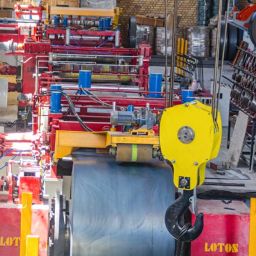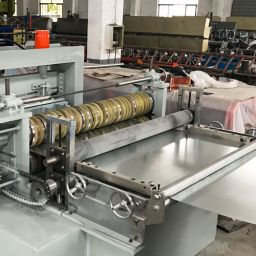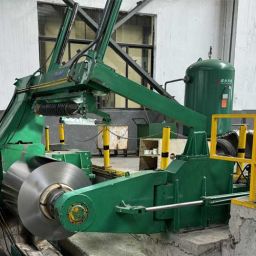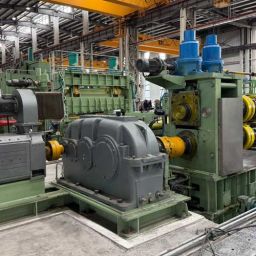
What Is Steel Slitting?
Strip metal slitting is a precision coil processing method used to divide wide metal coils into narrower strips with controlled widths and clean edges. It is an essential process in industries that require accurately sized steel, stainless steel, aluminum, galvanized steel, and other metal materials.
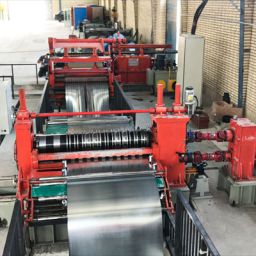
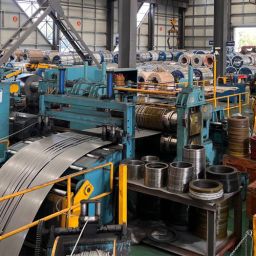
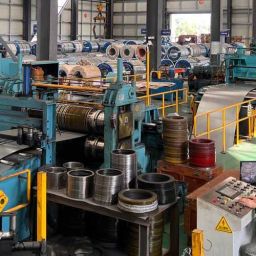
A modern strip metal slitting line combines coil handling, precision slitting, tension control, strip separation, and recoiling systems to produce narrow coils suitable for downstream manufacturing.
What Is Strip Metal Slitting?
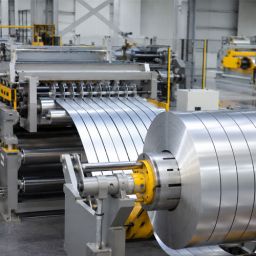
Strip metal slitting is the process of cutting a wide metal strip longitudinally into multiple narrower strips. Unlike cross cutting, which divides material according to length, slitting cuts continuously along the direction of the coil.
The basic process includes:
- Uncoiling the master coil.
- Leveling or straightening the strip when required.
- Slitting the material with circular rotary knives.
- Separating and tensioning the individual strips.
- Recoiling the finished narrow strips.
- Discharging and packing the slit coils.
The final strip width, thickness, number of strips, and production speed depend on the material and the configuration of the slitting line.
How Does a Strip Metal Slitting Line Work?
A typical strip metal slitting line consists of several integrated machines and systems.
1. Coil Loading and Uncoiling
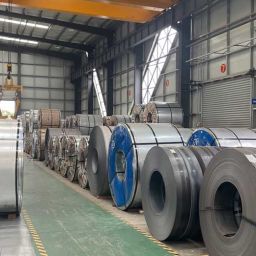
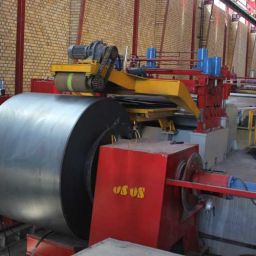
The master coil is loaded onto a decoiler, which continuously feeds the metal strip into the processing line.
A hydraulic or mechanical expansion system holds the coil securely while maintaining controlled feeding tension.
2. Coil Straightening
Depending on the material and production requirements, a leveler may be installed before the slitting section.
The leveler helps reduce coil set and improves strip flatness before the material reaches the slitter.
3. Precision Slitting
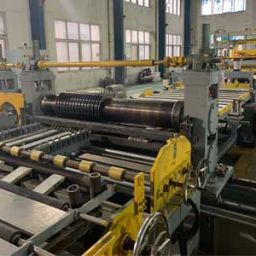
The central component of the line is the slitting machine.
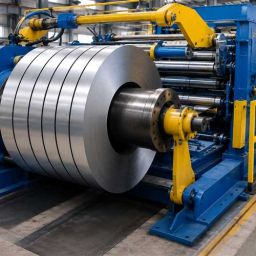
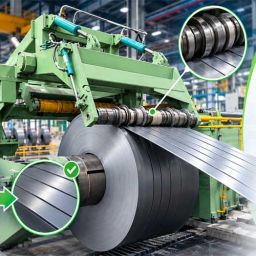
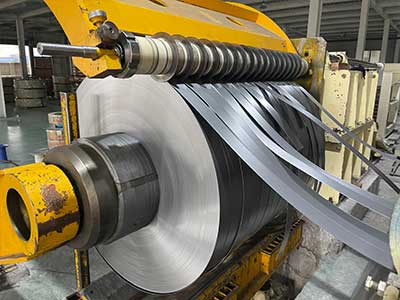
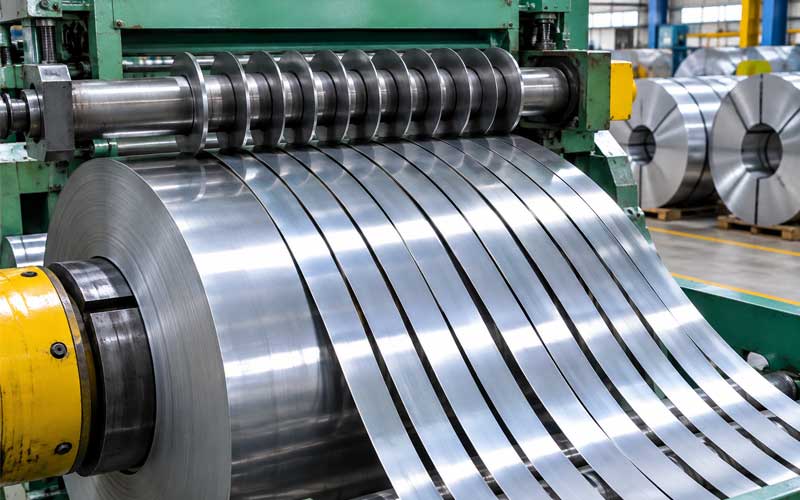
Circular slitting knives are arranged on slitter shafts according to the required strip widths. As the metal passes through the knives, the master coil is divided into several narrower strips.
Knife setup must be accurately controlled because incorrect knife positioning, clearance, or overlap can affect:
- Edge quality
- Burr height
- Strip width
- Knife life
- Production stability
4. Strip Separation and Tension Control
After slitting, the narrow strips must be separated and maintained under controlled tension.
Separator discs, tension devices, and other guiding components prevent the strips from overlapping or moving out of position during recoiling.
Proper tension control is particularly important when processing thin-gauge materials.
5. Recoiling
The slit strips are collected on a recoiler to form finished narrow coils.
The recoiler must maintain appropriate winding tension to produce compact, stable coils with consistent coil shape.
6. Coil Discharge
After recoiling, the finished coils are removed using a coil car, unloading device, or other handling equipment.
Depending on the application, automatic packing systems can also be integrated into the production line.
Main Types of Strip Metal Slitting
Strip metal slitting lines can be configured for different materials, thicknesses, widths, and production requirements.
Steel Strip Slitting
Steel slitting lines are commonly used for carbon steel, galvanized steel, structural steel, and other steel products.
They are widely used for manufacturing components, tubes, profiles, automotive parts, and construction products.
Stainless Steel Strip Slitting
Stainless steel requires careful knife selection and tension control because of its mechanical properties and surface quality requirements.
Precision slitting can produce narrow stainless steel strips for tube manufacturing, automotive applications, appliances, and industrial components.
Aluminum Strip Slitting
Aluminum is relatively soft and can be susceptible to scratching, deformation, and edge damage.
Therefore, aluminum slitting lines generally require suitable tooling, precise tension control, and careful strip handling.
Galvanized Strip Slitting
Galvanized steel requires proper knife adjustment and material handling to minimize coating damage and maintain acceptable slit edge quality.
Factors Affecting Strip Slitting Quality
Several parameters influence the quality of finished slit strips.
Material Thickness
The slitting configuration must correspond to the thickness and mechanical properties of the material. Thin-gauge and heavy gauge materials require different tooling and machine settings.
Material Width
The maximum master coil width determines the required capacity of the decoiler, slitter, and recoiler.
Strip Width
Narrow strip applications require highly accurate knife positioning and tension control.
Slitting Knife Clearance
Knife clearance must be adjusted according to material type and thickness. Incorrect clearance can result in excessive burrs, poor edges, or accelerated knife wear.
Knife Overlap
Proper knife overlap helps achieve stable cutting performance and consistent edge quality.
Slitting Tension
Stable tension is essential for producing tightly wound and dimensionally consistent slit coils.
Applications of Strip Metal Slitting
Strip metal slitting is used in many manufacturing sectors, including:
- Tube and pipe manufacturing
- Automotive components
- Solar mounting structures
- Construction materials
- Electrical equipment
- HVAC components
- Metal fabrication
- Appliance manufacturing
- Steel service centers
- Industrial machinery
- Packaging and metal-processing industries
For tube mills, slit coils can be prepared to the required width before entering the tube-forming and welding process. Accurate strip width is particularly important for stable tube production.
Advantages of Precision Strip Metal Slitting
A properly designed slitting line provides several production advantages.
High Dimensional Accuracy
Precision knife positioning allows manufacturers to produce strips with consistent widths.
Improved Material Utilization
Accurate slitting patterns can reduce unnecessary edge trim and material waste.
Consistent Edge Quality
Correct knife setup and controlled operating conditions help minimize burrs and edge deformation.
Flexible Production
A modern slitting line can be configured for different master-coil widths, strip widths, materials, and thickness ranges.
Higher Production Efficiency
Automated coil handling, slitting, tension control, and recoiling reduce manual operations and improve production continuity.
How to Select a Strip Metal Slitting Line
Before purchasing a strip metal slitting machine, manufacturers should evaluate several technical parameters:
- Material type
- Maximum coil width
- Maximum coil weight
- Material thickness
- Required strip width
- Number of slit strips
- Required production speed
- Slitting accuracy
- Knife material and configuration
- Recoiler capacity
- Coil ID and OD
- Automation requirements
- Finished-coil handling method
The slitting line should be designed according to the actual production range rather than based only on maximum machine capacity.
Why Choose LOTOSSLITTING for Strip Metal Slitting Equipment?
LOTOSSLITTING provides customized metal slitting solutions for different materials, thicknesses, coil widths, and production requirements.
The equipment can be engineered with suitable decoiling, precision slitting, strip separation, tension control, recoiling, and coil-handling systems to meet specific production requirements.
A properly configured strip metal slitting line helps manufacturers achieve stable production, accurate strip widths, consistent edge quality, reduced material waste, and efficient coil processing.
FAQ:
Depending on the machine configuration, slitting lines can process carbon steel, stainless steel, galvanized steel, aluminum, and other coil materials.
Yes. The slitter knives can be arranged according to the required slitting pattern, allowing one master coil to be divided into multiple strip widths.
Yes. Slit coils are widely used as the raw material for tube and pipe production. Accurate strip width and edge quality can contribute to stable tube mill operation.
Strip metal slitting is a continuous longitudinal cutting process used to divide a wide metal coil into multiple narrower strips.