Aluminum Coil Slitting
Slitting aluminum is the process of cutting wide aluminum coils into narrower strips of precise width. It is a fundamental operation for manufacturers of building materials, packaging, electrical components, automotive parts, and heat exchangers. Because aluminum is soft, ductile, and easily marked, slitting it demands specialized tooling, controlled tension, and careful coil handling. This article explains how aluminum slitting works, the equipment involved, the main technical challengezas, and the factors that determine strip quality.
What Is Aluminum Coil Slitting?
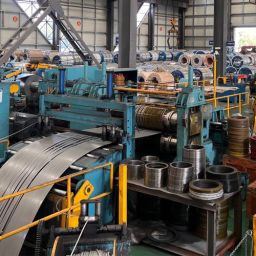
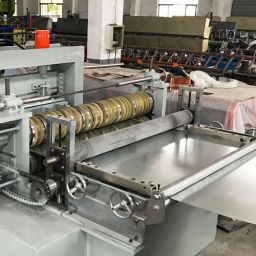
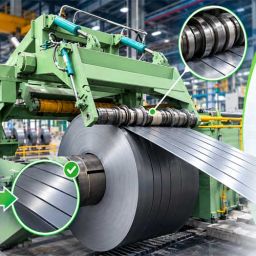
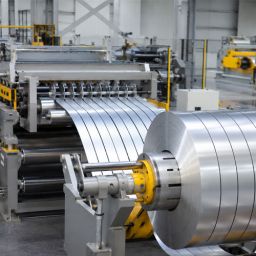
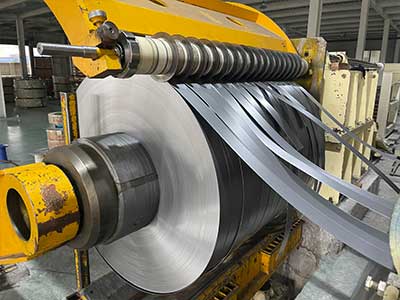
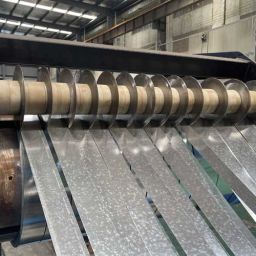
Aluminum coil slitting uses a slitting line to pass a master coil through rotary circular knives. The knives cut the material longitudinally into several narrower coils, known as mults or strips. The strips are then recoiled for storage, shipment or further processing.
Compared with steel, aluminum offers lower density, excellent corrosion resistance and high thermal conductivity. These properties make it valuable, but they also change how the material behaves during cutting.
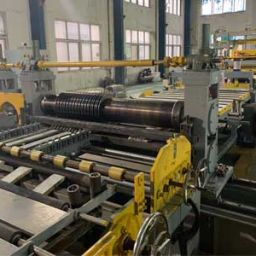
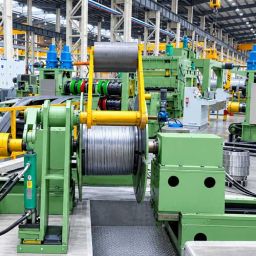
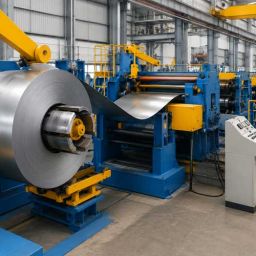
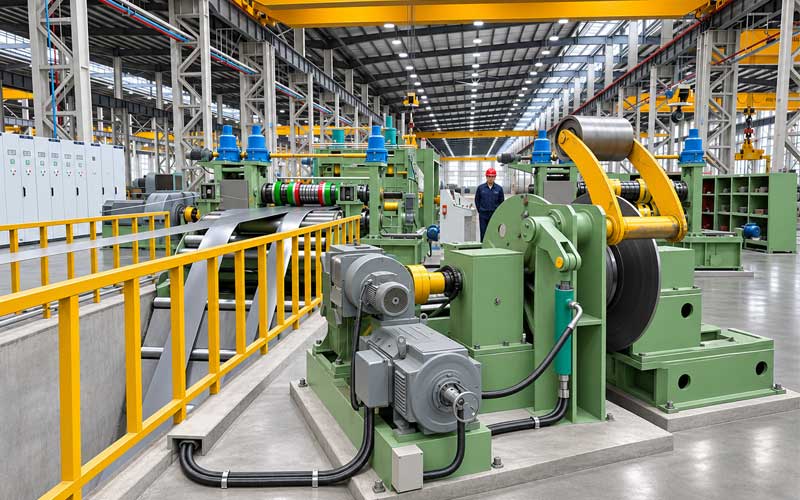
Typical Aluminum Slitting Line Configuration
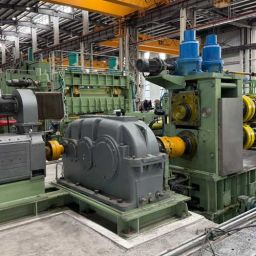
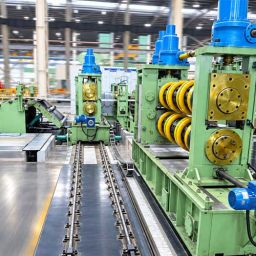
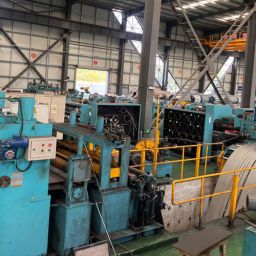
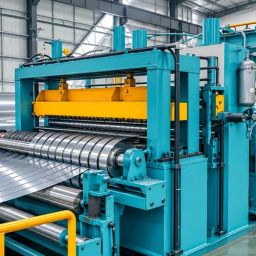
A complete aluminum slitting line normally consists of the following sections:
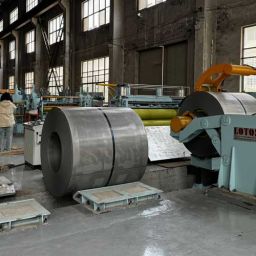
- Coil Car and Decoiler (Uncoiler): loads the master coil and unwinds it under controlled speed and tension.
- Entry Guide and Pinch Unit: aligns the strip and feeds it smoothly into the slitter.
- Slitter Head: holds the upper and lower knife shafts with spacers that set each strip width.
- Scrap Winder or Trim Chopper: removes edge trim continuously.
- Separator and Tension Unit: keeps the cut strips apart and applies uniform back tension.
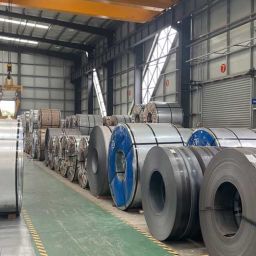
- Recoiler: winds the finished strips into compact, evenly aligned coils.
Aluminum Alloys and Thickness Range
Slitting lines are used for a wide range of aluminum products, including:
- Pure aluminum (1xxx series)
- Aluminum manganese alloys (3xxx series), common in roofing and cladding
- Aluminum magnesium alloys (5xxx series), common in marine and transport applications
- Coated and pre painted aluminum coils
- Aluminum foil and thin gauge strip
Line design depends on alloy temper, thickness, coil weight and the strip width required. Lighter gauges need finer tension control, while heavier gauges need higher cutting force and a rigid machine structure.
Key Challenges When Slitting Aluminum
Surface Protection
Aluminum scratches and marks more easily than steel. Rollers, separators and guide surfaces must therefore be smooth, clean and properly maintained. For coated or polished surfaces, interleaving paper or protective film is often used.
Burr Control
Excessive burrs reduce strip quality and may cause problems in downstream forming, stamping or welding. Burr formation is controlled mainly by knife clearance, knife overlap and knife sharpness.
Edge Quality
A clean, smooth edge is essential for applications such as heat exchangers, cables and packaging. Poor edge quality can lead to cracking, dust generation and material waste.
Tension Management
Aluminum is soft and stretches easily. Uneven tension may cause telescoping, camber, wavy edges or loose coils. Accurate back tension and recoiling tension control are therefore critical.
Aluminum Dust and Fines
Cutting produces fine aluminum particles that can settle on the strip surface. Proper extraction, cleaning and housekeeping help prevent surface defects.
Benefits of Professional Aluminum Slitting
A well designed aluminum slitting line offers several advantages:
- High width accuracy for consistent downstream processing
- Superior edge quality with low burr levels
- Reduced scrap through optimized trim and setup
- Surface protection suited to sensitive finishes
- Higher productivity through fast knife changes and automated setup
- Stable coil build for easy handling and transport
Applications of Slit Aluminum Strip
Slit aluminum strip is widely used in:
- Roofing, gutters and building facades
- Aluminum composite panels
- Heat exchangers, fins and radiators
- Electrical busbars, cables and transformers
- Food packaging, containers and lids
- Automotive trim and structural components
- Lighting reflectors and household appliances
Maintenance Recommendations
To maintain consistent results when slitting aluminum, operators should:
- Inspect knives regularly and regrind them on schedule.
- Keep all rollers, separators and guide surfaces clean and free of debris.
- Check shaft runout and spacer tolerances periodically.
- Calibrate tension control systems at regular intervals.
- Remove aluminum dust and fines from the line frequently.
Choosing the Right Aluminum Slitting Line
When selecting equipment, manufacturers should consider alloy type, thickness range, maximum coil width and weight, required strip width tolerance, line speed and the final surface requirements. Automation features such as automatic knife positioning, tension control and coil handling can further improve efficiency and repeatability.
Conclusion
Slitting aluminum successfully requires a combination of precise tooling, controlled tension and a machine structure designed for a soft, surface-sensitive material. With correct knife setup, careful handling and regular maintenance, manufacturers can obtain accurate strip widths, clean edges and consistent coil quality. Investing in a properly engineered slitting line ensures reliable output and long-term operating efficiency for aluminum processing.
FAQ:
Aluminum is softer and more surface-sensitive, so it scratches, stretches and picks up debris more easily during cutting.
Clearance is set as a small percentage of the material thickness and confirmed through trial cuts for each alloy and temper.
Accurate tension prevents telescoping, camber, wavy edges and loose coils on the finished strips.
Slit aluminum strip is used in roofing, heat exchangers, electrical components, packaging, automotive parts and composite panels.
Key factors include alloy type, thickness range, coil width and weight, width tolerance, line speed and surface requirements.