A Complete Guide to the Process, Equipment, and Applications
Coil slitting is one of the most fundamental processes in the metal processing industry. It converts wide master coils of steel, stainless steel, aluminum, and other metals into narrower strips that meet the exact width requirements of downstream manufacturing. Understanding what coil slitting is, how it works, and which equipment it requires is essential for any enterprise that purchases, processes, or distributes coiled metal.
Definition of Coil Slitting
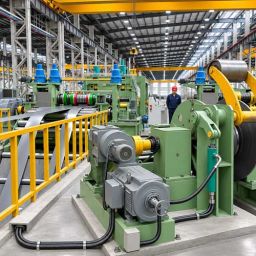
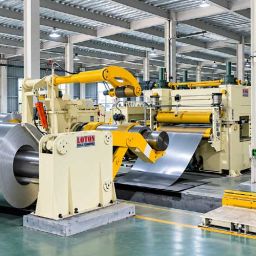
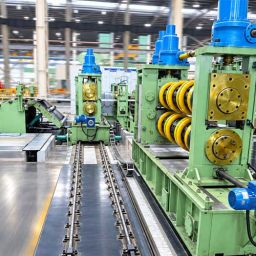
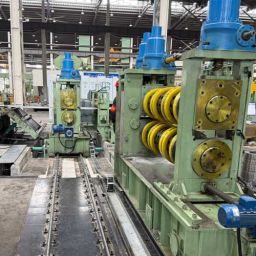
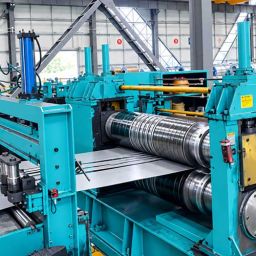
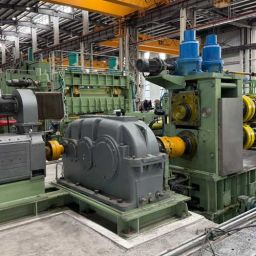
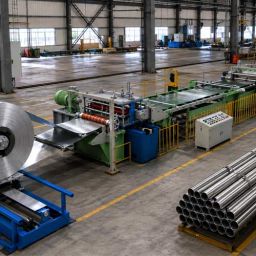
Coil slitting is a metal cutting process in which a wide coil is longitudinally cut into multiple narrower coils, commonly called mults, using rotary circular knives. The process takes place on a slitting line, an integrated system that uncoils the material, cuts it to the specified widths, and rewinds the resulting strips into finished coils.
Master coils are produced by mills in wide standard widths. Because manufacturers rarely require this exact width, slitting provides the economical bridge between mill production and the specific dimensions that end users need.
How Does the Coil Slitting Process Work?
The coil slitting process follows a structured sequence of stages.
1. Coil Loading and Uncoiling
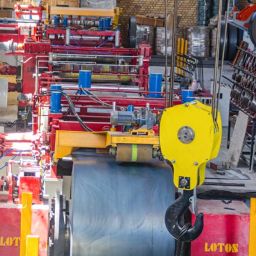
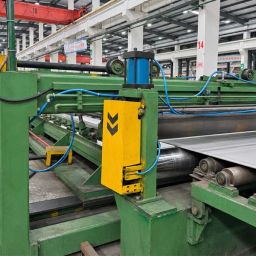
A coil car transports the master coil to the decoiler, where it is secured on an expanding mandrel. The decoiler pays out the strip at a controlled rate and tension.
2. Threading and Entry Guidance
The coil head is straightened and guided through the pinch rolls and entry guide into the slitter. Accurate alignment at this stage is essential for consistent strip quality.
3. Slitting
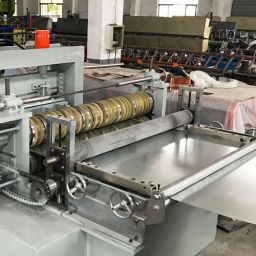
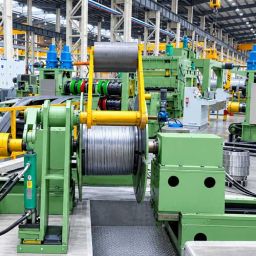
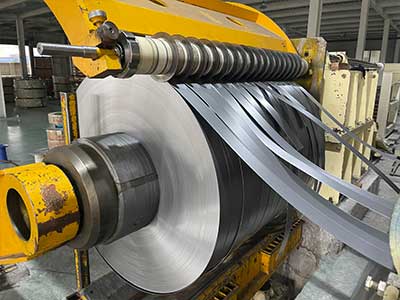
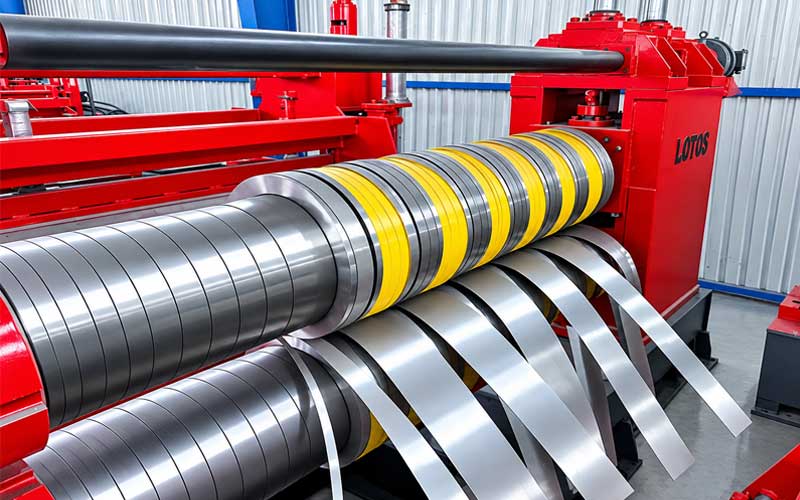
The strip passes between two arbors fitted with circular knives and spacers. The upper and lower knives overlap slightly and shear the material along its length. The knife spacing and arrangement are precisely set according to the required strip widths.
4. Scrap Handling
Edge trim is removed during slitting. A scrap winder or chopper collects or cuts the trim so the line remains clear.
5. Looping and Tension Control
A loop pit or loop control section absorbs speed differences between the slitter and the recoiler. A tension station then applies controlled back tension to the individual strips.
6. Recoiling
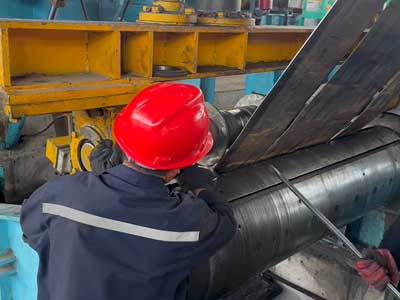
The slit strips are wound onto the recoiler into separate coils. Separator discs and controlled tension produce neatly wound, uniformly packed coils ready for delivery or further processing.
Types of Coil Slitting
Loop Slitting
In loop slitting, the strip forms a loop between the slitter and the recoiler. This arrangement allows the line to run at high speed and is widely used for thin and medium gauge material.
Tight Slitting
In tight slitting, the strip is drawn directly from the slitter to the recoiler without a loop. This method is often used for thicker material.
Heavy Gauge and Light Gauge Slitting
Slitting lines are classified by the thickness range they process. Light gauge lines handle thin materials such as sheet for appliances and electronics, while heavy gauge lines are engineered for thick, high-strength material.
Materials Suitable for Coil Slitting
Coil slitting is applicable to a wide range of metals, including:
- Cold rolled and hot rolled steel
- Stainless steel
- Galvanized and galvalume steel
- Pre-painted steel
- Aluminum and aluminum alloys
- Copper and brass
- Silicon (electrical) steel
Different materials require specific knife materials, clearances, and surface-protection measures to maintain edge and surface quality.
Key Factors Affecting Slitting Quality
Several variables determine the quality of slit strips:
- Knife condition and material, since sharp, correctly specified knives produce clean edges
- Knife clearance and overlap, which must match material type and thickness
- Strip tension, which prevents telescoping and loose winding
- Machine rigidity and alignment, which ensure width accuracy
- Line speed, which must be optimized for the material and gauge
- Operator training and setup procedures, which maintain repeatability
Careful control of these factors reduces burr, edge wave, camber, and width variation.
Advantages of Coil Slitting
Coil slitting offers considerable benefits to metal processors and manufacturers:
- Cost efficiency: Wide coils are more economical to purchase than narrow ones
- Width flexibility: Strips can be produced in the exact widths required
- High productivity: Many strips are cut simultaneously in a continuous process
- Material efficiency: Accurate cutting minimizes waste
- Consistent quality: Automated tension and guidance produce uniform coils
- Reduced inventory: One master coil can supply multiple product requirements
Industrial Applications of Slit Coils
Slit coils are used in numerous industries, including:
- Automotive: Structural parts, brackets, and components
- Construction: Roll formed profiles, purlins, and roofing
- Appliances: Housings, panels, and internal parts
- Electrical: Transformer laminations and motor cores
- Pipe and tube manufacturing: Strip for welded pipe and tube
- Packaging: Steel strapping and containers
- General fabrication: Stamping and forming operations
Coil Slitting versus Cut to Length
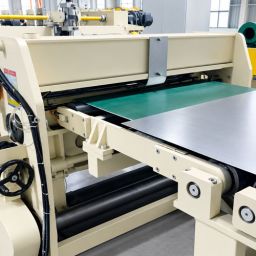
Although both processes begin with coil, their outputs differ. Coil slitting produces narrower coils through longitudinal cutting, whereas a cut to length line shears the coil into flat sheets of a specified length. Many processors operate both types of line, and combination systems are available for operations requiring both functions.
Choosing a Coil Slitting Line Manufacturer
Selecting a qualified manufacturer is critical to long-term production performance. Consider the following:
- Engineering capability and customization options
- Slitting accuracy, speed, and thickness and width range
- Quality of knives, arbors, drives, and control components
- Safety systems and compliance
- Installation, commissioning, and training services
- Availability of spare parts and technical support
Your Partner in Coil Slitting Solutions
LotosSlitting designs and manufactures coil processing equipment, including slitting lines and cut to length lines, engineered to the customer’s material, thickness, width, and production requirements. Our commitment to precision engineering, strict quality control, and comprehensive support enables our customers to achieve efficient, reliable, and high quality coil processing.
Conclusion
Coil slitting is an essential process that converts wide master coils into precisely dimensioned narrow strips for a broad range of industries. A well designed slitting line, operated with correct tooling and tension control, delivers consistent quality, high productivity, and efficient material utilization.
To discuss your slitting requirements or request a customized proposal, please contact the LotosSlitting technical team.
FAQ :
Mults are the narrower coils produced when a master coil is slit to specified widths.
The line uncoils the master coil, slits it between upper and lower circular knives, and rewinds the strips into separate finished coils.
Knife condition, knife clearance, strip tension, machine rigidity, line speed, and operator setup all influence slit quality.
Automotive, construction, appliance, electrical, pipe and tube, packaging, and general fabrication industries all use slit coils.
Yes, a qualified manufacturer designs the line according to material type, thickness, width range, and production capacity.