Heavy Gauge Steel Coil Slitting Line
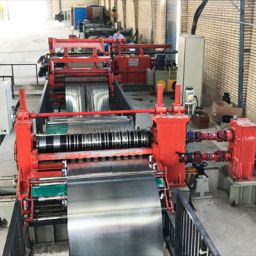
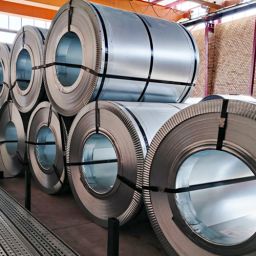
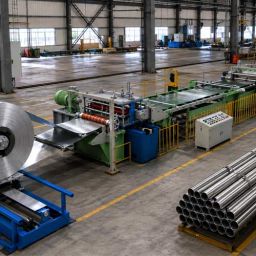
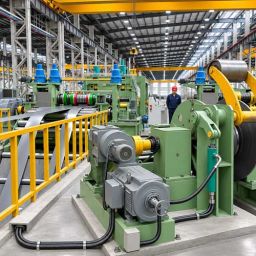
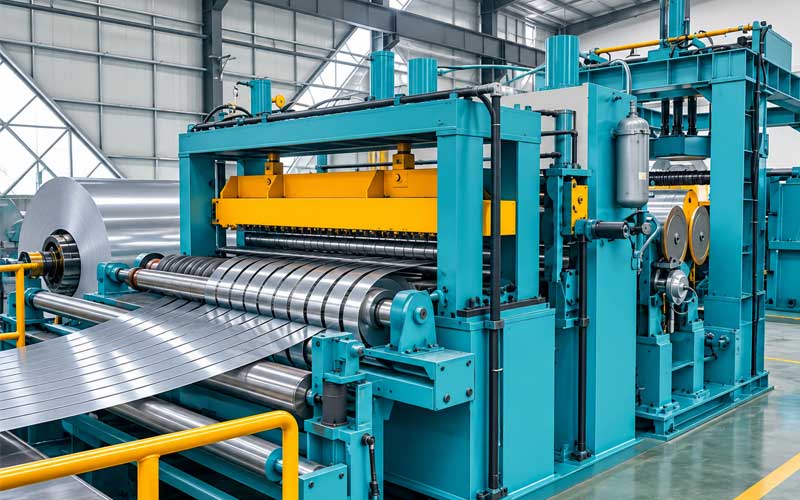
Heavy gauge slitting equipment occupies a distinct category within coil processing. While light and medium gauge slitting lines prioritise speed and flexibility, heavy gauge lines must withstand the substantial forces generated when thick, high strength material is uncoiled, cut, and recoiled. Material thicknesses in this class typically range from 3 mm to 16 mm, with strip widths extending to 2,000 mm and coil weights frequently exceeding 30 tonnes.
For service centres, pipe and tube mills, structural fabricators and automotive suppliers, the slitting line is often the first operation that determines downstream quality. Burr height, camber, edge wave and width tolerance are all established at the slitter. This article examines how heavy gauge slitting equipment is designed, what distinguishes a robust line from an inadequate one, and the considerations that should guide any procurement decision.
What Is Heavy Gauge Slitting?
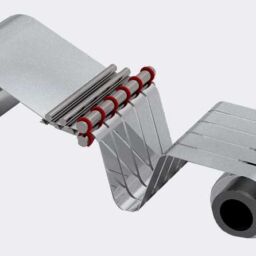
Slitting is the process of cutting a wide master coil longitudinally into narrower strips of specified width. In heavy gauge applications, the material is thick enough that conventional shearing geometry, blade clearances and tension control methods no longer suffice. The forces involved increase disproportionately with thickness, and so does the consequence of any deflection in the slitter head, arbors or tooling.
Heavy gauge slitting equipment therefore differs from lighter lines in several fundamental respects:
- Structural rigidity of the slitter head and housing, which must resist deflection under cutting loads.
- Arbor diameter and bearing design, sized to carry thick, large diameter knives without lateral runout.
- Drive power and torque, sufficient to pull material through the knives at production speed.
- Tension and recoiling systems, capable of managing the spring-back and memory of thick strip.
- Scrap handling, since edge trim in heavy gauge is itself a substantial, rigid section that cannot be managed with a simple winder.
Core Components of a Heavy Gauge Slitting Line
Coil Handling and Uncoiler
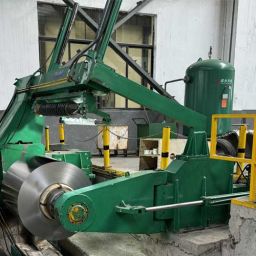
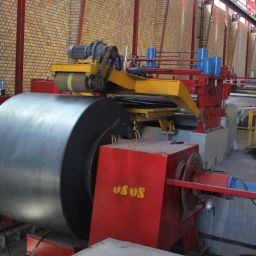
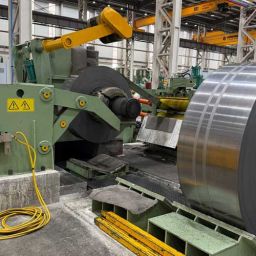
The line begins with a coil car and uncoiler rated for the maximum coil weight and outside diameter. In heavy gauge equipment, the uncoiler mandrel is typically hydraulically expanded, supported by an outboard bearing, and fitted with a hold-down roll to control the coil as the outer wrap is released. A peeler table and straightening pinch roll assist in threading the thick, stiff leading edge into the line.
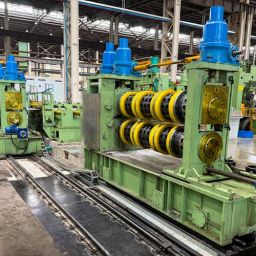
Flattener or Leveller
Heavy gauge strip retains coil set that must be reduced before slitting to achieve accurate width and straight strip. A multi roll flattener, often with backed-up work rolls, applies alternating bending to remove curvature. The roll diameter and spacing are selected according to the thickness range; small diameter rolls suited to thin material would simply deflect under thick stock.
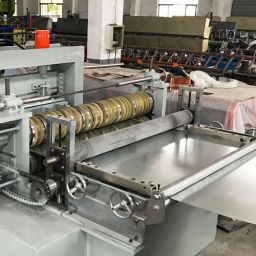
Slitter Head
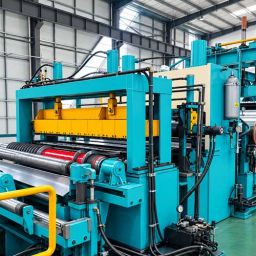
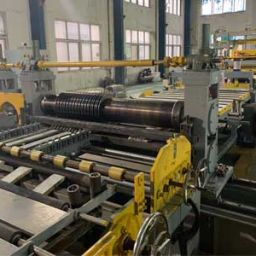
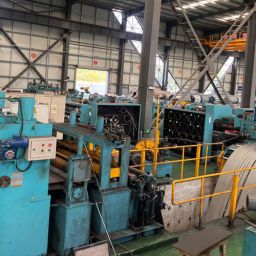
The slitter head is the heart of the equipment. Key design features include:
- Large diameter arbors, commonly 180 mm to 300 mm, machined from alloy steel and supported by heavy-duty roller bearings.
- Precision ground housings with vertical adjustment to set blade clearance in increments of hundredths of a millimetre.
- Quick change tooling systems, including dual head or shuttle configurations, that allow the next set-up to be prepared while the current one is cutting.
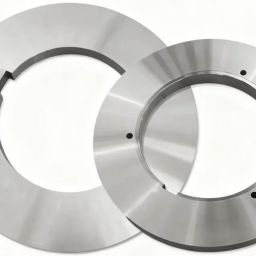
- Hardened knife and spacer sets manufactured to tight tolerances in diameter, thickness and parallelism.
Correct blade clearance, usually expressed as a percentage of material thickness, is critical. Insufficient clearance causes excessive wear and double-cutting; excessive clearance produces roll-over and burr. On a heavy gauge slitting line, the equipment must hold this clearance under full load without drift.
Tensioning System
As thick strip passes from the slitter to the recoiler, the individual strips must be held under controlled tension. Heavy gauge lines typically employ one of the following:
- Looping pit and tension pad or bridle rolls — the most common configuration, in which strips drop into a free loop before entering a tension unit ahead of the recoiler.
- Tight-line configurations without a loop, suitable where strip is short, and thickness is at the lower end of the range.
The tension unit must apply sufficient braking force to wind a tight, uniform coil without marking the strip surface.
Recoiler and Separator
The recoiler winds the slit strips into finished coils. Heavy gauge recoilers feature high torque drives, hydraulic expansion mandrels with outboard support, and overarm separator assemblies that keep adjacent strips apart during winding. A coil car then removes the finished product from the mandrel.
Scrap Handling
Edge trim from heavy gauge material is stiff and unforgiving. Rather than a scrap winder, a heavy gauge line typically uses a scrap chopper that cuts the trim into short lengths for collection in a bin, or a scrap baller sized for thick strip. Reliable scrap handling is frequently underestimated, yet it is one of the most common causes of unplanned downtime.
Quality Indicators in Heavy Gauge Slit Strip
A well-engineered heavy gauge slitting line should consistently deliver:
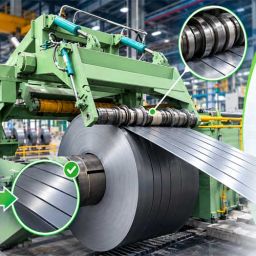
- Minimal burr — generally below 10 per cent of material thickness, with clean, consistent edges across all strips.
- Low camber — straight strip free of lateral bow, which is essential for tube mills and roll forming lines.
- Accurate width — repeatable within the specified tolerance along the entire coil length.
- Tight, uniform recoiling — coils free of telescoping, loose wraps and surface marking.
Each of these outcomes depends on the interaction of rigidity, tooling precision, levelling and tension control. Deficiencies in any one element will manifest as a visible defect in the finished strip.
Automation and Control
Modern heavy gauge slitting equipment integrates programmable logic control with operator interfaces that store setup recipes, monitor drive loads, and coordinate line speed across the uncoiler, slitter and recoiler. Common automation features include:
- Automatic knife clearance setting from the thickness input.
- Tooling set up calculation software that generates spacer configurations for a given cut schedule.
- Coil weight and length tracking for production reporting.
- Safety interlocks and light curtains conforming to applicable machinery directives.
Automation reduces changeover time, which is particularly valuable in heavy gauge work where tooling is large and manual handling is laborious.
Maintenance Considerations
The longevity of heavy gauge slitting equipment depends on disciplined maintenance:
- Knife regrinding and inspection at scheduled intervals, with records kept of diameter after each regrind.
- Arbor runout checks using dial indicators to confirm the arbors remain within tolerance.
- Lubrication of bearings and gearboxes according to the manufacturer’s schedule.
- Hydraulic system monitoring for pressure, temperature and contamination.
- Leveller roll inspection for wear patterns that indicate misalignment.
A structured preventive maintenance programme is considerably less costly than reactive repair on a line of this scale.
Selecting a Manufacturer
The choice of equipment supplier is as consequential as the specification itself. Purchasers should evaluate:
- Engineering capability — whether the manufacturer designs the line in-house and can adapt it to specific material and layout requirements.
- Build quality — the heaviness of fabricated frames, the precision of machined components, and the sourcing of bearings, drives and controls.
- Reference installations — evidence of lines operating successfully at comparable thickness and strength.
- Commissioning and training — on-site support to bring the line into production and train operators.
- After sales service and spare parts — availability of tooling, consumables and technical assistance throughout the equipment life.
LOTOSSlitting designs and manufactures slitting lines for a broad range of coil processing requirements, with heavy gauge configurations engineered around the specific thickness, strength and width demands of each customer. Each line is built with the structural rigidity, drive capacity, and tooling precision that thick coil processing requires.
FAQ: