How to Reduce Scrap in a Cut to Length Production Line
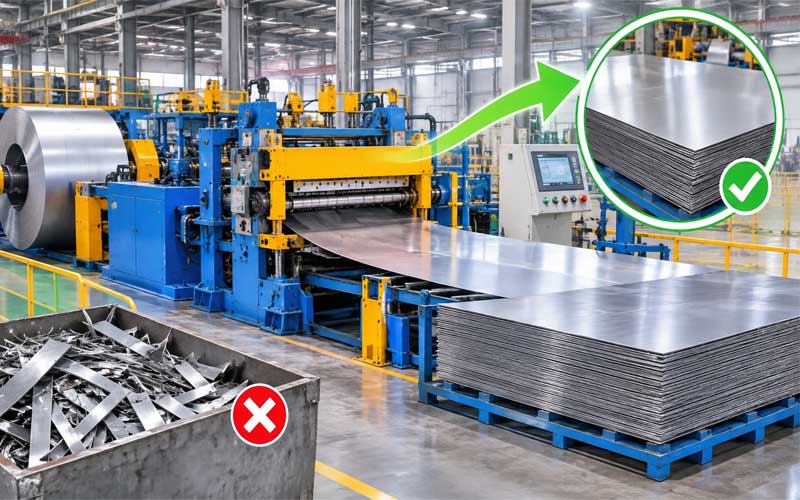
Scrap is one of the largest hidden costs in any cut to length production line. Every sheet that is cut to the wrong length, scratched, or rejected for flatness represents lost material, lost labor, and lost machine time. Because steel and other metals account for the majority of a processor’s total cost, even a small reduction in scrap rate can produce a significant improvement in profit.
Understanding Scrap in a Cut to Length Line
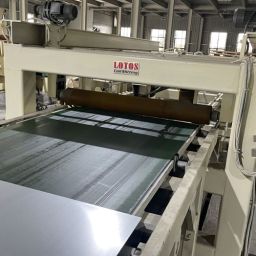
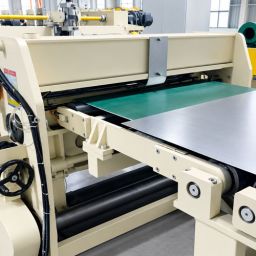
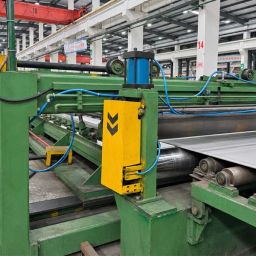
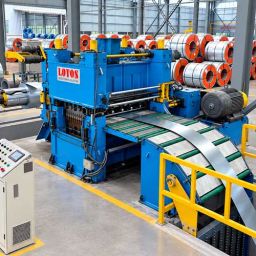
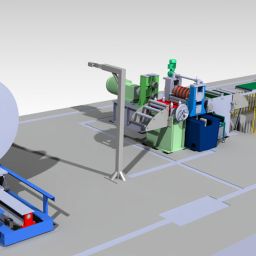
A cut to length line uncoils a metal coil, levels the strip, measures it to a set length, cuts it, and stacks the finished sheets. Scrap in this process generally falls into four categories:
- Coil related scrap: Coil head and tail ends, damaged edges, and defective material.
- Setup and changeover scrap: Material wasted while adjusting length, thickness or material type.
- Process scrap: Sheets rejected for incorrect length, poor flatness, burrs or surface marks.
- Handling scrap: Damage that occurs during stacking, transport or storage.
Identifying which category contributes most to your loss is the first step toward reducing it.
1. Improve Length Measurement Accuracy
Inaccurate length is among the most common causes of rejected sheets. To maintain tight tolerances:
- Use a high resolution encoder mounted on a dedicated, spring-loaded measuring roll.
- Keep the measuring roll clean and free from oil, rust and debris.
- Calibrate the encoder regularly against a certified reference length.
- Choose a servo driven feeding system for precise, repeatable positioning.
- Allow the PLC to compensate automatically for acceleration and deceleration effects.
A line that cuts within tight length tolerance reduces both rejected sheets and the need for overlength allowance.
2. Optimize Leveling for Better Flatness
Poor flatness leads to rejected sheets, especially for customers in appliance, automotive and construction industries. To improve leveling results:
- Select a leveler with a suitable number and diameter of work rolls for your material thickness.
- Adjust roll penetration according to material grade, thickness and yield strength.
- Inspect work rolls and backup rolls regularly for wear or surface damage.
- Maintain consistent tension between the decoiler and the leveler.
Correct leveling removes coil set, crossbow and edge wave, and it prevents rework further downstream.
3. Maintain Sharp, Properly Adjusted Cutting Blades
Dull or misaligned blades cause burrs, edge distortion and uneven cuts. To control cutting quality:
- Inspect and regrind or replace blades on a fixed schedule.
- Set the blade clearance according to material thickness and grade.
- Ensure the upper and lower blades are parallel and properly aligned.
- Use blade materials suited to the metal being processed, such as stainless steel or high-strength steel.
Well maintained blades produce clean edges and reduce secondary finishing or rejection.
4. Reduce Coil Head and Tail Scrap
Each coil has unavoidable leading and trailing sections, but the amount lost can be minimized:
- Use an automatic strip threading and feeding system to shorten setup time.
- Apply an optimized tail-out control that stops the line at the correct position.
- Avoid unnecessary trimming of usable material at the coil end.
- Inspect incoming coils for edge damage, rust or defects before loading.
Careful coil management ensures that more of each coil becomes saleable product.
5. Shorten Changeover and Setup Time
Frequent changes of length, thickness or material produce test sheets that are often scrapped. To reduce this loss:
- Store recipes for common products in the PLC so that settings load automatically.
- Use digital readouts or motorized adjustment for guides and pressure settings.
- Group orders by thickness and material type to reduce the number of changeovers.
- Train operators to follow a standard setup procedure.
Faster, more repeatable changeovers reduce the number of trial cuts required.
6. Protect the Strip Surface
Surface scratches, dents and coating damage can make an otherwise good sheet unsaleable. To protect the surface:
- Keep rolls, tables and guides clean and free of metal particles.
- Use soft-contact rollers or protective belts on sensitive materials.
- Use an automatic stacker with smooth, controlled sheet placement.
- Handle finished stacks with proper lifting equipment and protective separators.
This is especially important when processing pre-painted, galvanized, aluminum or stainless steel coil.
7. Control Tension and Strip Tracking
Unstable tension or a wandering strip leads to uneven cutting, edge damage and skewed sheets. To maintain stability:
- Install a loop control or tension system between the leveler and the feeder.
- Use edge guides or automatic centering devices to keep the strip aligned.
- Ensure the decoiler maintains smooth, consistent payoff speed.
Stable material flow improves squareness and cutting accuracy.
8. Use Automation and Real-Time Monitoring
Modern cut to length lines benefit from data driven control. Useful features include:
- Automatic length compensation based on encoder feedback.
- Production counters and order management in the PLC or HMI.
- Fault alarms for blade wear, sensor errors and feed problems.
- Optional inspection systems for length, width, diagonal and surface quality.
Real time monitoring helps operators detect problems immediately, before a large quantity of scrap is produced.
9. Train Operators and Standardize Procedures
Even the best machine depends on the people who operate it. A structured approach should include:
- Written operating and setup procedures for each product type.
- Regular training on leveling, blade adjustment and measurement checks.
- Daily and weekly inspection checklists.
- Recording and reviewing scrap data by shift, material and cause.
Tracking scrap by cause allows management to focus improvement efforts where they matter most.
10. Perform Regular Preventive Maintenance
Mechanical wear gradually reduces accuracy. A preventive maintenance program should cover:
- Lubrication of bearings, gearboxes and guide components.
- Inspection of the hydraulic system for leakage or pressure variation.
- Checking brakes, clutches and servo drives for correct performance.
- Verification of machine alignment and levelness of the foundation.
Consistent maintenance keeps the line accurate and reduces unplanned downtime.
Conclusion
Reducing scrap in a cut to length production line requires a combination of accurate equipment, well-maintained tooling, stable material handling and disciplined operating procedures. By improving length measurement, leveling quality, blade condition, changeover efficiency and surface protection, processors can raise material yield, improve customer satisfaction and lower overall production cost.
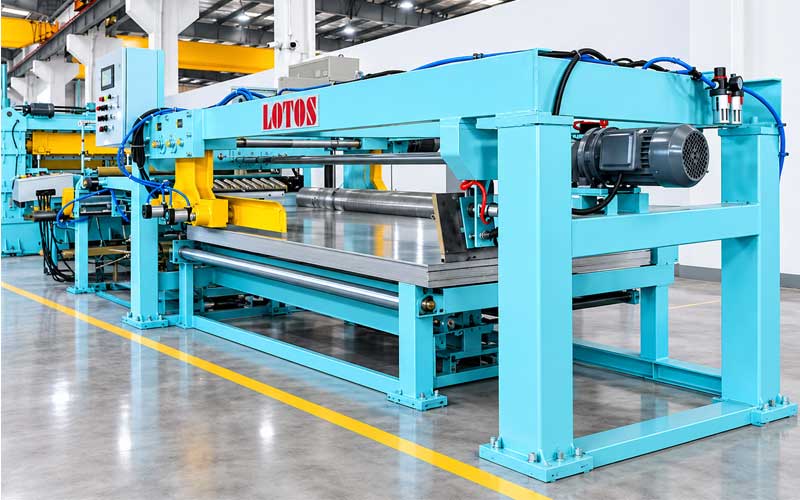
Lotos designs and supplies cut to length lines configured to your material, thickness and output requirements. Contact our engineering team to discuss a solution suited to your production needs.
FAQ:
Use a servo feeder with a high-resolution encoder, keep the measuring roll clean and calibrate it regularly.
Blades should be inspected on a fixed schedule and reground or replaced according to material type, thickness and production volume.
Storing product recipes in the PLC and grouping orders by thickness and material reduces the number of trial cuts.
Yes, stable tension and proper strip centering prevent skewed sheets, uneven cuts and edge damage.
Yes, upgrades such as a servo feeder, a new encoder, a modern PLC or an improved leveler can significantly improve accuracy.