A Complete Technical Overview
Steel coil slitting is a fundamental metal processing operation that converts wide master coils into narrower strips of precise width, tailored to the requirements of downstream manufacturing. From automotive components to appliance housings and construction materials, slit steel coils form the raw material foundation for countless industrial applications. Understanding the mechanics of the slitting process is essential for processors seeking to achieve tight tolerances, clean edges, and consistent yield.
This article provides a detailed, step-by-step overview of the steel coil slitting process, the equipment involved, and the technical factors that determine product quality.
What Is Steel Coil Slitting?
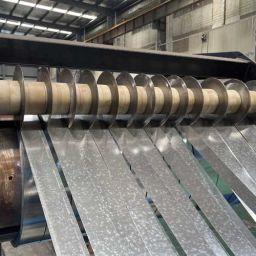
Coil slitting is a shearing process in which a wide steel coil is fed through a series of circular rotary knives, cutting it lengthwise into multiple narrower strips of specified width. Unlike blanking or stamping, which produce discrete parts, slitting is a continuous process that runs the full length of the coil, producing long strips that are then rewound into individual coils.
The process is used across a wide range of steel types, including cold rolled, hot rolled, galvanized, and stainless steel, in gauges ranging from thin foil-like material to heavy structural plate.
Key Stages of the Slitting Process
1. Uncoiling
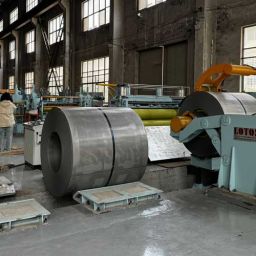
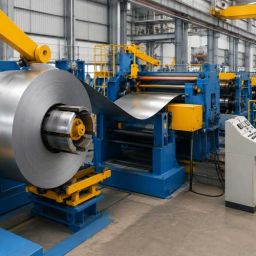
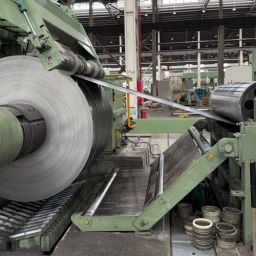
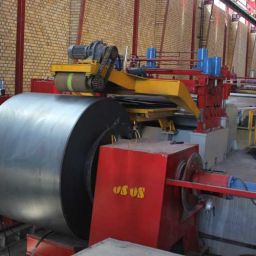
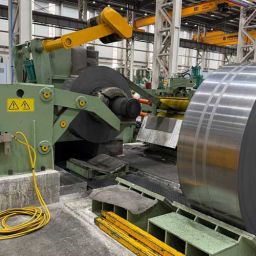
The process begins with the master coil mounted on an uncoiler, which unwinds the steel at a controlled rate. Proper uncoiler tension is critical at this stage, as excessive or insufficient tension can cause misalignment, wrinkling, or camber as the material feeds into the line.
2. Threading and Guiding
As the steel exits the uncoiler, it passes through guide rolls and a straightener (if required) to correct coil set and ensure the material feeds flat and true into the slitting head. Edge guides help maintain proper alignment, preventing lateral drift that could compromise strip width accuracy.
3. Slitting Head Operation
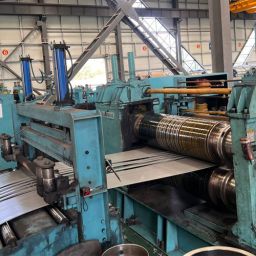
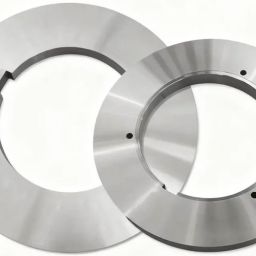
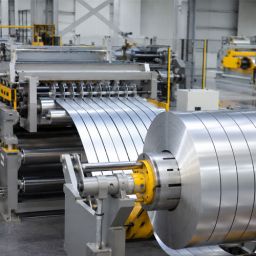
The core of the process occurs at the slitting head, where the steel passes between upper and lower rotary knives arranged in matched pairs, separated by spacers that determine strip width. As the material passes through, the knives shear the steel along its length into individual strips.
Two primary slitting methods are used, depending on material characteristics:
- Rotary shear slitting — the standard method for most steel gauges, using overlapping upper and lower knives to shear the material cleanly.
- Razor (score) slitting — typically used for thinner or softer materials, employing a single blade pressed against a bottom roll rather than a matched knife pair.
The precision of knife clearance, overlap, and alignment at this stage directly determines edge quality, burr height, and dimensional accuracy.
4. Tension Control Through the Line
Maintaining consistent tension between the uncoiler, slitting head, and recoiler is essential throughout the process. Tension stands and dancer rolls regulate strip tension as it moves through the line, compensating for changes in coil diameter and preventing issues such as telescoping, scratching, or strip breakage.
5. Separation and Recoiling
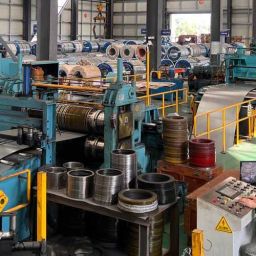
Once slit, the individual strips must be properly separated to avoid scratching or edge damage as they travel toward the recoiler. Separator discs, tension pads, or spreader rolls are commonly used to maintain adequate spacing between strips.
Each strip is then rewound onto individual mandrels at the recoiler, forming separate coils. Recoil tension is carefully controlled to produce tightly and evenly wound coils, minimizing the risk of telescoping or coil collapse during handling and transport.
6. Inspection and Packaging
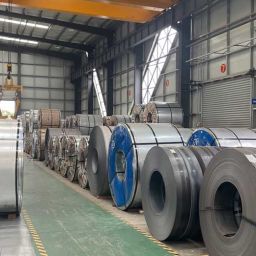
After recoiling, finished strips undergo quality inspection, checking for width accuracy, edge condition (burr height and camber), and surface quality. Coils that meet specification are then strapped, wrapped, and prepared for shipment or transfer to downstream processing.
Critical Equipment Components
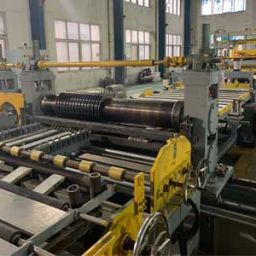
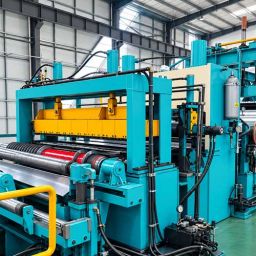
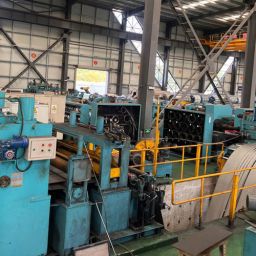
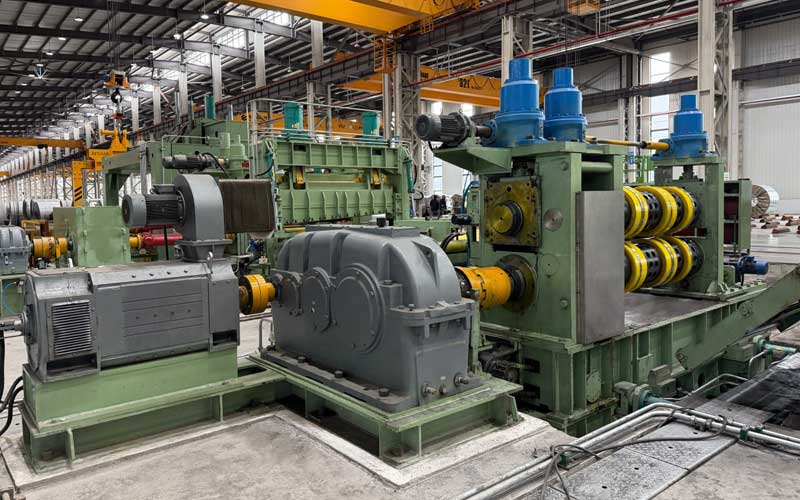
A steel coil slitting line typically consists of the following key components:
- Uncoiler – holds and feeds the master coil.
- Straightener/Leveler – removes coil set and flattens the material.
- Slitting Head – houses the rotary knives and spacers that perform the cut.
- Tension Stand – regulates strip tension between sections of the line.
- Recoiler – rewinds individual slit strips into finished coils.
- Control System – governs line speed, tension parameters, and synchronization across all sections.
The configuration and sophistication of these components vary depending on line capacity, material specifications, and required output tolerances.
Factors Affecting Slitting Quality
Several technical variables influence the quality and consistency of the slit product:
- Knife clearance and overlap – improper settings lead to burr formation or premature knife wear.
- Material hardness and gauge – harder or thicker materials require adjusted knife spacing and slitting force.
- Line tension – inconsistent tension causes camber, telescoping, or width variation.
- Knife condition – dull or damaged knives degrade edge quality regardless of correct setup.
- Coil quality – existing camber or edge defects in the master coil will carry through to the finished strips.
Attention to these variables throughout the process is essential for producing strips that meet tight industry tolerances.
Applications of Slit Steel Coils
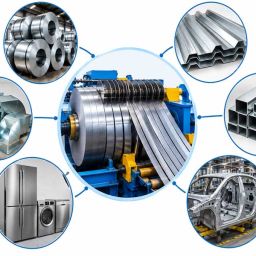
Slit steel strips serve as the input material for a wide range of downstream manufacturing processes, including:
- Roll forming for structural and architectural components
- Stamping and pressing for automotive parts
- Tube and pipe manufacturing
- Appliance and electrical enclosure production
- Construction hardware and fastener manufacturing
Because these applications often demand precise width and consistent edge quality, the accuracy of the slitting process has a direct impact on the efficiency and quality of subsequent manufacturing steps.
Conclusion
The steel coil slitting process combines precise mechanical shearing with carefully controlled tension management to transform wide master coils into narrow strips suited to a wide range of industrial applications. Each stage of the process from uncoiling and guiding to slitting and recoiling must be properly calibrated to ensure dimensional accuracy, clean edges, and reliable yield.
At Lotosslitting, slitting lines are engineered to deliver this level of precision consistently, combining robust tension control systems, accurate knife setting mechanisms, and reliable recoiling technology to meet the demanding tolerances of modern steel processing.
FAQ:
A typical line includes an uncoiler, straightener/leveler, slitting head, tension stand, recoiler, and a control system that synchronizes speed and tension across all sections.
Burrs typically result from incorrect knife clearance or overlap, dull or worn knives, or improper alignment at the slitting head. Correct knife setup based on material thickness and hardness minimizes burr formation.
Slitting lines can process cold-rolled, hot-rolled, galvanized, and stainless steel across a wide range of gauges, from thin sheet material to heavier structural plate.
Defects such as existing camber, edge damage, or surface imperfections in the master coil carry through to the finished strips regardless of line calibration, making incoming coil inspection an important step in the overall process.